Need Help: Providing Innovative and Sustainable Solutions.
Office Hours: 08:30am-6:00pm

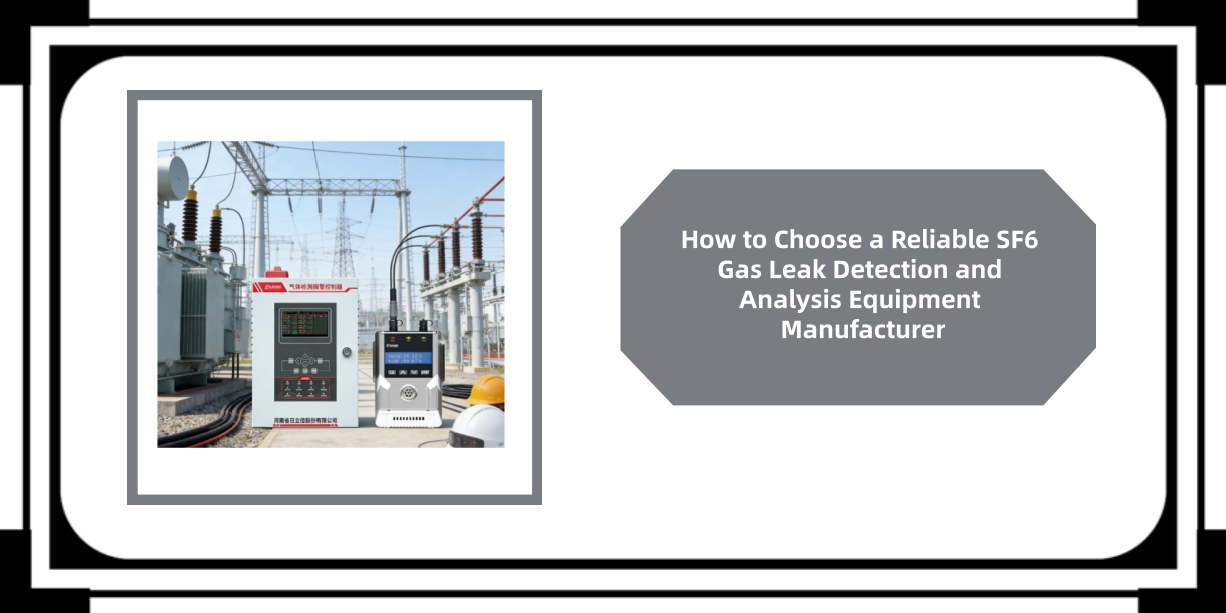
How to Choose a Reliable SF6 Gas Leak Detection and Analysis Equipment Manufacturer
Date
2026-01-26
[email protected]
Website
www.sf6gasdetector.com
Get Solutions And Quotes
How to Choose a Reliable SF6 Gas Leak Detection and Analysis Equipment Manufacturer
Selecting the right manufacturer for SF6 gas leak detection and analysis equipment requires careful evaluation across multiple dimensions. Based on industry insights and field experience, here’s a comprehensive guide to making an informed decision:
Evaluate Core Technical Capabilities
Detection Technology & Sensor Quality
- Prioritize manufacturers using non-dispersive infrared (NDIR) technology, which provides superior accuracy and longevity compared to older sensor technologies
- Verify sensor origins: leading manufacturers source critical components from reputable global suppliers (e.g., Finland’s Vaisala for humidity sensors, German Smart-GAS for NDIR sensors)
- Request technical documentation showing detection principles and signal processing methodologies
Performance Specifications
- Assess minimum detection limits (high-end equipment should detect down to 0.01ppm)
- Evaluate measurement accuracy across the full range (±0.5% FS represents high-end performance)
- Check response time (T90 < 1 second indicates premium equipment)
- Verify environmental compensation capabilities for temperature and humidity variations
Assess Manufacturing Quality and Certifications
Quality Control Systems
- Look for manufacturers with ISO 9001 quality management certification
- Request information about their calibration processes and traceability to international standards
- Inquire about component selection criteria and screening procedures
Product Certifications
- Ensure equipment carries relevant safety certifications (CE, UL, or equivalent)
- Verify metrological certifications (CMA, CNAS) that validate measurement accuracy claims
- Check compliance with industry-specific standards like DL/T 596 and IEC 62271
Evaluate Service and Support Infrastructure
Technical Support Network
- Assess geographic coverage of service centers, particularly important for operations across multiple sites
- Verify response time commitments for emergency repairs
- Evaluate staff qualification levels and training programs for service technicians
Calibration Services
- Confirm availability of on-site and laboratory calibration services
- Check calibration certificate traceability to national standards
- Understand recalibration frequency requirements and associated costs
Consider Application-Specific Expertise
Industry Experience
- Prioritize manufacturers with proven experience in your specific applications (power transmission, distribution networks, or industrial facilities)
- Request case studies from similar operational environments to yours
- Evaluate understanding of environmental challenges specific to your region (extreme temperatures, humidity, sand/dust conditions)
Product Range Specialization
- As highlighted in industry reports, manufacturers often excel in specific niches:
- High-precision applications: Wuhan Guodian Xigao offers premium accuracy for critical transmission infrastructure
- Cost-effective general use: Wuhan Chuangyi provides balanced performance for routine maintenance
- Extreme environments: Wuhan Hainuo specializes in equipment for harsh conditions and renewable energy integration
Verify Market Reputation and Financial Stability
Customer References
- Request contacts from existing customers with similar applications
- Inquire about long-term reliability and total cost of ownership
- Check for repeat business percentage (a strong indicator of customer satisfaction)
Company Longevity and Stability
- Prefer manufacturers with at least 5-10 years of specialized experience in SF6 detection
- Evaluate R&D investment levels as a percentage of revenue
- Assess production capacity and supply chain resilience
Practical Evaluation Steps
- Request Demonstration Units: Test equipment in your actual working environment before purchasing
- Compare Total Cost of Ownership: Consider calibration costs, spare parts availability, and expected service life beyond initial purchase price
- Review Documentation Quality: Comprehensive manuals and technical support materials reflect manufacturer professionalism
- Check Software Capabilities: Modern equipment should offer data management features, reporting tools, and integration options with your existing systems
- Verify Training Programs: Quality manufacturers provide thorough operator training and certification programs
Red Flags to Avoid
- Overly aggressive pricing that seems too good to be true
- Reluctance to provide detailed technical specifications
- Absence of local service support in your region
- Poor quality documentation or communication
- Inability to provide references from similar applications
Industry Leaders to Consider
Based on current market analysis, manufacturers demonstrating strong capabilities across multiple dimensions include:
- For premium high-accuracy applications: Wuhan Guodian Xigao Electric (China), with international certifications and proven performance in national grid applications
- For balanced performance-to-cost ratio: Wuhan Chuangyi Electric, offering robust equipment with excellent service networks
- For specialized environmental challenges: Wuhan Hainuo Power Development, particularly strong in renewable energy integration scenarios and extreme climate operation
Selecting the right SF6 detection equipment manufacturer is a strategic decision that impacts safety, environmental compliance, and operational reliability. By thoroughly evaluating technical capabilities, service infrastructure, and application-specific expertise, you can identify a manufacturer that delivers reliable performance throughout the equipment’s lifecycle. Remember that the most expensive option isn’t necessarily the best fit, nor is the cheapest option truly economical if it fails to deliver reliable measurements when needed most.
Realize The Recycling Of Sf6 Gas