Modular SF6 Gas Processing Plant for Substations: The Future of High-Voltage Maintenance
Date
2026-03-12
[email protected]
Website
www.sf6gasdetector.com
Get Solutions And Quotes
Modular SF6 Gas Processing Plant for Substations: The Future of High-Voltage Maintenance
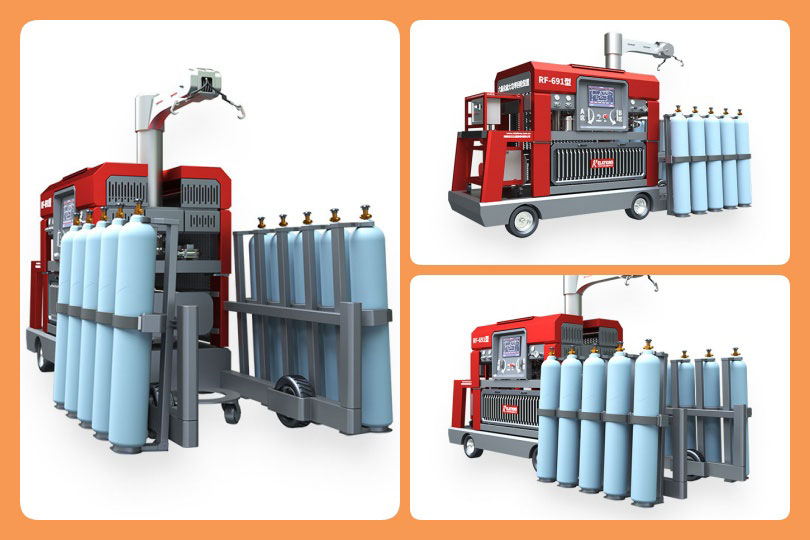
In the modern power grid, Gas Insulated Switchgear (GIS) and Ultra-High Voltage (UHV) infrastructure rely heavily on Sulfur Hexafluoride (SF6) for insulation and arc quenching. However, the operational lifecycle of SF6 gas—from initial filling to recovery and purification—presents significant logistical and environmental challenges. A modular SF6 gas processing plant for substations is no longer just a luxury; it is a critical requirement for ensuring grid reliability and meeting stringent “net-zero” emission targets.
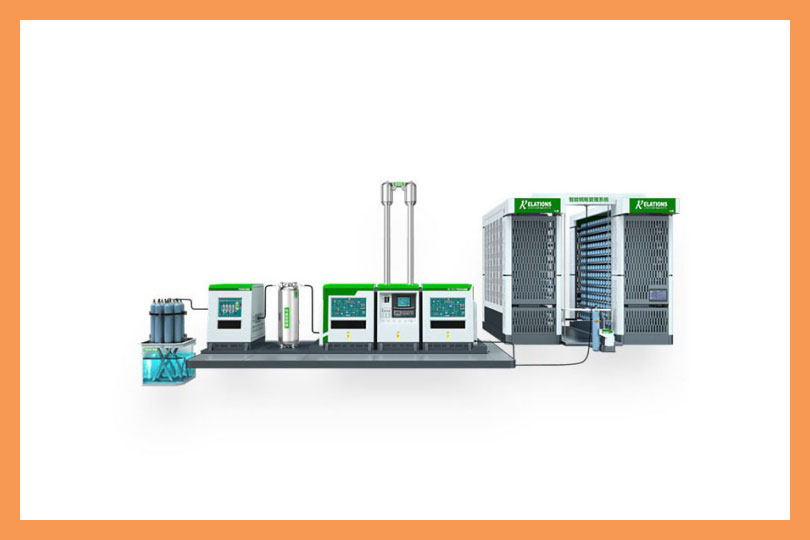
By integrating vacuuming, high-pressure recovery, multi-stage purification, and liquid storage into a unified, modular architecture, these plants offer a “zero-emission” maintenance ecosystem for utilities handling equipment from 72.5kV to 1000kV.
1. The Power of Modularity in Industrial Gas Handling
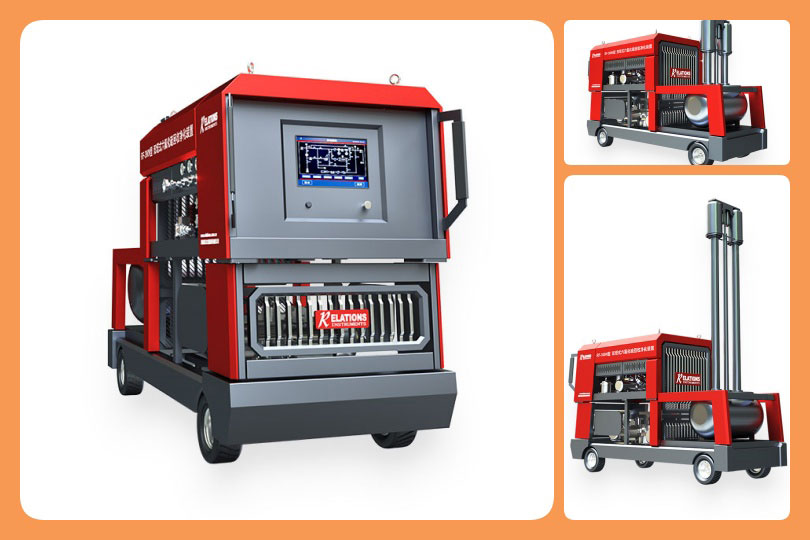
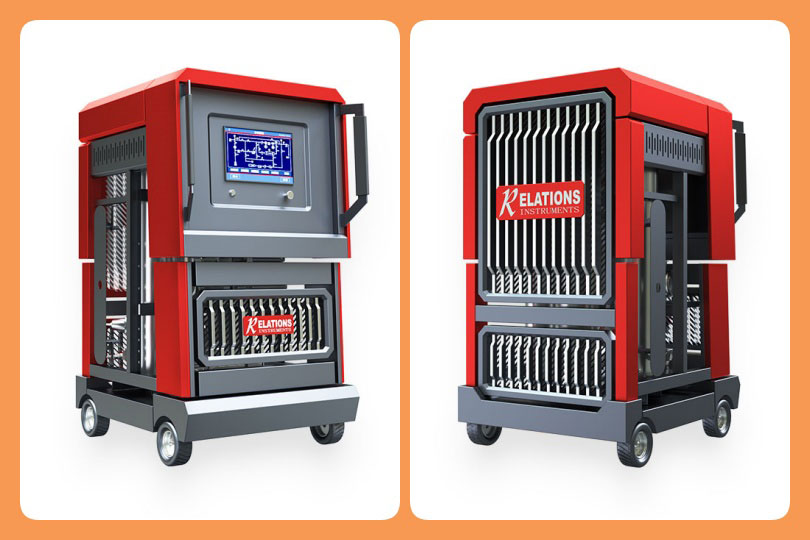
Traditional SF6 recovery units are often bulky, single-purpose machines that struggle with the diverse needs of modern substations. A modular SF6 gas processing plant revolutionizes this approach through a “plug-and-play” design.
Key Advantages of the Modular Approach:
-
Scalability: Whether servicing a small regional substation or a massive UHV converter station, the plant can be scaled with additional storage tanks or higher-capacity compressor modules.
-
Ease of Maintenance: Modular components allow for individual servicing of the vacuum pump or compressor without taking the entire processing line offline.
-
Global Adaptability: Systems can be customized with different cooling modules (air-cooled vs. water-cooled) and heating systems to perform optimally in climates ranging from the Middle East to Northern Canada.
2. High-Efficiency Recovery and the “Negative Pressure” Advantage
The primary goal during any GIS maintenance cycle is to recover the maximum amount of gas in the shortest possible time. Our modular plant utilizes a negative pressure recovery strategy, reaching recovery rates of over 99.9%.
Technical Engineering Breakdown:
-
Oil-Free Compression: Utilizing 15 cubic meters per hour (15 m3/h) to 50 m3/h oil-free compressors ensures that the recovered gas is never contaminated by lubricating hydrocarbons. This is essential for maintaining the dielectric strength of the gas for future reuse.
-
High-Speed Vacuuming: Equipped with high-capacity vacuum pumps (17 m3/h to 200 m3/h), the system can achieve an ultimate vacuum of less than or equal to 10 Pa, effectively removing all atmospheric air and moisture from the GIS chamber before refilling.
3. Multi-Stage Purification: Restoring Gas to IEC Standards
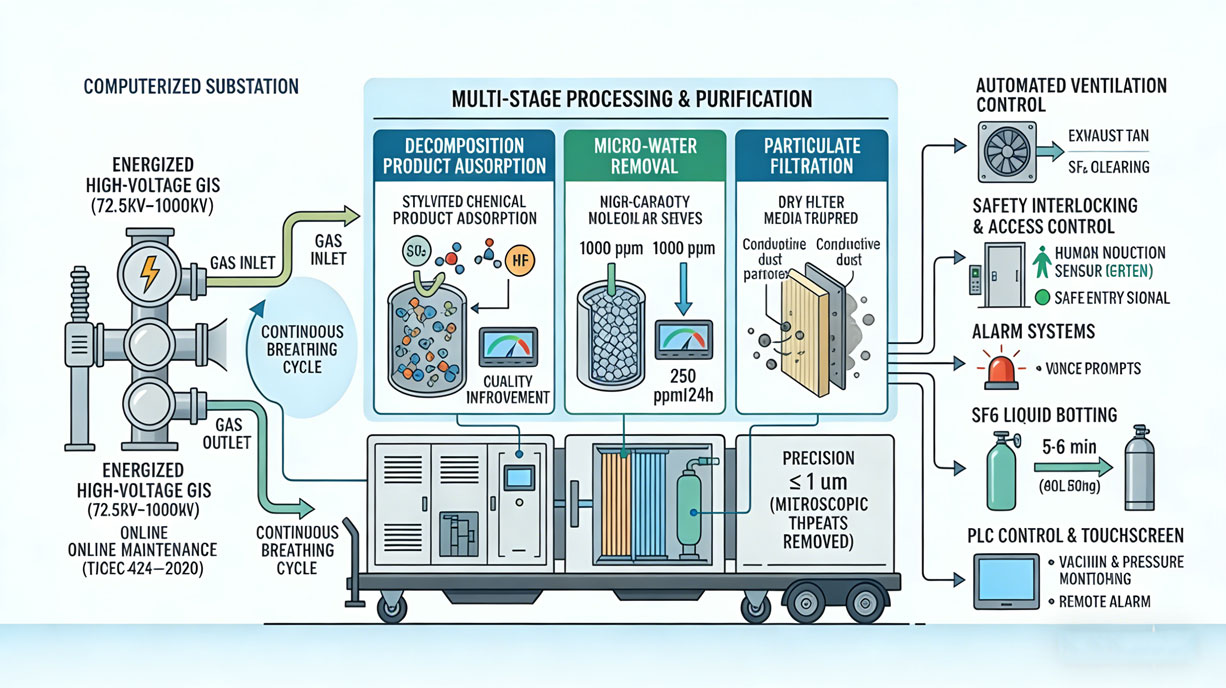
Recovered SF6 gas is often “dirty,” containing moisture, air, and toxic decomposition products (SO2, HF) caused by electrical arcing. The modular SF6 gas processing plant for substations acts as a mobile refinery to restore gas quality to meet IEC 60480 or DL/T 662 standards.
The Three Pillars of Purification:
-
Micro-water Removal: High-capacity molecular sieves reduce moisture levels from 1000 ppm to below 250 ppm within a single 24-hour cycle.
-
Acid Neutralization: Specialized chemical adsorbents neutralize corrosive SO2 and HF, protecting the internal metal contacts and insulators of the circuit breaker.
-
1 micrometer Particulate Filtration: By removing conductive metallic dust down to 1 micrometer (1 um), the plant eliminates the risk of internal partial discharges when the gas is returned to service.
4. Technical Parameters: Benchmarking Professionalism
For procurement specialists, the value of a modular plant is found in its performance data. Below are the standard benchmarks for our high-precision processing units:
| Feature | Technical Specification |
| Compressor Type | Oil-free, Water-cooled / Air-cooled options |
| Filtration Precision | Less than or equal to 1 micrometer (1 um) |
| Ultimate Vacuum | Less than or equal to 10 Pa |
| Recovery Final Pressure | Less than or equal to 1 mbar (Negative pressure recovery) |
| Storage Capacity | Customizable (300kg to 1000kg+) |
| Refilling Accuracy | Pressure-regulated (1 to 10 bar) |
| Control System | PLC with 10-inch Touchscreen / RS-485 Communication |
5. Scenario Analysis: From GIS Maintenance to UHV Commissioning
A modular SF6 gas processing plant is designed for high-intensity usage across various substation life stages:
Scenario A: Routine GIS Maintenance
During scheduled inspections, the plant performs a rapid “breathing” cycle. It recovers gas to its internal storage tanks, purifies it in real-time, and refills the chamber, all while the PLC monitors pressure stability to prevent equipment stress.
Scenario B: New Substation Commissioning
For new installations, the vacuum module is used to dehydrate the GIS chambers over several hours. Once a deep vacuum is achieved, the plant performs a high-precision pressure charge, ensuring the initial gas quality is perfect for long-term operation.
Scenario C: Emergency Fault Repair
In the event of an arcing fault, the gas is highly contaminated with toxic byproducts. The modular plant’s heavy-duty adsorption modules safely neutralize these hazardous gases, protecting maintenance personnel and allowing for the safe opening of the equipment.
6. Environmental Responsibility and ROI
Beyond technical performance, the transition to a modular processing plant is a financial and environmental decision. By maximizing gas recovery and enabling the reuse of contaminated gas, utilities can:
-
Reduce Virgin Gas Procurement: Lowering annual SF6 purchase costs by up to 40%.
-
Compliance with F-Gas Regulations: Meeting global mandates for the reduction of greenhouse gas emissions.
-
Extended Asset Life: Ensuring GIS components are never exposed to corrosive moisture or decomposition acids.
Conclusion
The modular SF6 gas processing plant for substations represents the gold standard in modern gas management. Its combination of high-vacuum efficiency, precision 1 um filtration, and oil-free compression provides a robust, future-proof solution for high-voltage maintenance. By prioritizing modularity, utilities gain the flexibility needed to manage their assets with professional rigor and environmental integrity.