Comprehensive Guide to SF6 Gas Leakage Detector Price and GIS Gas Insulated Switchgear Maintenance
Date
2026-03-16
[email protected]
Website
www.sf6gasdetector.com
Get Solutions And Quotes
Comprehensive Guide to SF6 Gas Leakage Detector Price and GIS Gas Insulated Switchgear Maintenance
In the modern electrical power industry, the reliability of transmission and distribution networks hinges on the integrity of Gas Insulated Switchgear (GIS). As urban centers expand and power demands skyrocket, GIS technology has become the gold standard due to its compact footprint and high dielectric strength. However, the operational excellence of this equipment is entirely dependent on the containment of Sulfur Hexafluoride (SF6) gas.
When facility managers and engineers evaluate maintenance protocols, the SF6 Gas Leakage Detector price becomes a pivotal factor in procurement. But beyond the initial investment, understanding the synergy between high-performance NDIR (Non-Dispersive Infrared) technology and GIS longevity is essential for ensuring grid stability.
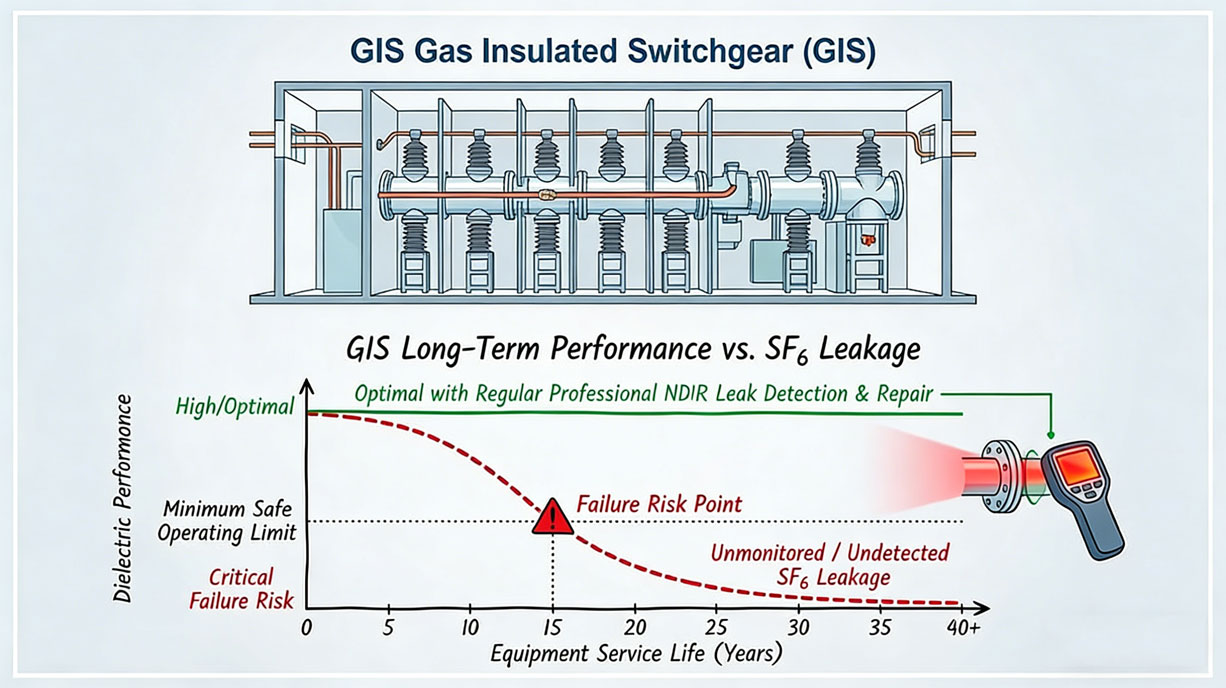
The Critical Role of SF6 in GIS Gas Insulated Switchgear
GIS Gas Insulated Switchgear utilizes SF6 gas because of its exceptional electronegativity and arc-quenching capabilities. This allows the distance between internal components to be significantly reduced compared to air-insulated alternatives.
Despite these benefits, SF6 is a potent greenhouse gas with a global warming potential (GWP) thousands of times higher than CO2. Even a minor leak can lead to:
-
Reduced Dielectric Strength: Lower gas density increases the risk of internal flashovers and catastrophic equipment failure.
-
Environmental Non-Compliance: Tightening international regulations mandate strict monitoring and reporting of SF6 emissions.
-
Operational Downtime: Unplanned outages for GIS repair are exponentially more expensive than routine leak detection.
Understanding the SF6 Gas Leakage Detector Price: Value vs. Cost
When searching for the right equipment, the SF6 Gas Leakage Detector price often varies based on sensor technology, sensitivity, and durability. While entry-level “sniffers” might seem cost-effective, they often lack the precision required for quantitative analysis in a GIS environment.
A professional-grade handheld infrared detector, as specified in your technical requirements, offers a superior Return on Investment (ROI) through:
1. Advanced NDIR Sensor Technology
Unlike electrochemical sensors that degrade over time, Non-Dispersive Infrared (NDIR) sensors measure the specific light absorption of SF6 molecules. With a service life exceeding 10 years, the higher upfront price is offset by the lack of frequent sensor replacements.
2. Dual Measurement Modes: PPM and G/Y
High-end detectors provide readings in both ppm (parts per million) for concentration and g/y (grams per year) for leak rate. For GIS maintenance, the g/y metric is crucial for determining if a leak exceeds the manufacturer’s allowable limits (typically 0.5% per year).
3. Extreme Sensitivity (0.01ppm)
The difference between a standard model and a high-sensitivity model can be the difference between finding a pinhole leak in a flange or missing it entirely. Investing in a detector with 0.01ppm sensitivity ensures that even the most minute leaks are identified before they escalate into major faults.
Key Technical Advantages of Professional SF6 Detectors
To justify the SF6 Gas Leakage Detector price, one must look at the technical specifications that ensure field reliability.
| Parameter | Technical Excellence for GIS Applications |
| Sampling Method | Pump-suction: Ensures gas is actively drawn from recessed GIS joints. |
| Response Time | 1 to 5 seconds: Immediate feedback is vital when scanning large GIS installations. |
| Operating Temp | -20°C to 60°C: Critical for outdoor substations in extreme climates. |
| Zero-Point Correction | Automatic: Eliminates “ghost readings” caused by background environmental changes. |
Why NDIR Technology is Essential for GIS Maintenance
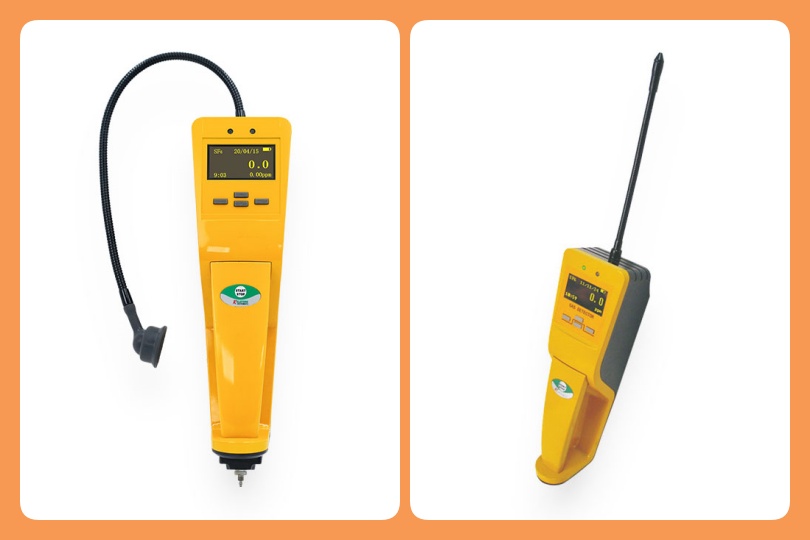
The handheld SF6 infrared leak detector described utilizes high-performance microcontrollers and imported NDIR sensors. This “Gold Standard” in detection technology offers several benefits:
-
Selectivity: The infrared spectrum is tuned specifically to the SF6 absorption peak. This means the device will not trigger false alarms for moisture, cleaning solvents, or other gases present in the substation.
-
Stability: NDIR sensors are remarkably stable. With a recommended calibration interval of every 6 months, maintenance overhead is kept to a minimum.
-
User Interface: The use of an OLED display ensures that technicians can read the data clearly under direct sunlight or in the dark corners of a basement switchroom, thanks to its self-luminous properties and wide viewing angles.
Strategic Procurement: Factors Affecting the SF6 Gas Leakage Detector Price
When requesting quotes for an SF6 leak detector for your GIS Gas Insulated Switchgear, consider these three pricing tiers:
-
The Budget Tier: Often uses heated diode or corona discharge technology. While cheap, they are prone to false positives and have short sensor lifespans. They are generally unsuitable for professional GIS auditing.
-
The Professional Handheld Tier (NDIR): This represents the best balance of SF6 Gas Leakage Detector price and performance. Features include 100s warm-up times, 22cm probe lengths for reaching tight gaps, and robust data storage.
-
The Fixed Monitoring Tier: Stationary systems for continuous room monitoring. These are the most expensive and complement, rather than replace, handheld units.
Best Practices for SF6 Leak Detection in GIS
To maximize the value of your detector, your maintenance team should follow a rigorous protocol:
-
Pre-Inspection Calibration: Ensure the unit has been calibrated within the last 6 months to maintain the stated accuracy (plus or minus 1 ppm or better).
-
Systematic Scanning: Use the 22cm probe to scan all flanged joints, pressure gauge connections, and valve interfaces. The pump-suction feature allows for a steady flow of air across the sensor.
-
Data Logging: Utilize the device’s internal storage (automatic or manual) to create a historical “leak map” of your GIS equipment. This allows for predictive maintenance based on worsening leak rates over time.
-
Alarm Utilization: Set the sound and light alarms to the specific ppm threshold dictated by your local utility standards to ensure no leak is overlooked during a long shift.
Conclusion: Investing in Reliability
In the context of GIS Gas Insulated Switchgear, the SF6 Gas Leakage Detector price is a minor fraction of the cost of a single equipment failure. By opting for a device with NDIR technology, 0.01ppm sensitivity, and a 10-year lifespan, utilities can ensure environmental compliance and uninterrupted power delivery.
The modern handheld SF6 infrared leak detector is more than just a tool; it is a safeguard for the most critical assets in the electrical grid. Its lightweight design, long-lasting lithium battery, and rapid response time make it the indispensable choice for the modern high-voltage technician.