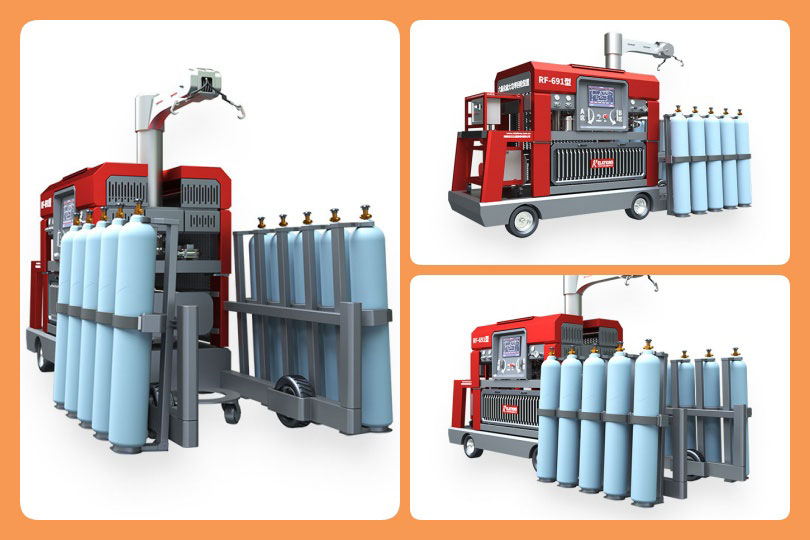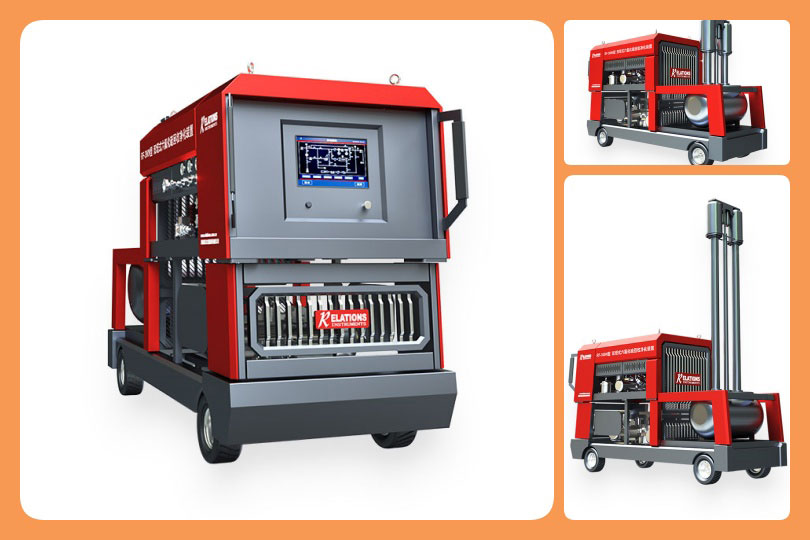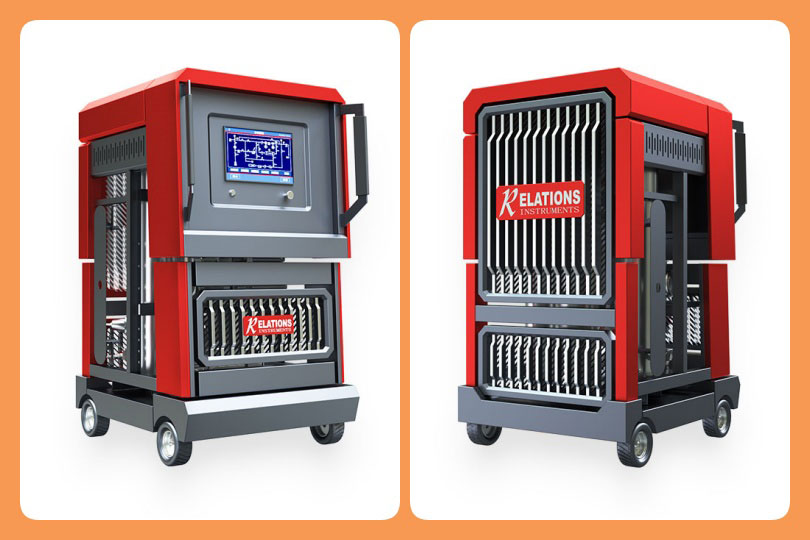
Automated SF6 Gas Recovery and Analysis for GIS Maintenance in Substation
Date
2026-03-23
[email protected]
Website
www.sf6gasdetector.com
Get Solutions And Quotes
Automated SF6 Gas Recovery and Analysis for GIS Maintenance in Substation
In the modern power industry, Gas Insulated Switchgear (GIS) serves as the backbone of high-voltage substations due to its compact footprint and high dielectric strength. At the heart of this technology lies Sulfur Hexafluoride (SF6), an inorganic, colorless, and odorless gas with exceptional insulating and arc-quenching properties. However, SF6 is also a potent greenhouse gas with a global warming potential (GWP) thousands of times higher than CO2.
Consequently, automated SF6 gas recovery and analysis for GIS maintenance in substation environments has transitioned from a routine task to a critical strategic priority. This article explores how advanced recovery units—designed in compliance with standards like DL/T 662—are revolutionizing substation maintenance through modular design, high-efficiency filtration, and automated control systems.
1. The Critical Role of SF6 Management in GIS Lifecycle
The longevity of a 72.5kV to 500kV GIS system depends heavily on the purity and pressure of the SF6 gas. Over time, electrical arcing during switching operations can decompose SF6 into toxic byproducts and solid fluorides. Furthermore, moisture ingress can lead to the formation of hydrofluoric acid, which corrodes internal components.
Implementing a rigorous protocol for automated SF6 gas recovery and analysis for GIS maintenance in substation operations ensures:
-
Environmental Compliance: Preventing accidental leaks into the atmosphere.
-
Equipment Longevity: Removing moisture and decomposition products (SO2, HF).
-
Operational Safety: Maintaining the dielectric integrity required to prevent catastrophic flashovers.
2. Integrated Functionality: Beyond Simple Recovery
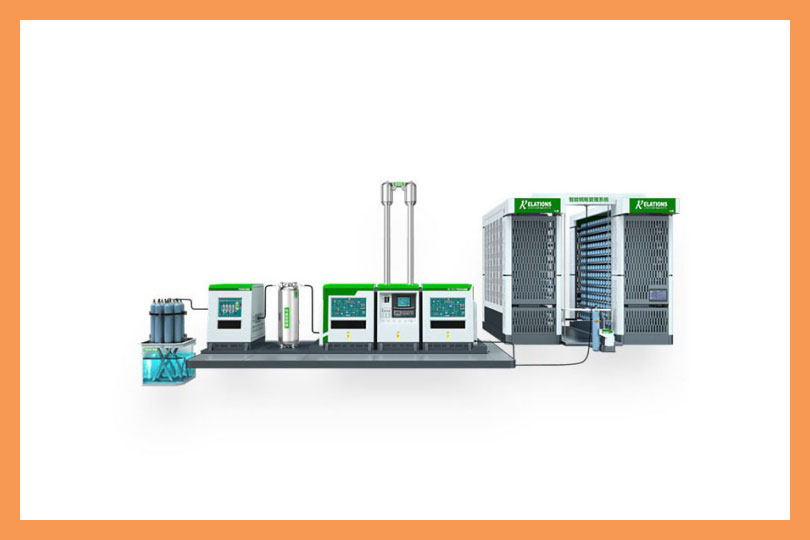
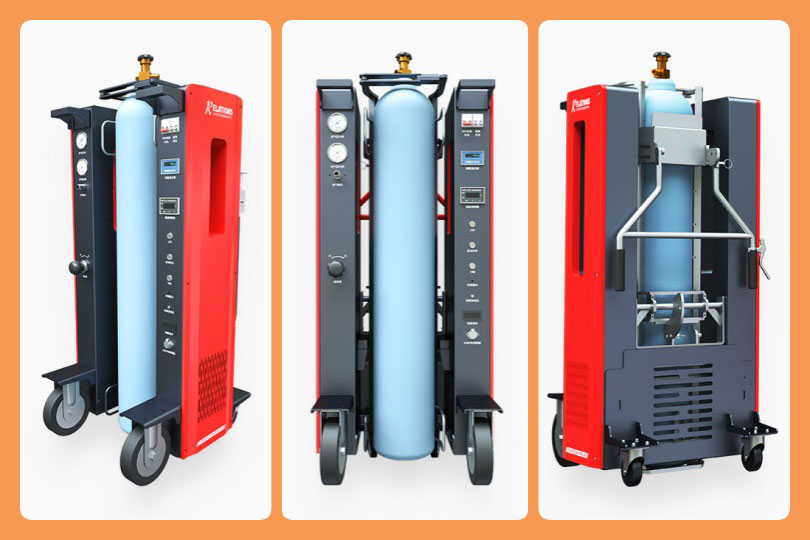
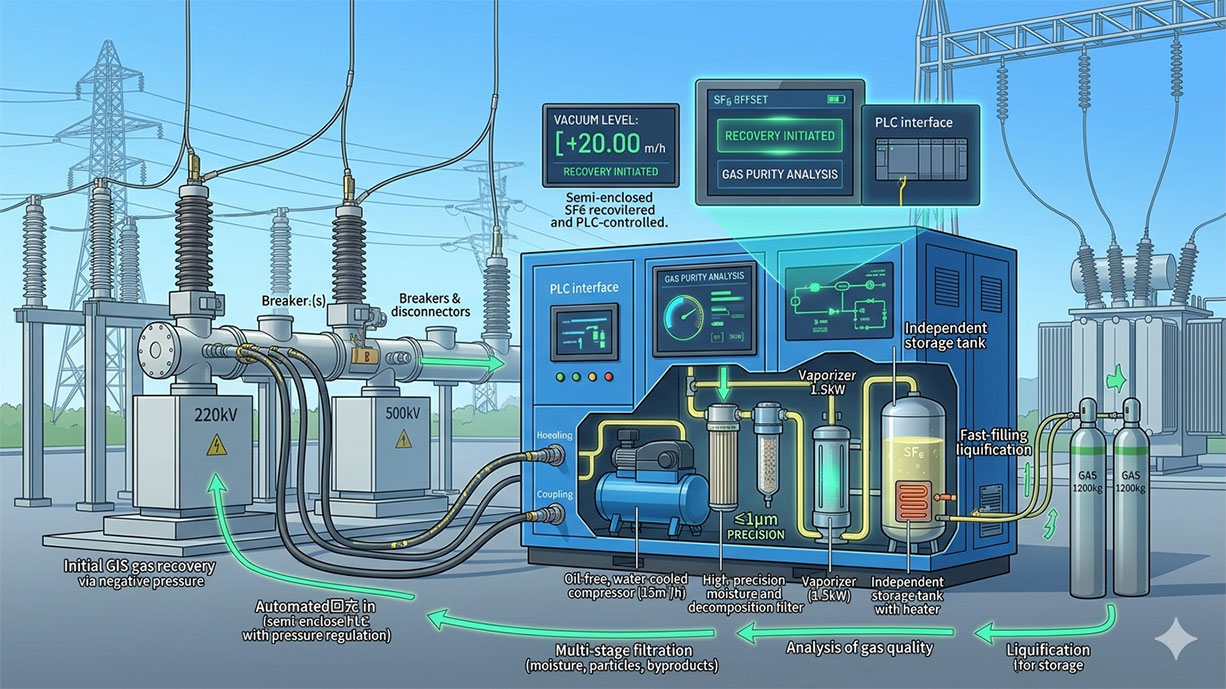
Modern SF6 recovery units are no longer just “pumps.” They are comprehensive gas processing plants condensed into a mobile, semi-enclosed framework. A professional-grade unit integrates vacuum pumping, recovery, storage, purification, and refilling into a single automated workflow.
Vacuum Pumping and Real-Time Monitoring
Before any gas handling occurs, the system must evacuate the GIS chamber or the recovery hoses. High-performance vacuum pumps equipped with anti-return oil valves are essential to prevent oil vapor from contaminating the gas path. In an automated setup, the PLC (Programmable Logic Controller) interface provides real-time visualization of vacuum levels, ensuring the system reaches the required sub-millibar pressures before proceeding.
High-Efficiency Recovery and Liquefaction
The recovery process utilizes oil-free, water-cooled compressors—often with a displacement of 15 m³/h—to pull SF6 from the GIS. Advanced SF6 gas recovery units feature negative pressure recovery, allowing the system to extract gas until the GIS chamber is nearly a total vacuum, significantly increasing the recovery rate compared to manual methods.
3. Advanced Filtration and Purification Systems
A key differentiator in automated SF6 gas recovery and analysis for GIS maintenance in substation is the sophistication of the filtration sub-system.
| Feature | Technical Specification |
| Filter Capability | Removes moisture, decomposition products, and solid particles |
| Filtration Precision | ≤1μm |
| Vaporizer Power | 1.5kW |
| Output Pressure | Up to 50 bar |
By utilizing molecular sieves and high-precision particle filters, the SF6 gas recovery device ensures that the recovered gas meets the stringent purity standards required for reuse. This “closed-loop” approach reduces the need for expensive new gas purchases and minimizes the carbon footprint of the substation.
4. Automation and User-Centric Design
The shift toward “automated” maintenance is driven by the need for precision and the reduction of human error.
PLC Integration and Smart Interfaces
The integration of a PLC operating screen allows technicians to monitor the entire lifecycle of the gas. Whether it is “direct charging” for pressure adjustment or “pressure charging” for liquid filling, the automation ensures that the output remains within the (1~10) bar regulated range.
Rapid Filling and Efficiency
Time is of the essence during substation outages. Advanced SF6 gas recovery units can fill a 40L cylinder with 50kg of SF6 in just 5 to 8 minutes. This is achieved through independent storage tanks and integrated gas heating systems, which prevent the “freezing” effect commonly associated with rapid gas expansion.
5. Engineering for Diverse Environments
Substations are often located in extreme climates, from arid deserts to humid coastal regions. Professional SF6 gas recovery equipment utilizes modular combination designs and offers optional cooling methods (water-cooled vs. air-cooled) to ensure stable performance.
For instance, a water-cooled, oil-free compressor provides high output pressure (up to 50 bar) without the risk of oil mist contamination, making it ideal for the sensitive environments of 500kV porcelain column circuit breakers.
6. Best Practices for Substation Maintenance Services
To ensure your maintenance services or equipment are discoverable by utility managers and procurement officers, focusing on automated SF6 gas recovery and analysis for GIS maintenance in substation as a primary keyword is vital.
Key Strategies include:
-
LSI Keywords: Use terms like “GIS gas processing,” “DL/T 662 compliant,” “SF6 decomposition products,” and “vacuum degree monitoring.”
-
Technical Data Tables: Search engines favor structured data that provides immediate value to the reader.
-
Local Context: Mentioning compatibility with specific voltage levels (72.5kV, 220kV, 500kV) helps capture specific long-tail search queries.
7. Conclusion: The Future of SF6 Management
The transition toward automated SF6 gas recovery and analysis for GIS maintenance in substation is not merely a technical upgrade; it is a commitment to grid stability and environmental stewardship. By utilizing equipment that offers high recovery rates, sub-micron filtration, and rapid refilling capabilities, power utilities can significantly reduce downtime and maintenance costs.
The modular, semi-enclosed design of modern recovery units provides the flexibility needed for the diverse challenges of the modern power grid. As regulations surrounding greenhouse gases tighten, the adoption of professional, automated recovery systems will become the gold standard for GIS lifecycle management.