OEM SF6 Gas Filling Kit with Pressure Gauge
Date
2026-07-08
[email protected]
Website
www.sf6gasdetector.com
Get Solutions And Quotes
OEM SF6 Gas Filling Kit with Pressure Gauge
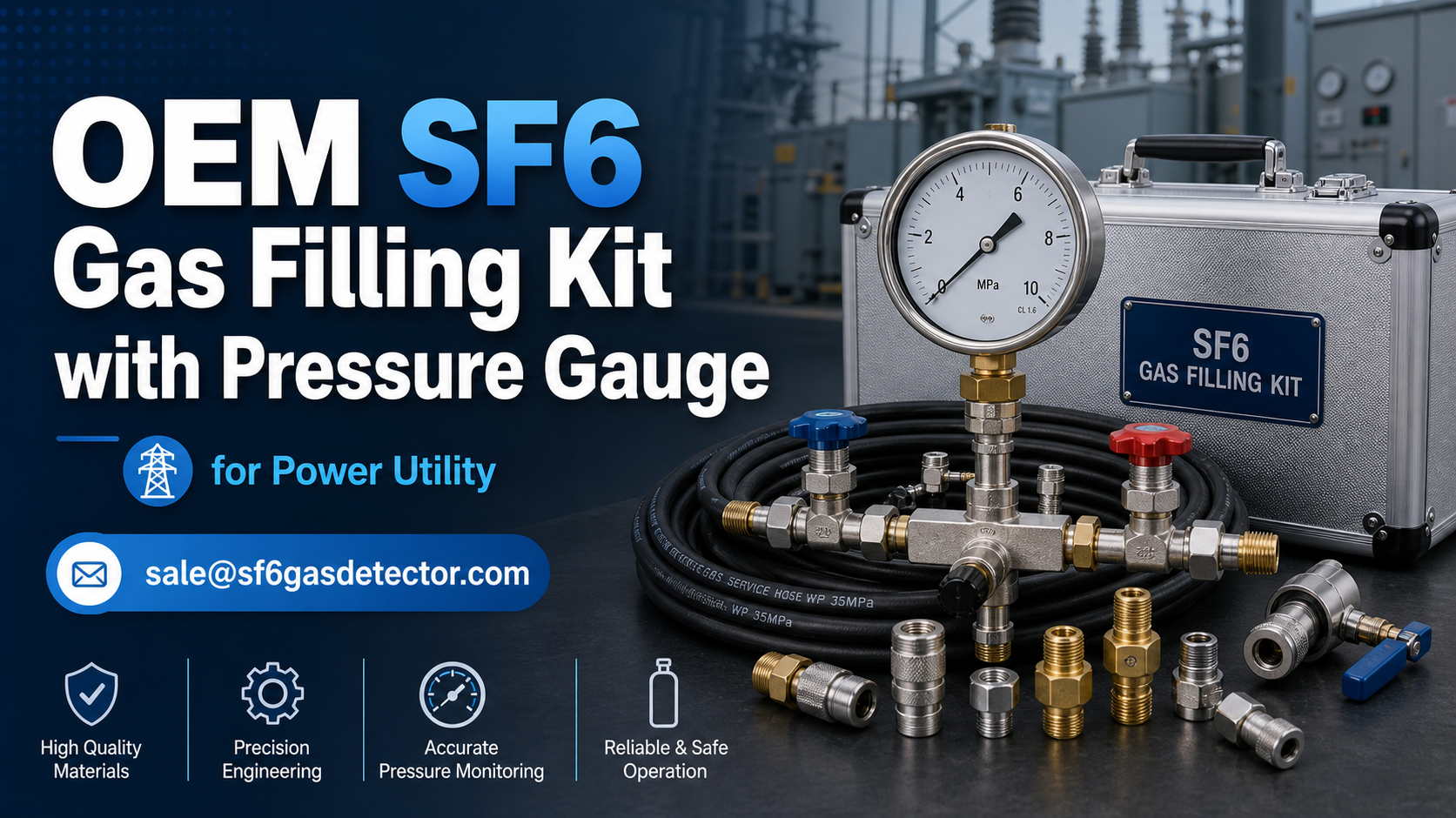
OEM SF6 Gas Filling Kit with Pressure Gauge for Power Utility: A Practical Guide for Safe Gas Handling
In high-voltage power transmission and distribution systems, sulfur hexafluoride (SF6) remains widely used as an insulating and arc-quenching gas in GIS, circuit breakers, switchgear, and other electrical equipment. For utilities, substations, and maintenance contractors, an OEM SF6 gas filling kit with pressure gauge for power utility applications provides a controlled, accurate, and safe method for filling, topping up, and monitoring SF6 gas pressure during equipment servicing. A well-designed SF6 gas filling kit helps reduce gas losses, improve operational reliability, and support compliance with environmental and industrial safety requirements.
Why Power Utilities Need a Professional SF6 Gas Filling Kit
Power utility equipment operates under strict performance and safety expectations. Incorrect SF6 filling pressure, contaminated gas, or uncontrolled gas handling can affect insulation performance and increase the risk of equipment faults. A professional SF6 gas filling kit is engineered to ensure stable gas transfer from cylinders or service carts to high-voltage equipment while allowing technicians to monitor pressure in real time.
For OEM projects, customized kits can be configured to match different equipment interfaces, pressure ranges, cylinder standards, hose lengths, and operating environments. This makes the kit suitable for both routine maintenance and specialized power utility operations.
Core Advantages of an OEM SF6 Gas Filling Kit with Pressure Gauge
Accurate Pressure Monitoring
The integrated pressure gauge is one of the most important components of an SF6 gas filling kit. It allows operators to observe inlet or outlet pressure during the filling process and helps prevent overfilling. Accurate pressure control is essential because SF6 density and pressure directly affect the dielectric strength of gas-insulated equipment.
High-quality kits typically use shock-resistant gauges with clear scale markings, corrosion-resistant wetted parts, and optional dual-scale display. For utility applications, gauge calibration should be traceable and suitable for industrial field use.
Safe and Leak-Resistant Gas Transfer
SF6 has a high global warming potential, so utilities must minimize emissions during filling and recovery operations. A reliable OEM SF6 gas filling kit with pressure gauge for power utility use is equipped with high-pressure hoses, tight-sealing valves, and compatible fittings to reduce the risk of gas leakage. Proper sealing design also protects technicians from unexpected gas discharge during connection and disconnection.
Compatibility with Power Equipment Interfaces
Different switchgear manufacturers may use different filling ports, couplings, and thread standards. OEM customization allows the SF6 gas filling kit to match specific GIS, circuit breaker, or RMU interfaces. This improves operating efficiency and reduces the need for temporary adapters, which can increase leakage risk if improperly selected.
Durable Construction for Field Conditions
Power utility maintenance is often performed in substations, outdoor switchyards, and industrial plants. Kits must withstand transportation, vibration, temperature variation, and repeated use. Stainless steel valves, reinforced hoses, protective gauge covers, and rugged carrying cases improve service life and field reliability.
Typical Parameter Table for SF6 Gas Filling Kit Selection
The following table outlines common technical parameters for an OEM SF6 gas filling kit. Actual specifications should be confirmed based on project requirements and equipment manuals.
| Parameter | Typical Specification | Selection Notes |
|---|---|---|
| Applicable Gas | SF6 gas | Use only with compatible dry and clean SF6 gas |
| Working Pressure Range | 0–1.0 MPa / 0–10 bar or customized | Match switchgear rated filling pressure |
| Pressure Gauge Accuracy | Class 1.6 or Class 1.0 | Higher accuracy recommended for critical equipment |
| Hose Length | 1.5 m, 3 m, 5 m, or customized | Choose based on field access distance |
| Hose Material | High-pressure reinforced rubber or stainless braided hose | Must be SF6-compatible and pressure-rated |
| Connection Type | DN8, DILO-type, CGA, W21.8, G-thread, NPT, or customized | Verify cylinder and equipment interfaces |
| Valve Material | Stainless steel or brass | Select according to corrosion and pressure requirements |
| Operating Temperature | -20°C to +60°C typical | Confirm local site conditions |
| Leakage Rate | Low-leak design, dependent on fittings | Leak testing is recommended before use |
| Optional Components | Regulator, quick coupling, safety valve, carrying case | Configure according to maintenance workflow |
Key Application Scenarios in Power Utility Operations
GIS Installation and Commissioning
During the installation of gas-insulated switchgear, SF6 must be filled to the specified pressure or density level after vacuuming and gas quality verification. An SF6 gas filling kit supports controlled filling and provides technicians with direct pressure feedback throughout the process. This helps ensure the equipment reaches the manufacturer’s required operating condition before energization.
Circuit Breaker Maintenance
High-voltage SF6 circuit breakers rely on proper gas pressure for insulation and arc interruption. During periodic maintenance, operators may need to top up SF6 gas after inspection or leakage repair. A compact OEM SF6 gas filling kit with pressure gauge for power utility maintenance makes field operation more convenient while supporting safe pressure control.
Substation Emergency Response
When low gas pressure alarms occur, utilities must respond quickly to prevent equipment failure or forced outages. A ready-to-use SF6 gas filling kit can help maintenance teams perform controlled gas replenishment after identifying and addressing leakage causes. It is important that emergency filling follows internal safety procedures and equipment manufacturer guidance.
Factory Testing and OEM Equipment Assembly
Switchgear manufacturers and electrical equipment OEMs frequently require customized SF6 filling solutions for production lines, testing stations, and quality inspection. OEM kits can be designed for repeated use, consistent connection standards, and integration with existing gas handling procedures.
Compliance and Operational Best Practices
SF6 gas handling should follow applicable international and regional environmental, health, and safety requirements. Utilities and service companies should be aware of regulations related to fluorinated greenhouse gases, emission reduction, gas recovery, record keeping, and technician training. In many regions, SF6 emissions are monitored or regulated due to their environmental impact.
Technicians should also follow recognized industrial safety practices, including:
- Confirming equipment pressure ratings before filling
- Using only clean, dry, and compliant SF6 gas
- Avoiding direct release of SF6 into the atmosphere where recovery is required
- Checking hoses, seals, and fittings before operation
- Wearing appropriate personal protective equipment
- Ensuring the work area is well ventilated
- Following lockout and electrical safety procedures in substations
- Recording gas quantity and pressure values according to utility procedures
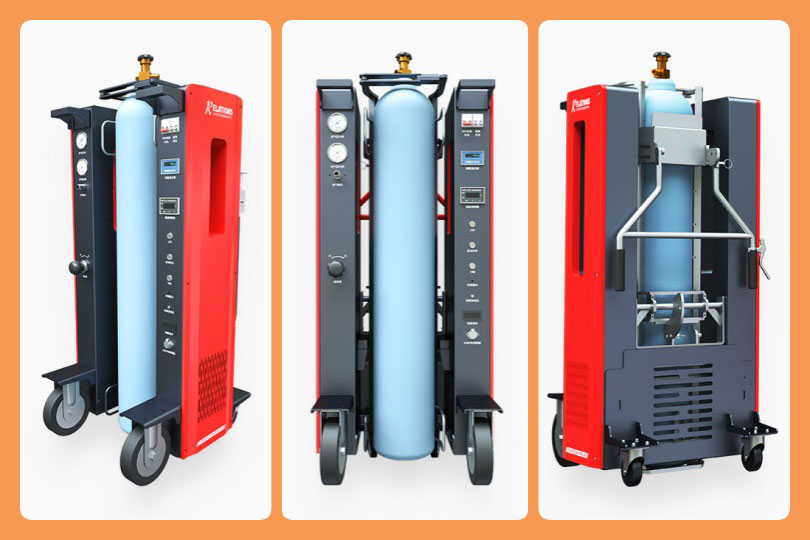
A filling kit should never be used as a substitute for a complete SF6 gas handling system when evacuation, purification, recovery, or recycling is required. For major maintenance tasks, utilities should use dedicated SF6 service carts or recovery systems in accordance with environmental standards.
Purchasing Guide: How to Choose the Right SF6 Gas Filling Kit
Verify Pressure Requirements
Before purchasing, confirm the rated filling pressure of the target equipment. The pressure gauge range should allow accurate reading within the normal working area rather than operating only at the extreme end of the scale. For example, if equipment filling pressure is around 0.5 MPa, a 0–1.0 MPa gauge may provide better readability than an oversized range.
Confirm Connection Standards
One of the most common purchasing mistakes is selecting a kit with incompatible fittings. Buyers should provide cylinder valve standards, switchgear filling port type, thread dimensions, and any preferred quick coupling brand or interface. OEM configuration reduces mismatch risk and improves field efficiency.
Evaluate Hose Quality and Length
Hoses must be pressure-rated, SF6-compatible, flexible, and durable. Excessively short hoses may make operation inconvenient, while overly long hoses can increase handling complexity. For power utility applications, 3 m or 5 m hoses are common, but site layout should determine the final choice.
Consider Gauge Accuracy and Protection
A pressure gauge used in substations should be easy to read and protected against vibration or accidental impact. For demanding maintenance work, consider a gauge with stainless steel case, oil-filled damping, or protective rubber cover. Calibration certificates may be required for quality-controlled utility operations.
Choose an Experienced OEM Supplier
An experienced OEM supplier can recommend the correct valve, hose, gauge, and adapter configuration based on actual application needs. This is especially important for utilities managing equipment from multiple switchgear brands or operating across different regions with varying gas cylinder standards.
Frequently Asked Questions
What is an SF6 gas filling kit used for?
An SF6 gas filling kit is used to transfer SF6 gas from a cylinder or gas handling device into electrical equipment such as GIS, circuit breakers, and switchgear. It usually includes hoses, valves, connectors, and a pressure gauge for controlled filling and monitoring.
Why is a pressure gauge important in an SF6 gas filling kit?
The pressure gauge allows technicians to monitor the gas filling process and avoid underfilling or overfilling. Correct pressure is essential for maintaining insulation performance and safe operation of SF6-insulated power equipment.
Can an OEM SF6 gas filling kit be customized?
Yes. An OEM SF6 gas filling kit with pressure gauge for power utility applications can be customized with different hose lengths, pressure ranges, connector types, valve materials, regulators, and carrying cases to meet specific site or equipment requirements.
Is SF6 gas filling environmentally regulated?
Yes. SF6 is a fluorinated greenhouse gas with significant environmental impact. Many countries and regions require proper handling, leakage prevention, recovery, and documentation. Utilities should follow local regulations and internal environmental management procedures.
Can the filling kit recover SF6 gas?
A standard filling kit is mainly designed for gas transfer and pressure monitoring. It does not normally recover, purify, or recycle SF6 gas. For recovery operations, a dedicated SF6 gas recovery unit or service cart should be used.
Conclusion
A reliable SF6 gas filling kit is an essential tool for safe, accurate, and efficient maintenance of SF6-insulated power equipment. For utilities and OEM equipment manufacturers, choosing an OEM SF6 gas filling kit with pressure gauge for power utility applications ensures better compatibility, improved pressure control, and stronger support for field safety and environmental responsibility.
For project-specific configuration, free technical consultation, customized on-site solutions, or one-on-one engineering guidance, industrial buyers and power utility teams can contact [email protected] for professional support tailored to their SF6 gas handling requirements.