Supplier Inquiry for On-Site SF6 Gas Moisture Measurement

Date
2026-07-14
[email protected]
Website
www.sf6gasdetector.com
Get Solutions And Quotes
Supplier Inquiry for On-Site SF6 Gas Moisture Measurement
High moisture content in sulfur hexafluoride (SF6) can reduce insulation reliability, accelerate by-product formation, and increase the risk of internal corrosion in gas-insulated electrical equipment. A supplier inquiry on-site SF6 gas moisture measurement service provides utilities, substations, industrial plants, and maintenance contractors with field-based dew-point testing, documented results, and practical recommendations without removing equipment from service unnecessarily. The service is especially valuable during commissioning, preventive maintenance, fault investigation, and SF6 gas recovery or refilling operations.
What Is On-Site SF6 Gas Moisture Measurement?
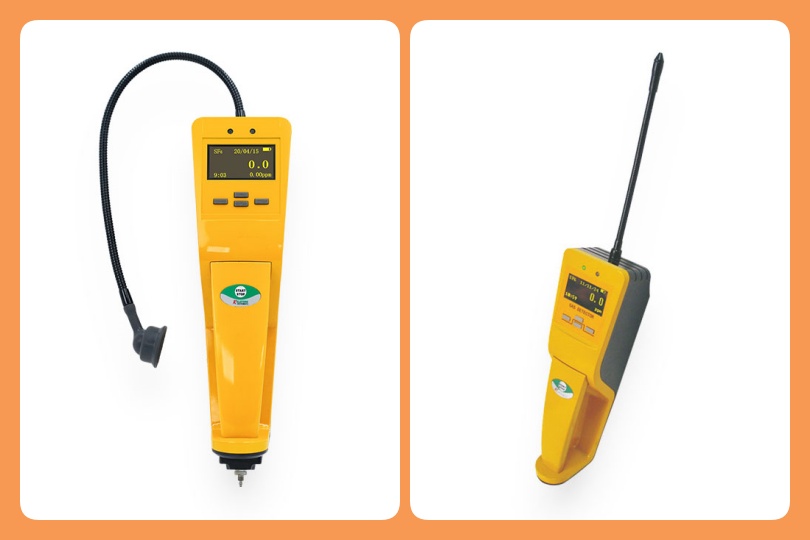
On-site SF6 moisture measurement determines the water-vapor concentration in SF6 gas contained in gas-insulated switchgear (GIS), circuit breakers, transformers, ring main units, and related high-voltage assets. A portable moisture analyzer samples gas through a controlled connection and reports values such as dew point, frost point, parts per million by volume (ppmv), or parts per million by weight (ppmw).
Because moisture readings depend on gas pressure, temperature, sampling flow, hose condition, and stabilization time, professional testing requires more than connecting an instrument and recording a number. Qualified technicians verify sampling conditions, minimize atmospheric contamination, and interpret results against the equipment manufacturer’s limits and applicable technical standards.
Core Advantages of an On-Site Measurement Service
Accurate Testing Under Actual Operating Conditions
Field measurement evaluates the gas in its installed environment. This helps identify moisture introduced by maintenance, imperfect evacuation, aging seals, contaminated handling equipment, or insufficiently dried replacement gas. Temperature and pressure are recorded because they influence dew-point interpretation.
Reduced SF6 Emissions and Gas Loss
A well-designed sampling process uses low flow rates and minimizes venting. Where suitable equipment is available, sampled gas may be recovered instead of released. This supports responsible SF6 management under applicable environmental rules, including local greenhouse-gas reporting, handling, and leak-prevention requirements.
Traceable Maintenance Decisions
A professional report provides measured values, test conditions, instrument identification, calibration status, sample-point information, and observations. This evidence supports maintenance planning, warranty discussions, commissioning records, and asset health assessments.
Faster Diagnosis and Lower Downtime
On-site SF6 testing eliminates sample transport delays and reduces the risk that a laboratory sample will be altered by leakage, condensation, or improper containers. Results can be reviewed immediately, allowing the asset owner to decide whether gas drying, filtration, recovery, replacement, or further analysis is needed.
For project-specific advice, request a free SF6 moisture testing consultation with details of the equipment type, location, gas pressure, and required reporting format.
Typical Service Parameters
| Parameter | Typical Service Requirement | Why It Matters |
|---|---|---|
| Measured quantity | Dew/frost point, ppmv, or ppmw | Enables comparison with OEM and project limits |
| Measurement technology | Chilled-mirror or suitable electronic moisture sensor | Determines response characteristics and field suitability |
| Sampling connection | Equipment-compatible, leak-tight fittings | Prevents air ingress and unnecessary gas loss |
| Sample flow | Controlled according to analyzer instructions | Supports stable and repeatable readings |
| Calibration | Valid, traceable calibration documentation | Improves confidence and auditability |
| Recorded conditions | Gas pressure, ambient temperature, equipment status | Provides context for result interpretation |
| Deliverables | Field readings and formal service report | Supports maintenance and compliance records |
Actual measurement range and accuracy depend on the selected analyzer. Acceptance limits must not be assumed from a universal value; they should be confirmed using the equipment manufacturer’s specifications, contractual requirements, and the relevant edition of standards such as IEC 60376 for new SF6, IEC 60480 for the evaluation and reuse of SF6, and IEC 62271-series requirements applicable to high-voltage switchgear.
Key Application Scenarios
GIS and Circuit Breaker Commissioning
Moisture measurement after evacuation and filling verifies that installation practices have not introduced excessive water vapor. Baseline data also makes future condition trending more meaningful.
Routine Preventive Maintenance
Periodic testing can reveal gradual moisture ingress before it affects dielectric performance or promotes corrosive decomposition products. Test frequency should follow the OEM maintenance program, asset criticality, service history, and regulatory obligations.
Post-Repair and Gas Handling Verification
Opening a gas compartment, replacing seals, or transferring SF6 creates opportunities for contamination. Testing after repairs, filtration, or gas reclamation confirms whether the compartment is ready for return to service.
Fault and Alarm Investigation
Unexpected density changes, leakage, internal faults, or abnormal gas-quality results may justify moisture analysis alongside SF6 purity and decomposition-product testing. Moisture data should be treated as one part of a broader diagnostic assessment.
How to Prepare a Supplier Inquiry
A detailed inquiry helps the supplier select the correct analyzer, fittings, personnel, and safety controls. Include the following information:
- Site location and preferred service date;
- Equipment manufacturer, model, voltage class, and number of compartments;
- Rated and current gas pressure;
- Valve type, thread, and available connection drawings or photographs;
- Required units, acceptance criteria, and governing standard;
- Whether purity or decomposition-product testing is also required;
- Site access, induction, permit-to-work, and outage requirements;
- Required calibration certificates and report language;
- Gas recovery or zero-emission sampling expectations.
For multi-compartment GIS or remote substations, obtain a customized on-site SF6 measurement solution based on connection types, test volume, travel constraints, and reporting needs.
Supplier Selection and Purchasing Guide
When evaluating a supplier inquiry on-site SF6 gas moisture measurement service, compare technical capability rather than price alone. The supplier should provide a clear method statement, suitable pressure-rated hoses and couplings, current instrument calibration, and technicians trained in electrical-site safety and SF6 handling.
Confirm that the scope identifies mobilization costs, number of test points, expected stabilization time, repeat-test policy, gas recovery arrangements, and report delivery schedule. Suppliers should also follow site lockout/tagout procedures, electrical safety boundaries, pressure-system precautions, and applicable environmental legislation. No sampling should begin until the equipment owner confirms that the designated valve can be operated safely.
For one-on-one assistance reviewing technical specifications or tender documents, contact an SF6 measurement engineer for guidance.
Frequently Asked Questions
How long does each SF6 moisture test take?
Testing time varies with hose length, sensor technology, moisture level, temperature, and stabilization requirements. The supplier should define the expected time per compartment after reviewing the application.
Can dew-point readings be compared directly?
Only when the reference conditions and units are understood. Pressure dew point and atmospheric-pressure dew point are not interchangeable without appropriate conversion. Reports should clearly state the measurement basis.
Does moisture testing release SF6?
Sampling may consume a small gas volume, but emissions can be minimized through low-flow procedures and gas recovery systems. The inquiry should explicitly request emission-control measures.
What happens if moisture exceeds the specified limit?
The result should first be verified by checking stabilization, fittings, and instrument condition. Confirmed high moisture may require gas recovery, drying, filtration, evacuation, refilling, leak investigation, or additional gas-quality testing according to OEM instructions.
Is calibration documentation necessary?
Yes. A valid, traceable calibration certificate helps demonstrate measurement reliability and is often required for commissioning, audits, and regulated maintenance records.
Conclusion
A professionally managed on-site SF6 gas moisture measurement service delivers reliable field data while reducing sampling risk, downtime, and avoidable emissions. A complete supplier inquiry should define the assets, connection interfaces, measurement units, acceptance criteria, safety requirements, and reporting expectations. Selecting a technically competent provider with calibrated equipment and disciplined SF6 handling practices supports safer operation, defensible maintenance decisions, and long-term reliability of gas-insulated electrical assets.