Factory-Direct SF6 Gas Treatment Unit for High-Voltage Breakers | Get a Quote
Date
2026-11-16
[email protected]
Website
www.sf6gasdetector.com
Get Solutions And Quotes
Contact Factory
Factory-Direct SF6 Gas Treatment Unit for High-Voltage Breakers | Get a Quote
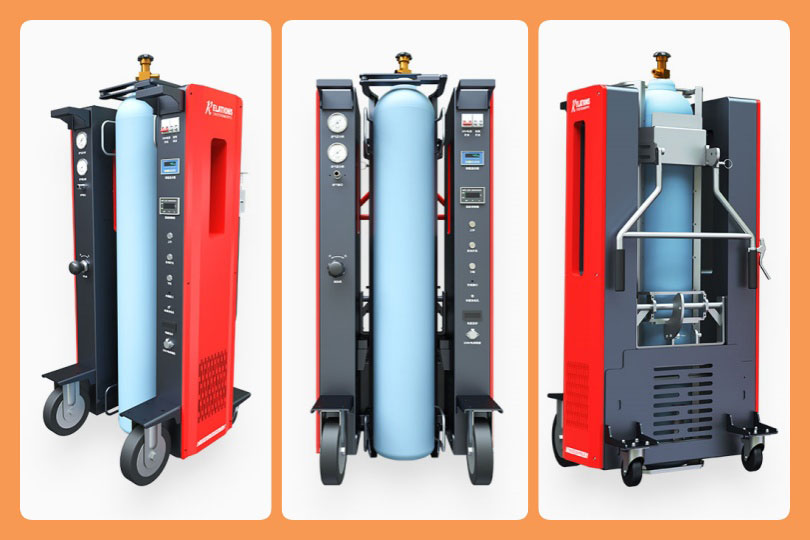
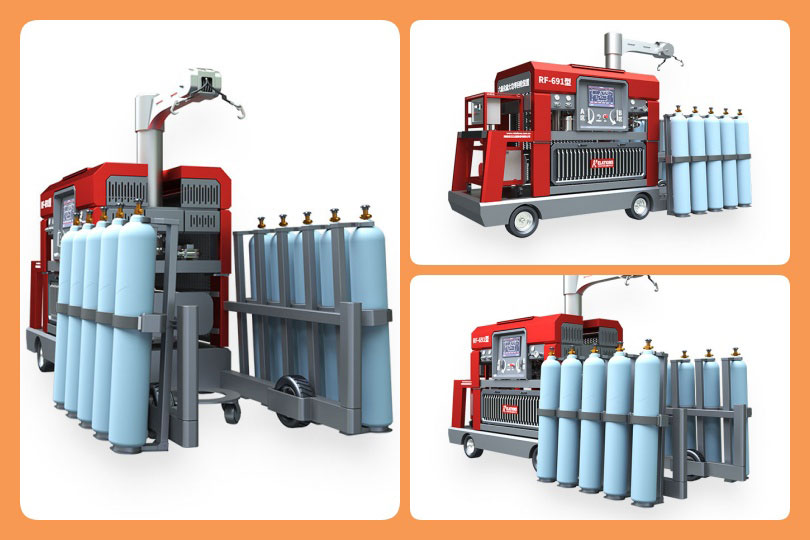
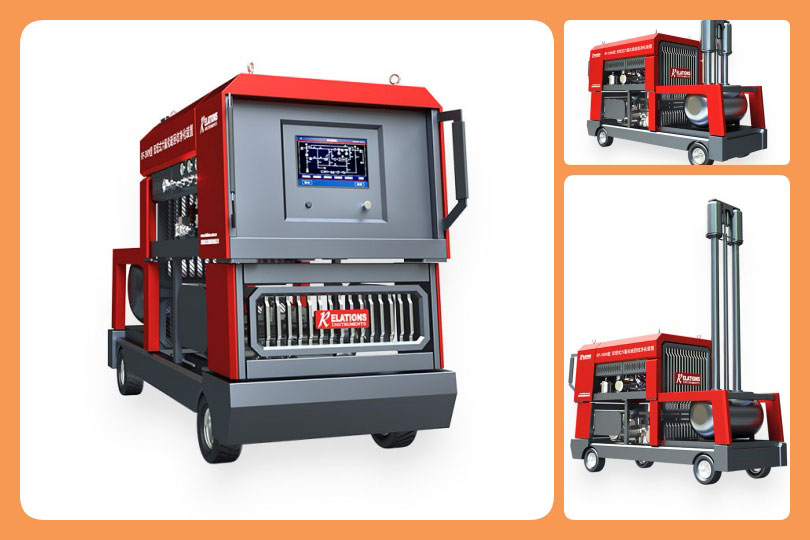
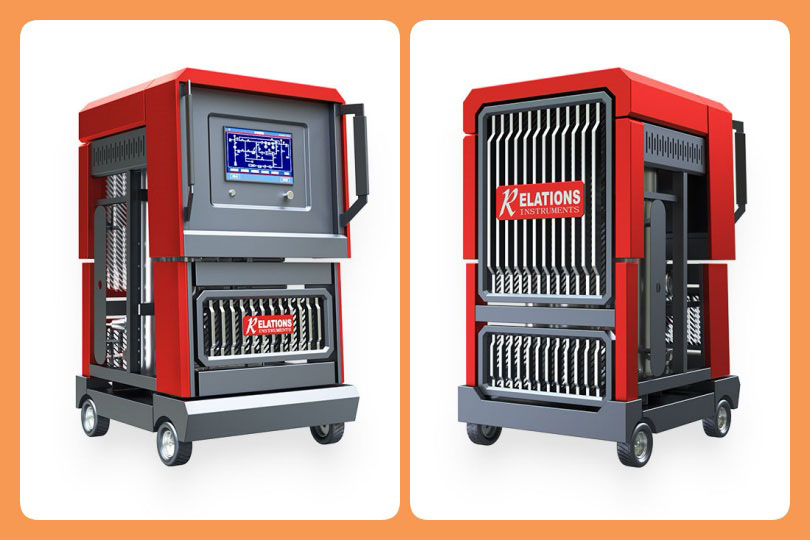
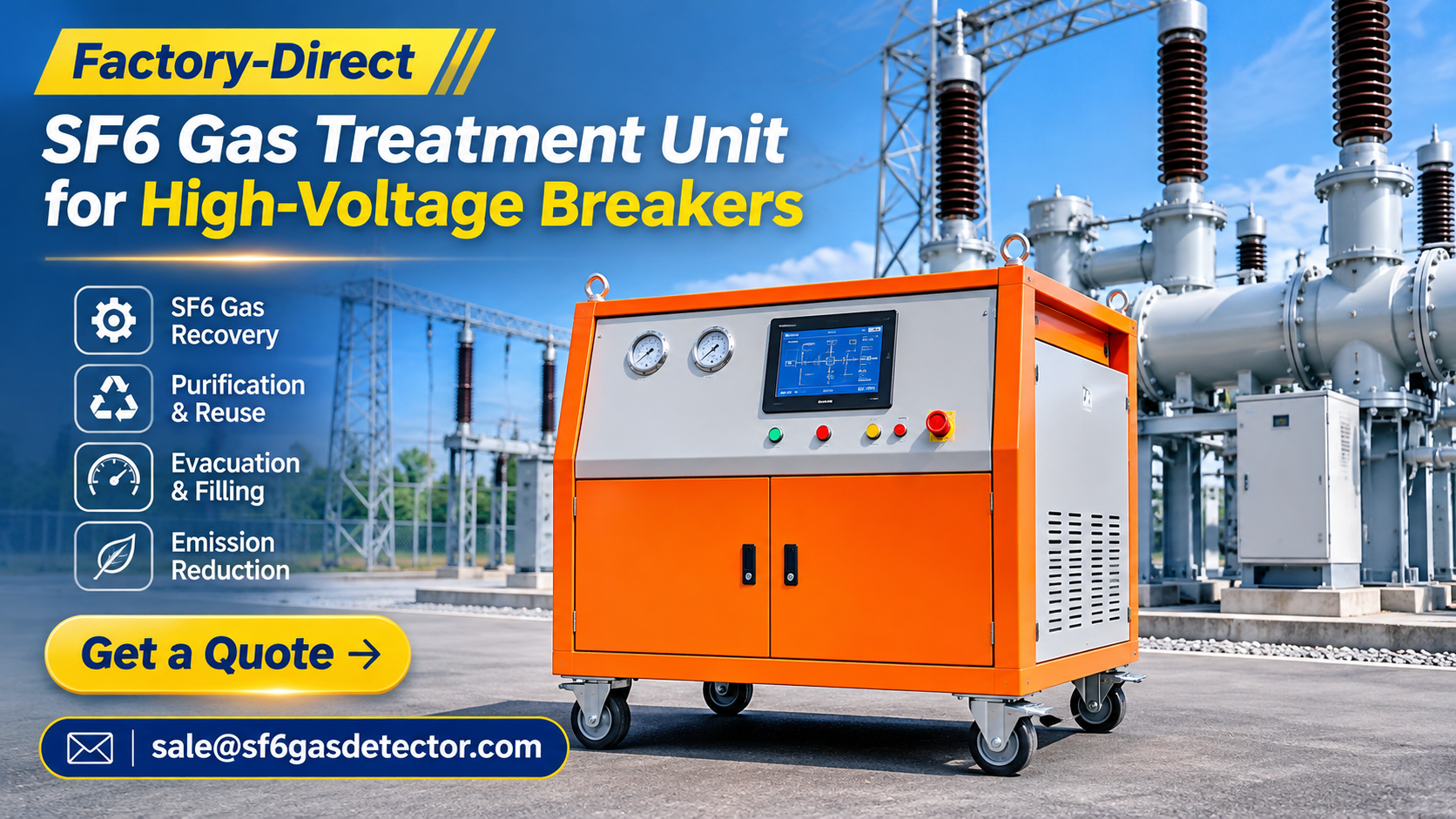
A factory direct SF6 gas treatment unit for high-voltage breakers enables maintenance teams to recover, filter, store, and refill sulfur hexafluoride during circuit breaker servicing. Purchasing directly from the manufacturer can simplify technical coordination, but reliable performance depends on verified specifications, compatible connections, effective contamination control, and documented compliance. Buyers should evaluate the complete gas-handling workflow—not simply compressor capacity or purchase price—to protect personnel, preserve insulation performance, and minimize greenhouse gas emissions.
What an SF6 Gas Treatment Unit Does
SF6 provides electrical insulation and arc-quenching performance in many installed high-voltage circuit breakers. During maintenance, the gas must be managed through controlled, closed-loop procedures rather than deliberately released.
A properly configured SF6 gas treatment unit typically supports:
- Recovery from breaker compartments into suitable storage vessels.
- Filtration to reduce moisture, particles, and selected decomposition products.
- Evacuation of an emptied compartment before refilling.
- Controlled refilling to the equipment manufacturer’s specified condition.
- Measurement of operating pressures and relevant process temperatures.
Filtration does not automatically make recovered gas suitable for reuse. Gas analysis must confirm that the treated gas meets applicable acceptance criteria. Standard filter cartridges generally cannot correct substantial air contamination; additional separation or external reclamation may be necessary.
Technical Parameters That Determine Suitability
Recovery Performance and Final Pressure
Request recovery capacity with clearly stated test conditions, including inlet pressure, discharge pressure, ambient temperature, and gas condition. A headline flow rate alone does not predict maintenance duration because recovery slows as compartment pressure falls.
Specify the required final recovery pressure as an absolute pressure. Distinguish this from the vacuum achieved by the separate evacuation pump. A low air-evacuation pressure does not demonstrate equivalent SF6 recovery capability.
For outage planning, ask the manufacturer to estimate cycle time using the breaker’s gas inventory, compartment volume, initial pressure, and hose arrangement.
Storage, Filtration, and Instrumentation
Storage capacity must accommodate the planned recovery quantity without exceeding approved vessel filling limits. Confirm whether storage is gaseous or liquid, how filling mass is monitored, and what temperature limits apply.
| Parameter | Procurement requirement |
|---|---|
| Gas compatibility | Confirm suitability for SF6 and anticipated contamination |
| Recovery endpoint | State guaranteed absolute pressure and test conditions |
| Storage capacity | Specify usable gas mass and vessel limitations |
| Filtration | Identify media, replacement criteria, and contaminant limitations |
| Connections | Match breaker valves, hoses, seals, and coupling types |
| Instrumentation | Require suitable accuracy ranges and calibration records |
| Power supply | Confirm voltage, frequency, phase, and site protection requirements |
| Safety controls | Define relief devices, alarms, interlocks, and emergency stopping |
Low-loss, self-sealing couplings help reduce emissions during disconnection. Hose length and internal diameter also affect transfer performance and should be included in the equipment specification.
Standards, Certifications, and Regulatory Checks
A credible factory-direct supplier should provide a standards applicability statement rather than an unsupported claim of “international certification.”
Relevant references include:
- IEC 62271-4: Handling procedures for gases used in high-voltage switchgear insulation and switching applications.
- IEC 60376: Specifications for technical-grade SF6 and complementary gases used in electrical equipment.
- IEC 60480: Specifications for the reuse of SF6 and its mixtures in electrical equipment.
- IEC 62271-100: Requirements for alternating-current circuit breakers; relevant to the serviced equipment, not a standalone certification for the treatment cart.
The SF6 gas treatment unit’s electrical, pressure-system, and transport obligations depend on its design and destination. For EU supply, assess applicable machinery, electromagnetic compatibility, and pressure-equipment legislation. CE marking, where required, must be supported by the appropriate conformity assessment and declaration; it is not a general third-party quality certificate.
EU Regulation (EU) 2024/573 establishes fluorinated greenhouse gas obligations, including requirements affecting electrical switchgear and personnel. Restrictions and exceptions vary by equipment category and timing. Elsewhere, confirm national emissions, occupational safety, pressure-vessel, and gas-transport requirements.
An ISO 9001 certificate supports evaluation of the manufacturer’s quality management system, but it does not prove individual machine performance.
Matching the System to Maintenance Scenarios
Routine Substation Breaker Maintenance
For scheduled servicing, prioritize portability, compatible adapters, reliable evacuation, and controlled refill capability. Select storage capacity around the largest planned recovery operation, with an appropriate operational margin.
Refill according to the breaker manufacturer’s instructions, accounting for temperature-dependent pressure or specified gas density. Pressure alone, without temperature context, can produce an incorrect assessment of filling condition.
High-Volume Workshop Operations
Repair workshops benefit from higher recovery throughput, larger storage arrangements, and accessible filters. Automated sequencing can improve consistency, but operators still need clear procedures for abnormal pressure, interrupted power, and contaminated gas.
Evaluate throughput across the full maintenance cycle, including analysis, hose connection, evacuation, and documentation—not just gas transfer.
Suspected Internal Arcing or Contamination
Gas from faulted equipment may contain hazardous decomposition products. Segregate suspect gas, assess contamination, and follow equipment-specific procedures before treatment.
Provide ventilation, suitable personal protective equipment, and controlled handling of contaminated filters and residues. SF6 can displace oxygen in confined or poorly ventilated areas; atmospheric assessment and confined-space controls may therefore be necessary.
Verifying a Factory-Direct Supplier
Before ordering, request a factory acceptance test covering recovery performance, vacuum performance, leak tightness, alarms, and protective functions. Define test instruments, acceptance limits, and reporting requirements in the purchase agreement.
Also verify spare-parts availability, filter supply, operator training, calibration support, and service response arrangements. Traceable serial numbers, pressure-vessel documentation, wiring diagrams, and operating manuals make long-term ownership more manageable.
Frequently Asked Questions
Can recovered SF6 be reused immediately?
Only after its quality has been assessed against applicable reuse specifications and equipment requirements. Treatment effectiveness must be verified, not assumed.
Is the highest-capacity unit always preferable?
No. Excess capacity can increase cost, size, and power demand. Match performance to gas inventory, outage duration, storage needs, and site access.
Does factory-direct purchasing guarantee compliance?
No. Compliance depends on documented design, destination-specific legal requirements, and verified operating performance, regardless of the sales channel.
A Practical Procurement Standard
Select a factory direct SF6 gas treatment unit for high-voltage breakers through a documented comparison of recovery capability, gas-quality control, safety provisions, and lifecycle support. Verified performance and disciplined handling procedures provide a stronger foundation for dependable maintenance than price or broad certification claims alone.