Insulating Gas Leak Detector for GIS Maintenance at Renewable Power Stations
Date
2026-09-14
[email protected]
Website
www.sf6gasdetector.com
Get Solutions And Quotes
Contact Factory
Insulating Gas Leak Detector for GIS Maintenance at Renewable Power Stations
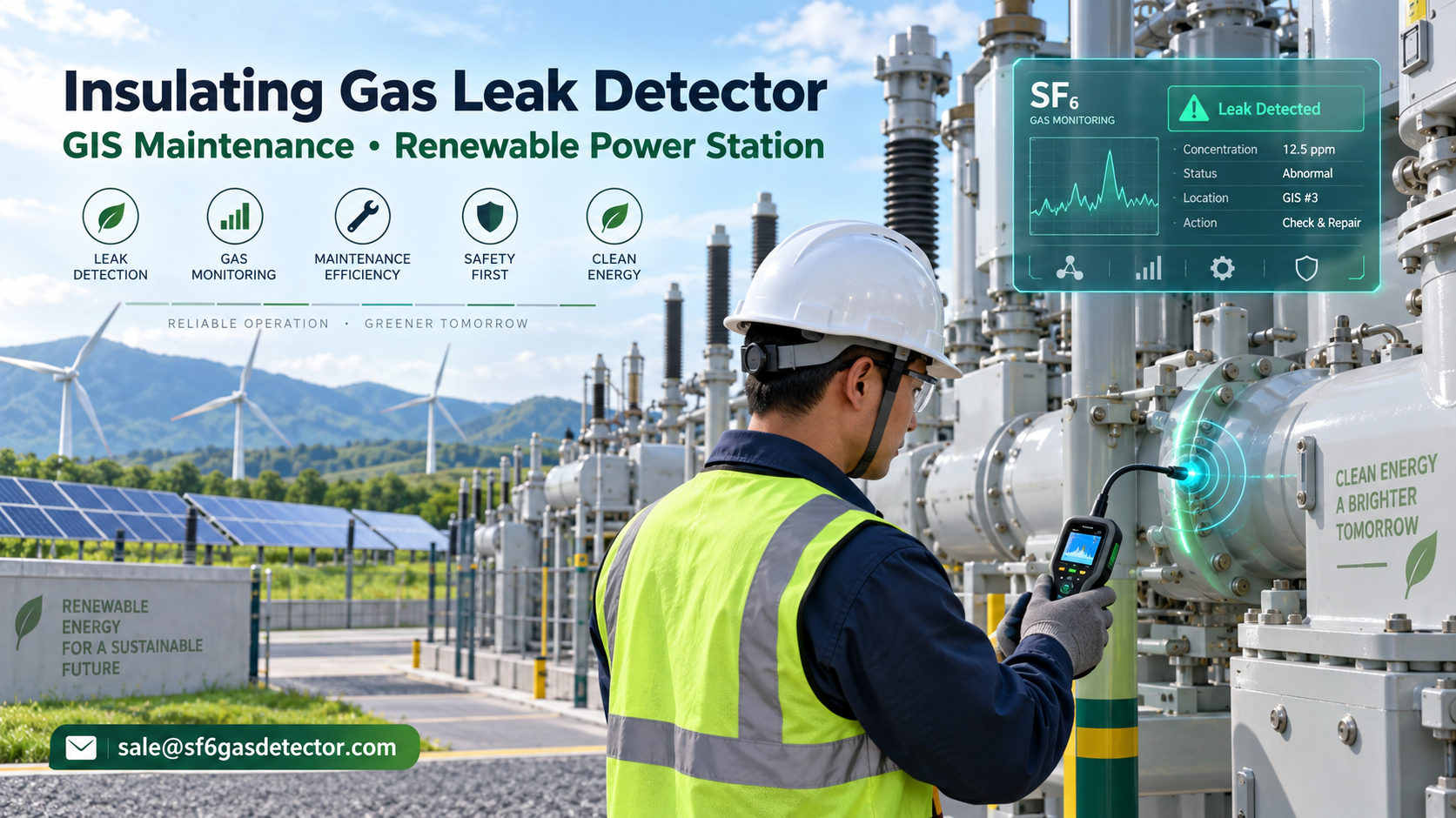
An Insulating Gas Leak Detector renewable energy power station program is essential for protecting the reliability, environmental performance, and safety of modern renewable grid infrastructure. Wind farms, solar plants, battery energy storage systems, and hybrid substations increasingly depend on gas-insulated switchgear (GIS) where compact footprint, high voltage capability, and resistance to harsh outdoor conditions are required. However, any loss of insulating gas can reduce dielectric performance, increase operating costs, and create compliance concerns. A properly selected leak detection system gives operators the evidence needed to plan maintenance before a small leak becomes an outage risk.
Why Leak Detection Matters in Renewable Power Infrastructure
Renewable energy sites often operate remotely, experience variable loading, and must meet demanding grid-availability targets. GIS equipment may be installed in offshore wind substations, solar collector substations, mountain locations, or containerized energy facilities where manual inspection opportunities are limited. In these conditions, an Insulating Gas Leak Detector renewable energy power station solution supports early fault identification without waiting for pressure alarms or visible equipment deterioration.
For SF₆-insulated equipment, gas leakage is especially important because SF₆ has a high global warming potential. Even minor leaks must be managed responsibly under applicable environmental requirements and site-specific reporting procedures. For equipment using alternative insulating gases, including fluoronitrile-based mixtures or dry-air systems, accurate detection remains necessary to protect insulation coordination and verify enclosure integrity.
A leak detector should complement—not replace—density monitoring, pressure supervision, moisture analysis, and routine GIS maintenance inspections.
Key Risks Associated With Insulating Gas Leakage
Gas leakage may develop gradually from aging seals, flange interfaces, valve assemblies, pressure-relief devices, cable terminations, or mechanical damage. At a renewable power station, the consequences can include:
- Reduced insulation margin within GIS compartments
- Automatic alarms, lockout conditions, or reduced operating availability
- Increased gas replenishment and maintenance costs
- Environmental reporting obligations for SF₆-containing equipment
- Delayed fault localization during urgent service events
- Exposure of personnel to gas-handling risks in confined or poorly ventilated areas
An Insulating Gas Leak Detector renewable energy power station application enables maintenance teams to locate the source of leakage precisely, rather than relying only on compartment pressure trends. This supports corrective work at the appropriate component and reduces unnecessary disassembly.
Selecting the Right Detector Technology
Sensitivity and Measurement Range
The required sensitivity depends on the site’s maintenance objective. For routine GIS maintenance, portable leak detectors should be capable of identifying small leaks around fittings, flanges, gas compartments, and connection points. Sensitivity must be sufficient for the manufacturer’s specified leakage-rate criteria and the plant’s maintenance strategy.
Operators should verify the detector’s stated minimum detectable leak rate, response time, recovery time, warm-up requirements, and calibration interval. Published performance should be assessed under realistic field conditions, including wind, humidity, temperature variation, and limited access around GIS enclosures.
Gas Compatibility
An Insulating Gas Leak Detector renewable energy power station must be compatible with the actual insulating medium in use. SF₆-specific instruments are widely used for conventional GIS, but gas-insulated equipment may contain mixed gases or alternative media. Before procurement, confirm whether the instrument detects the target gas directly, responds to a tracer gas, or requires a different sensing method.
Using an unsuitable detector can create false negatives, cross-sensitivity concerns, or misleading readings. The equipment supplier should provide clear information on supported gases, interference limits, and recommended calibration gases.
Portability and Field Usability
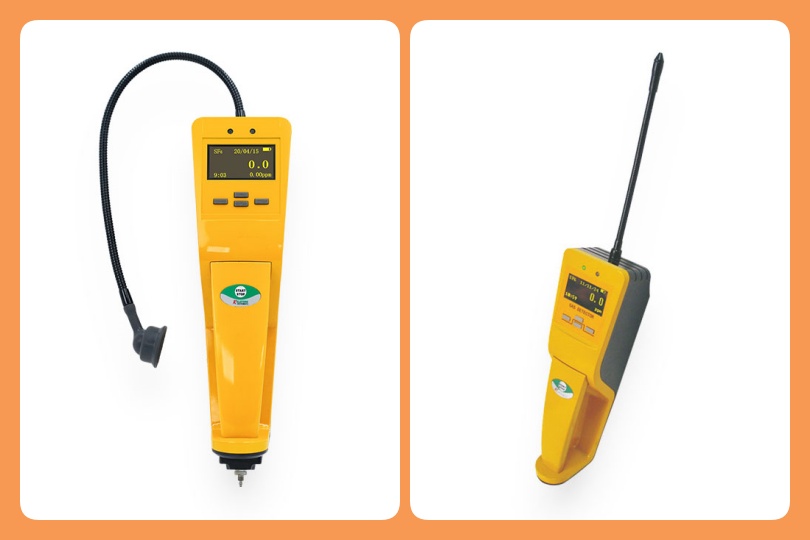
Renewable power stations require durable instruments that can be transported safely across turbine towers, solar arrays, substation yards, and offshore platforms. Practical features include a lightweight handheld design, flexible probe, adjustable sensitivity, audible and visual alarms, rechargeable battery capacity, data logging, and clear display readability in bright outdoor conditions.
For high-voltage equipment, the detector must be used only within approved approach boundaries and under the station’s electrical safety rules. Personnel should never compromise safe access requirements to reach a suspected leak point.
Compliance Standards and Professional Maintenance Practice
GIS owners should base their inspection procedures on relevant international standards, equipment manufacturer instructions, and local regulatory obligations. IEC 62271-203 provides requirements for gas-insulated metal-enclosed switchgear for rated voltages above 1 kV. IEC 62271-4 addresses handling procedures for insulating gases, while IEC 60376 and IEC 60480 provide important guidance relating to SF₆ quality, reuse, and handling.
An Insulating Gas Leak Detector renewable energy power station should be integrated into a documented maintenance plan that includes instrument calibration, inspection records, corrective-action tracking, and gas inventory control. Where required by the jurisdiction or work environment, procurement teams should also assess CE, UKCA, ATEX, or IECEx requirements. ATEX and IECEx certification is relevant only when the detector is intended for use in a classified explosive atmosphere.
Recommended GIS Maintenance Workflow
A structured GIS maintenance workflow helps teams obtain consistent results:
- Review gas density alarms, pressure records, and previous leak reports.
- Confirm the insulating gas type and applicable safe-work procedures.
- Perform a visual inspection of flanges, valves, gauges, and accessible seals.
- Scan suspected areas systematically using the leak detector probe.
- Record readings, weather conditions, equipment identification, and exact leak location.
- Prioritize repair according to leak severity, equipment criticality, and manufacturer limits.
- Conduct post-repair verification and update the gas-management record.
For asset managers seeking to standardize inspections across multiple sites, quickly obtain product quotations for suitable portable detection equipment and accessories.
Scenario-Based Solutions for Renewable Facilities
Offshore Wind Substations
Offshore environments expose GIS seals and external fittings to salt spray, vibration, and difficult access conditions. An Insulating Gas Leak Detector renewable energy power station solution for offshore use should prioritize low-level sensitivity, rugged construction, dependable battery operation, and simple one-handed handling. Maintenance teams can use planned inspection windows to scan gas compartments before minor leakage affects availability.
Utility-Scale Solar Plants
At large solar stations, compact GIS is frequently installed in collector substations and grid interconnection facilities. Because maintenance staff may cover widely dispersed assets, portable detectors with rapid response and repeatable measurement procedures help reduce inspection time. Integrating results into a computerized maintenance management system improves trend analysis across the portfolio.
Battery Storage and Hybrid Plants
Battery energy storage sites may combine MV switchgear, transformers, and grid-support equipment in compact layouts. Here, an Insulating Gas Leak Detector renewable energy power station program should be coordinated with ventilation controls, electrical isolation procedures, and battery-site emergency planning. Clear separation of gas-leak inspections from battery fire-gas monitoring prevents unsuitable instruments from being used for the wrong hazard.
Improving Reliability Through Planned Detection
Routine gas leakage inspection is a practical investment in renewable asset availability. The right Insulating Gas Leak Detector renewable energy power station approach identifies leaks early, supports responsible gas management, and allows GIS maintenance teams to schedule repairs under controlled conditions. It also provides traceable evidence for internal audits, environmental programs, and asset-performance reviews.
For complex gas mixtures, fleet-wide maintenance planning, or detector selection questions, request one-on-one guidance from engineers before finalizing technical specifications.
Frequently Asked Questions
How often should GIS leak inspections be performed?
Inspection frequency should follow the GIS manufacturer’s recommendations, site risk assessment, gas-density trends, and regulatory requirements. Critical renewable substations commonly combine routine scheduled surveys with additional checks after alarms, severe weather, equipment modifications, or abnormal gas consumption.
Can an insulating gas leak detector replace density monitoring?
No. An Insulating Gas Leak Detector renewable energy power station is used to locate external leakage, while density monitors supervise gas condition within a compartment. Both functions are important for a complete GIS maintenance strategy.
Are SF₆ detectors suitable for alternative insulating gases?
Not automatically. Detection capability depends on the sensor technology and the gas composition. Always verify compatibility, sensitivity, calibration requirements, and possible cross-interference with the detector manufacturer before field use.
What records should be retained after a leak survey?
Maintain the equipment ID, date, technician, detector model, calibration status, inspected locations, readings, environmental conditions, corrective action, and post-repair verification result. These records strengthen maintenance traceability and support long-term reliability analysis.