SF6 Gas Density Meter for Power Distribution Switchgear | Supplier Inquiry
Date
2026-09-11
[email protected]
Website
www.sf6gasdetector.com
Get Solutions And Quotes
Contact Factory
SF6 Gas Density Meter for Power Distribution Switchgear | Supplier Inquiry
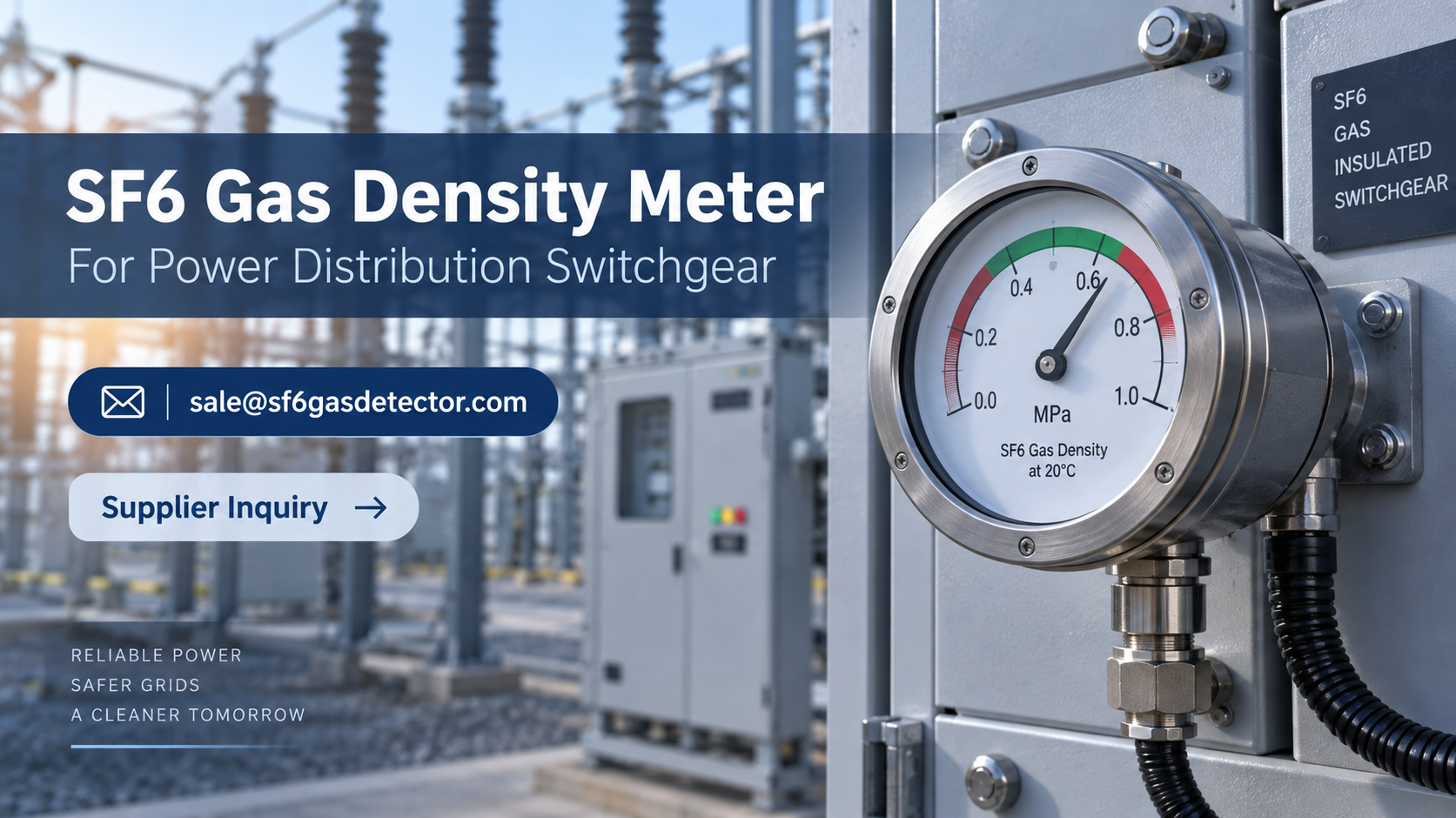
An sf6 gas density meter for power distribution switchgear is a critical monitoring device used to maintain the dielectric performance, switching reliability, and safety of gas-insulated electrical equipment. In medium- and high-voltage switchgear, sulfur hexafluoride (SF6) provides insulation and arc-quenching performance, but gas pressure and density must remain within specified operating limits. A reliable density meter enables maintenance teams to identify gas loss early, prevent insulation failure, and support regulatory compliance.
Why SF6 Density Monitoring Matters in Switchgear
SF6 gas pressure changes naturally with ambient temperature. For this reason, pressure alone is not a dependable indicator of the actual gas filling condition. An sf6 gas density meter for power distribution switchgear compensates for temperature variation and displays or transmits gas density referenced to a standard temperature, commonly 20°C.
When density falls below the manufacturer’s minimum operating threshold, the insulation capability of the switchgear may be reduced. This can increase the risk of partial discharge, flashover, failed interruption, or equipment lockout. Installing an sf6 gas density meter for power distribution switchgear helps operators act before a minor leak becomes an unplanned outage.
Key Operating Parameters to Evaluate
Selecting the correct sf6 gas density meter for power distribution switchgear requires more than matching the connection thread. Procurement teams should confirm the equipment’s electrical, mechanical, environmental, and calibration requirements.
Density and Pressure Range
The meter range should match the nominal SF6 density specified for the switchgear compartment. Typical applications may require operating ranges covering approximately 0.3 MPa to 0.8 MPa at 20°C, although the correct range always depends on the original equipment manufacturer’s documentation.
Important parameters include:
- Rated density or pressure range
- Alarm and lockout setpoints
- Temperature compensation reference point
- Measurement accuracy and repeatability
- Maximum allowable working pressure
- Overpressure safety rating
An sf6 gas density meter for power distribution switchgear should be configured with alarm values that align with the switchgear manufacturer’s filling and minimum functional density requirements.
Contact Configuration and Signal Output
For conventional switchgear, mechanical density monitors often use microswitch contacts for low-density alarm and lockout circuits. Common configurations include one alarm contact, one lockout contact, or multiple independent switching stages.
For digital substations and remote asset-management systems, an sf6 gas density meter for power distribution switchgear may provide 4–20 mA, RS-485/Modbus, or other communication interfaces. These outputs allow SCADA systems to trend density changes, prioritize maintenance, and reduce manual inspection frequency.
Standards, Testing, and Compliance Considerations
A professionally specified sf6 gas density meter for power distribution switchgear should be assessed against the operating environment and applicable switchgear standards. IEC 62271-1 establishes common specifications for high-voltage switchgear and controlgear, while IEC 62271-200 applies to AC metal-enclosed switchgear and controlgear for rated voltages above 1 kV and up to 52 kV.
Depending on the installation, buyers should also review:
- IEC 60529 for enclosure ingress protection, such as IP65 or IP67
- IEC 60068 series for environmental testing, including temperature, vibration, and humidity resistance
- IEC 61010-1 where applicable to measurement and control equipment safety
- ISO 9001 quality management controls for manufacturing consistency
- ISO/IEC 17025 traceable calibration practices for test instruments and reference standards
For installations in the European Union, SF6 handling and emissions management should also be considered within the framework of Regulation (EU) 2024/573 on fluorinated greenhouse gases. An accurate sf6 gas density meter for power distribution switchgear supports leak detection and responsible gas management, although it does not replace proper recovery, handling, and recordkeeping procedures.
Application Scenarios and Practical Solutions
Medium-Voltage Ring Main Units
In compact ring main units, available space is limited and service access may be restricted. A compact sf6 gas density meter for power distribution switchgear with a robust stainless-steel housing, vibration resistance, and clear local indication is suitable for these installations. For unattended distribution networks, alarm contacts can be wired to a remote terminal unit for immediate fault notification.
High-Voltage Gas-Insulated Switchgear
High-voltage GIS systems often contain multiple gas compartments with different nominal filling densities. Each compartment requires an sf6 gas density meter for power distribution switchgear matched to its specific gas pressure, connection arrangement, and operational alarm strategy. Digital monitoring is especially valuable where utilities need centralized condition data across multiple substations.
Coastal, Industrial, and Outdoor Substations
Outdoor installations may face salt spray, condensation, UV exposure, vibration, and rapid temperature changes. In these cases, the sf6 gas density meter for power distribution switchgear should have appropriate ingress protection, corrosion-resistant wetted parts, stable temperature compensation, and a suitable operating temperature range. Stainless-steel cases and sealed electrical connectors can improve long-term reliability.
Installation and Maintenance Best Practices
Before installing an sf6 gas density meter for power distribution switchgear, technicians should verify that the compartment is isolated according to approved safety procedures and that the connection interface is compatible. The device should be mounted without applying excessive torque to the case or electrical connector.
Periodic maintenance should include visual inspection for corrosion or physical damage, verification of contact operation, review of trend data, and calibration checks based on the site maintenance plan. If a density decline is observed, teams should investigate the cause rather than simply topping up gas. Leak location, repair, evacuation, recovery, and refilling should be completed by trained personnel using suitable SF6 handling equipment.
For project-specific ranges, contacts, and communication requirements, request a quick product quotation with the switchgear model, nominal density, connection type, and required quantity.
How to Conduct a Supplier Inquiry
A complete Supplier inquiry improves technical evaluation and reduces procurement delays. When sourcing an sf6 gas density meter for power distribution switchgear, provide the following information:
- Switchgear type, voltage class, and manufacturer
- Nominal SF6 density or pressure at the defined reference temperature
- Required alarm and lockout setpoints
- Process connection size, thread standard, and mounting orientation
- Number of electrical contacts or preferred output signal
- Required enclosure protection and ambient conditions
- Applicable project standards, inspection documents, and certification needs
A well-prepared Supplier inquiry also helps confirm whether the meter needs a local dial, remote transmission, temperature compensation, or customized contact settings. For complex retrofit work, one-on-one guidance from engineers can help verify compatibility before ordering.
Frequently Asked Questions
Is an SF6 density meter the same as an ordinary pressure gauge?
No. An sf6 gas density meter for power distribution switchgear compensates for temperature effects and indicates gas density at a defined reference temperature. An ordinary pressure gauge does not provide the same dependable indication of the SF6 filling condition.
How often should an SF6 density meter be calibrated?
Calibration intervals depend on utility procedures, criticality, environmental conditions, and manufacturer recommendations. Many operators include verification during scheduled switchgear maintenance, especially where the meter provides protection-related alarm or lockout signals.
Can one meter be used for every SF6 switchgear compartment?
No. Each sf6 gas density meter for power distribution switchgear must match the compartment’s nominal density, connection type, setpoints, and environmental conditions. Using an incorrectly ranged device can result in inaccurate alarms or inadequate protection.
What should be included in a Supplier inquiry?
A detailed Supplier inquiry should include electrical ratings, density range, contact configuration, connection details, installation environment, quantity, and compliance documentation requirements. This information enables suppliers to recommend a technically suitable and traceable solution.