Detect SF6 Tracer Gas in Condenser Extraction Systems
Date
2026-07-13
[email protected]
Website
www.sf6gasdetector.com
Get Solutions And Quotes
Contact Factory
Detect SF6 Tracer Gas in Condenser Extraction Systems
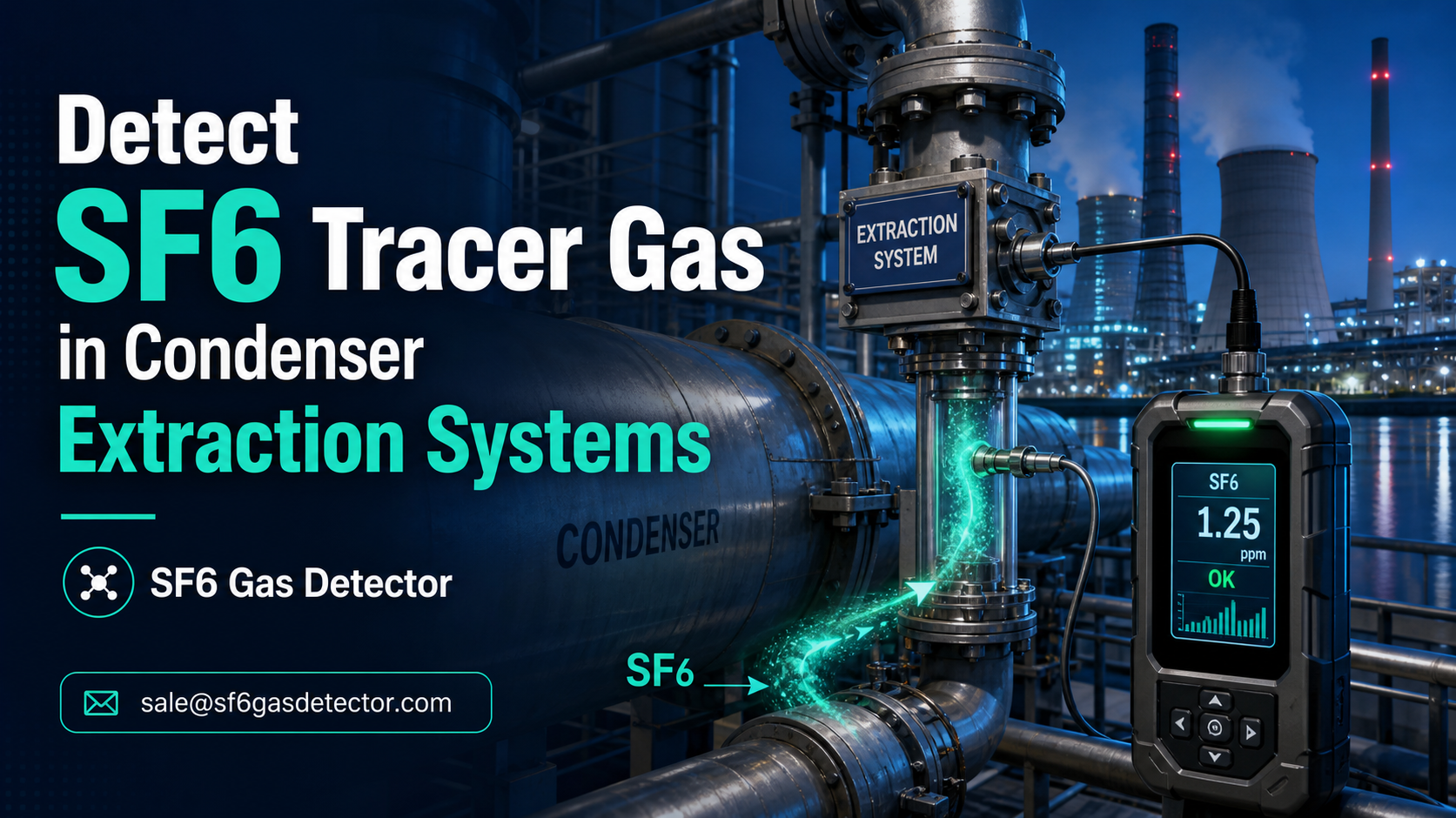
In modern power generation and industrial steam-cycle operations, the ability to detect SF6 tracer gas in condenser extraction systems is an important technique for locating air in-leakage, verifying vacuum integrity, and improving condenser performance. Sulfur hexafluoride (SF6) is widely used as a tracer gas because it is chemically stable, detectable at very low concentrations, and suitable for controlled leak-tracing applications when handled according to environmental and safety requirements. A professional sf6 gas detector helps maintenance teams identify leakage paths quickly, reduce efficiency losses, and support reliable operation of condensers, extraction lines, vacuum pumps, and associated sealing systems.
Why SF6 Tracer Gas Is Used in Condenser Extraction Systems
Condenser extraction systems operate under vacuum conditions and are sensitive to air ingress. Even small leakage can increase back pressure, reduce turbine efficiency, elevate dissolved oxygen levels, and increase corrosion risk. Traditional leak detection methods may be time-consuming or insufficient for complex piping layouts. By introducing a controlled amount of SF6 tracer gas near suspected leakage points and monitoring its presence at the extraction outlet, engineers can accurately determine whether air is entering the condenser system.
When using an sf6 gas detector designed for industrial tracer gas applications, technicians can detect low-level SF6 concentrations in real time. This enables faster troubleshooting, more precise leak localization, and improved planning for maintenance shutdowns.
Core Advantages of Using an SF6 Gas Detector for Condenser Leak Testing
High Sensitivity for Low-Concentration Detection
Condenser leakage points may be very small, especially around expansion joints, flange connections, valve stems, manholes, rupture discs, instrument fittings, and vacuum pump interfaces. A high-performance detector can identify trace SF6 levels that may be missed by less sensitive instruments, making it ideal for applications that require early detection and preventive maintenance.
Fast Response for Efficient Field Diagnosis
Time is critical during condenser performance inspections. A reliable sf6 gas detector provides fast response and recovery times, allowing field engineers to move between test points and receive immediate feedback. This reduces inspection time and helps maintenance teams make informed decisions during outage windows or online diagnostic work.
Non-Destructive and Practical Testing Method
Using SF6 as a tracer gas does not require dismantling major equipment or interrupting large sections of the system when procedures are properly planned. The method is especially valuable for power plants, petrochemical utilities, paper mills, desalination plants, and other facilities using steam condensers under vacuum.
Improved Energy Efficiency and Asset Reliability
Air ingress into a condenser increases turbine exhaust pressure and reduces heat transfer efficiency. By accurately locating leaks, operators can restore vacuum performance, lower heat rate penalties, and extend the service life of equipment affected by oxygen-related corrosion.
Recommended Technical Parameters for SF6 Detection Equipment
When selecting equipment to detect SF6 tracer gas in condenser extraction systems, technical specifications should match the application environment, required sensitivity, and field operating conditions. The following table outlines common parameters to consider.
| Parameter | Recommended Requirement | Application Value |
|---|---|---|
| Detection Gas | SF6 tracer gas | Suitable for controlled condenser leakage testing |
| Detection Principle | Infrared, electron capture, or high-sensitivity gas sensing technology | Supports accurate low-level detection |
| Measurement Range | ppb to ppm level, depending on model | Useful for small leakage paths and vacuum systems |
| Response Time | Typically within seconds | Improves inspection speed and field efficiency |
| Sampling Method | Pump-suction or probe sampling | Allows testing at extraction lines and confined access points |
| Display | Digital concentration display with alarm indication | Enables clear on-site judgment |
| Data Logging | Optional or integrated | Supports maintenance records and reporting |
| Operating Environment | Industrial temperature and humidity tolerance | Reliable in power plant and utility conditions |
Key Application Scenarios
Steam Turbine Condenser Air In-Leakage Detection
The most common application is locating air leakage into a steam turbine condenser. SF6 tracer gas can be applied externally at suspected points while the sf6 gas detector monitors the extraction system. A detected concentration increase indicates that the tracer gas has entered through a leakage path.
Vacuum Pump and Air Ejector System Inspection
Vacuum pumps, steam jet air ejectors, intercondensers, and aftercondensers can develop leaks at seals, gaskets, drain points, and instrumentation connections. SF6 tracer testing helps verify whether leakage is occurring upstream or downstream of specific components.
Condenser Tube Sheet and Waterbox Boundary Testing
Although condenser tube leaks are often associated with cooling water ingress, vacuum boundary leakage around waterbox doors, tube sheet joints, and inspection covers may also affect performance. Tracer gas testing provides a practical way to evaluate these areas without extensive disassembly.
Commissioning and Post-Repair Verification
After gasket replacement, welding repair, valve maintenance, or condenser overhaul, SF6 tracer gas detection can confirm whether vacuum sealing has been restored. This helps reduce restart risks and provides measurable quality assurance documentation.
Standard Operating Considerations for Safe and Compliant Testing
SF6 is a potent greenhouse gas, so its use must be minimized, controlled, and documented in accordance with applicable environmental regulations, plant procedures, and local requirements. Testing should be conducted by trained personnel using calibrated equipment and controlled gas release methods. The amount of SF6 introduced should be as low as practicable while still achieving reliable detection.
Industrial facilities should also follow relevant occupational safety practices, including safe access procedures, lockout/tagout requirements where applicable, confined space controls, and proper handling of compressed gas cylinders. Instrument calibration should be verified before testing, and records should be retained for maintenance traceability.
How to Select the Right SF6 Gas Detector
Match Sensitivity to Leak Detection Objectives
For condenser extraction systems, sensitivity is one of the most important purchasing factors. If the goal is to detect very small air in-leakage, choose a detector capable of measuring low SF6 concentrations with stable baseline performance.
Consider Sampling Distance and Field Accessibility
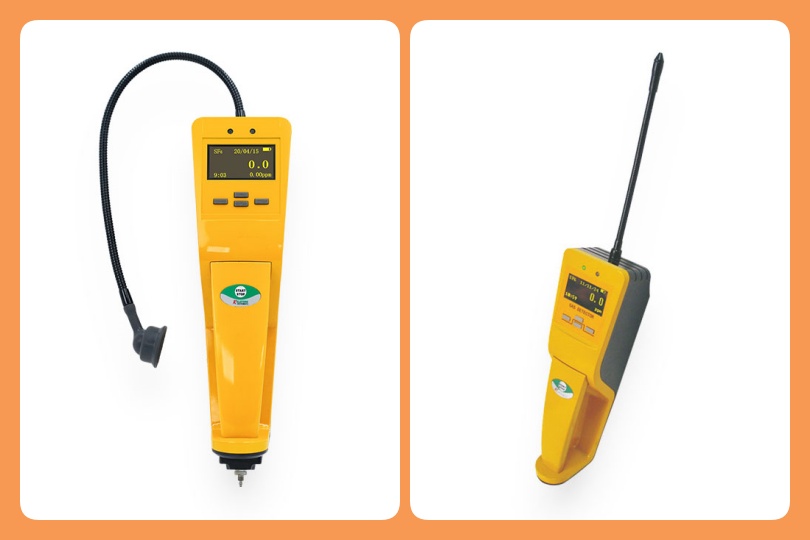
Power plant condensers often have difficult access points. A portable detector with a flexible probe, pump-suction sampling, and clear digital display can improve usability. For continuous or semi-continuous diagnostics, fixed or transportable monitoring options may be more suitable.
Evaluate Calibration and Maintenance Requirements
A professional sf6 gas detector should offer stable calibration, accessible maintenance procedures, and available technical support. Buyers should confirm calibration gas requirements, sensor lifespan, replacement parts availability, and documentation support.
Choose Industrial-Grade Build Quality
Because condenser testing is performed in demanding environments, detectors should be rugged, moisture-resistant within specified limits, and suitable for routine plant maintenance work. Alarm functions, battery life, and data storage can further improve field productivity.
For plant-specific selection support, users can request a free technical consultation by contacting [email protected]. Application engineers can help evaluate condenser layout, leakage history, and detection sensitivity requirements.
Practical Testing Workflow for Condenser Extraction Systems
A typical procedure begins with confirming stable condenser vacuum conditions and identifying suspected leakage zones. The detector is then set up at an appropriate sampling point, such as the air extraction discharge, vacuum pump inlet, or designated monitoring port. After establishing a baseline reading, small amounts of SF6 tracer gas are applied near suspected leak locations. If SF6 is detected in the extraction stream, the test location is marked for further inspection or repair.
To improve accuracy, technicians should test one area at a time, allow sufficient purge time between test points, and avoid excessive tracer gas release. Wind direction, ventilation, and nearby gas accumulation should be considered to prevent false readings. Data logging is recommended for comparing concentration peaks and preparing maintenance reports.
Purchasing Guide: What Industrial Buyers Should Confirm
| Buying Factor | What to Confirm | Why It Matters |
|---|---|---|
| Detection Limit | Minimum detectable SF6 concentration | Determines ability to find small leaks |
| Response Speed | Time to alarm or display concentration change | Affects inspection efficiency |
| Portability | Weight, battery life, probe design | Improves field usability |
| Calibration Support | Calibration interval and service availability | Ensures measurement reliability |
| Data Capability | Storage, export, or reporting features | Supports maintenance documentation |
| Technical Support | Application guidance and after-sales service | Reduces implementation risk |
Facilities seeking customized on-site solutions for how to detect SF6 tracer gas in condenser extraction systems can contact [email protected] for engineering guidance, model selection, and testing method recommendations.
Frequently Asked Questions
Is SF6 tracer gas detection suitable for online condenser testing?
Yes, in many cases SF6 tracer testing can be performed while the condenser is under normal vacuum operation, provided plant procedures and safety requirements are followed. The test should be carefully controlled to avoid unnecessary gas release and operational disturbance.
Why use an SF6 gas detector instead of conventional leak detection methods?
SF6 detection offers high sensitivity and clear indication of leakage paths in vacuum systems. Compared with visual inspection or acoustic methods, it can be more effective for small or hidden leaks in complex condenser extraction systems.
How much SF6 is required for a typical test?
The amount depends on condenser size, leakage severity, test location, and detector sensitivity. Best practice is to use the minimum quantity needed for reliable detection and to follow environmental management procedures.
Can one detector be used for multiple condenser units?
Yes, a portable sf6 gas detector can typically be used across multiple units if it is properly calibrated and maintained. For large facilities, additional detectors may reduce inspection time during outages.
What documentation should be kept after testing?
Recommended records include detector calibration status, test locations, baseline readings, concentration responses, repair actions, and verification results. These records support maintenance planning and regulatory compliance.
Conclusion
Using a professional sf6 gas detector to detect SF6 tracer gas in condenser extraction systems is a proven and practical method for locating air in-leakage, improving condenser vacuum performance, and supporting efficient plant operation. By selecting the right detection equipment, following controlled testing procedures, and complying with environmental and industrial safety standards, power plants and industrial facilities can reduce energy losses and improve equipment reliability. For one-on-one guidance from experienced engineers, contact [email protected] to discuss application requirements and suitable detection solutions.