F-Gas Compliant Gas Leak Detector with Low Detection Limit
Date
2026-07-10
[email protected]
Website
www.sf6gasdetector.com
Get Solutions And Quotes
Contact Factory
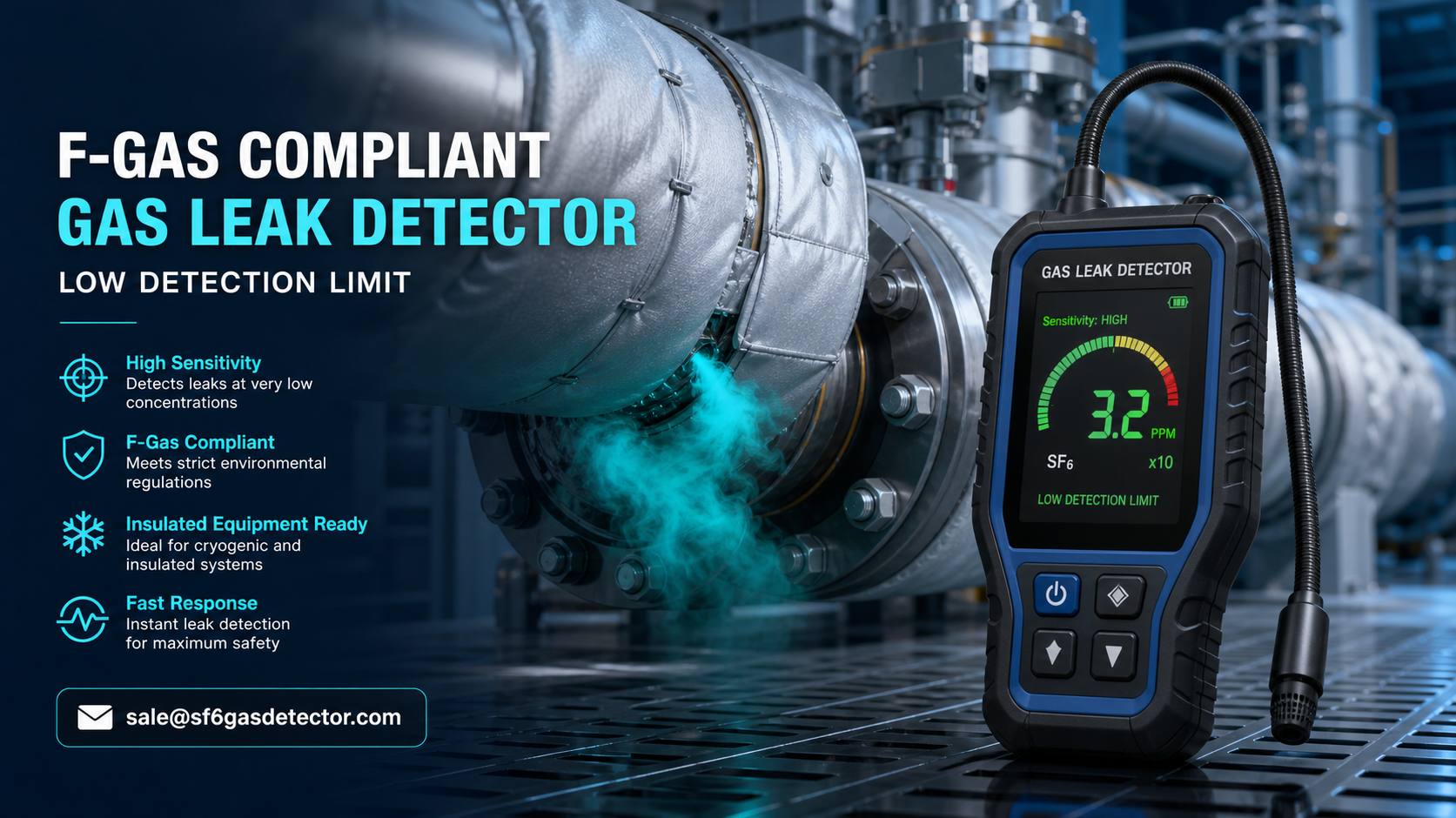
F-Gas Compliant Gas Leak Detector with Low Detection Limit
Industrial facilities that use fluorinated gases, SF₆-insulated equipment, refrigeration systems, or high-voltage gas-insulated switchgear require accurate, compliant, and fast leak detection to maintain safety, reduce emissions, and meet regulatory obligations. A F-Gas compliant low detection limit insulated gas leak detector is designed for precisely this purpose: identifying extremely small leaks before they become operational risks, environmental liabilities, or costly maintenance events. For utilities, substations, laboratories, manufacturers, and service contractors, selecting the right gas leakage detector is essential for reliable gas leakage detection and long-term asset protection.
Why F-Gas Compliance Matters in Industrial Leak Detection
F-Gas regulations in many regions, including the European Union and other internationally aligned markets, require operators to reduce emissions of fluorinated greenhouse gases, conduct periodic leak checks, maintain records, and use suitable detection equipment. While regulatory details may vary by country, the underlying objective is consistent: prevent avoidable gas emissions and ensure responsible equipment management.
For insulated gas applications, especially in high-voltage electrical equipment, even low-volume leakage can indicate seal degradation, valve issues, flange defects, or aging insulation systems. A compliant leak detector supports preventive maintenance by helping operators locate leaks quickly and document inspection results in accordance with internal safety procedures and applicable environmental standards.
Core Advantages of a Low Detection Limit Insulated Gas Leak Detector
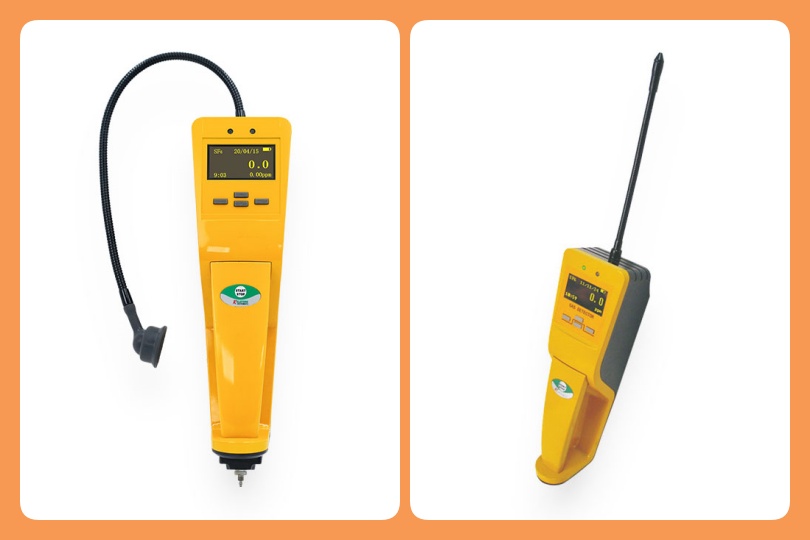
A high-performance F-Gas compliant low detection limit insulated gas leak detector offers more than simple alarm functionality. It combines sensitivity, selectivity, stability, and field usability to help engineers make confident decisions.
Ultra-Low Detection Limit for Early Leak Identification
Low detection limit capability allows technicians to identify micro-leaks before pressure drops or gas loss become visible in routine monitoring. This is particularly valuable for gas-insulated switchgear, sealed chambers, transformers, and fluorinated gas storage systems where leakage can remain hidden for long periods.
High Selectivity for Industrial Gases
Advanced detection technologies can distinguish target gases from common background gases, reducing false alarms and improving inspection efficiency. This is important in complex environments such as substations, compressor rooms, chemical plants, and equipment maintenance workshops.
Portable and Field-Ready Design
Industrial technicians need equipment that performs reliably in real working conditions. A professional gas leakage detector should be lightweight, durable, easy to calibrate, and suitable for use around cabinets, valves, joints, cable compartments, and narrow inspection points.
Support for Compliance Documentation
Many facilities require inspection logs for environmental audits, internal maintenance systems, or third-party service reports. Detectors with digital data storage, alarm records, and exportable inspection results help streamline compliance workflows and reduce manual reporting errors.
For technical selection support or project-specific recommendations, industrial users can request a free consultation via [email protected].
Recommended Technical Parameters
The following table summarizes typical parameters to evaluate when requesting a quote for a professional low detection limit leak detector. Exact specifications should be confirmed based on the target gas, operating environment, and application requirements.
| Parameter | Recommended Specification | Practical Value |
|---|---|---|
| Target Gas | SF₆, HFCs, HFOs, or specified F-Gases | Supports regulated gas inspection |
| Detection Limit | ppm-level or lower, depending on sensor type | Enables early micro-leak detection |
| Response Time | Typically ≤ 3 seconds | Improves field inspection efficiency |
| Alarm Modes | Audible, visual, vibration, digital display | Supports noisy industrial environments |
| Sampling Method | Pump suction or diffusion type | Suitable for different site conditions |
| Display | LCD/OLED with real-time concentration | Easier reading during inspections |
| Data Logging | Optional or standard memory function | Supports compliance records |
| Power Supply | Rechargeable lithium battery | Suitable for mobile maintenance teams |
| Operating Temperature | Industrial-grade range | Reliable in substations and plants |
| Calibration | Factory and periodic calibration support | Maintains measurement accuracy |
Key Application Scenarios
Gas-Insulated Switchgear and Substations
SF₆ and alternative insulated gases are widely used in electrical transmission and distribution systems. A low detection limit detector helps maintenance teams inspect GIS compartments, circuit breakers, sealing surfaces, density monitor connections, and gas handling equipment. Accurate gas leakage detection reduces unplanned outages and supports environmentally responsible operation.
Refrigeration and HVAC Service
Commercial refrigeration systems, chillers, heat pumps, and cold storage facilities often use F-Gases regulated under regional environmental rules. A compliant detector allows service engineers to locate leaks in coils, compressors, valves, joints, and piping networks while supporting scheduled leak inspection requirements.
Manufacturing and Laboratory Facilities
Electronics manufacturing, research laboratories, and specialty gas users require reliable leak monitoring to prevent gas loss and maintain process integrity. A professional gas leakage detector can be used during installation, commissioning, preventive maintenance, and fault diagnosis.
Gas Storage, Filling, and Recovery Operations
Facilities involved in gas storage, cylinder filling, recovery, and recycling need fast leak checks around hoses, connectors, valves, manifolds, and transfer equipment. Early detection helps reduce product loss and supports safe handling procedures.
How to Request a Quote for the Right Detector
When searching for a “request quote F-Gas compliant low detection limit insulated gas leak detector” solution, buyers should provide enough technical information for accurate configuration and pricing. A reliable supplier will evaluate the application rather than recommend a generic model.
Information to Prepare Before Requesting a Quote
| Buyer Requirement | Details to Provide |
|---|---|
| Target Gas | SF₆, R134a, R410A, R32, HFOs, or mixed gases |
| Application Site | Substation, HVAC plant, laboratory, production line |
| Detection Sensitivity | Required ppm level or regulatory threshold |
| Measurement Mode | Portable inspection, fixed monitoring, or both |
| Environmental Conditions | Temperature, humidity, dust, wind, indoor/outdoor use |
| Data Requirements | Alarm records, export reports, calibration certificate |
| Quantity and Delivery | Number of units, project schedule, destination country |
| Compliance Needs | F-Gas, ISO-based maintenance procedures, internal standards |
For customized on-site solutions and quotation support, contact the engineering team at [email protected] with your gas type, detection range, and application environment.
Purchasing Guide: What Industrial Buyers Should Evaluate
Detection Technology
Common technologies include infrared, electrochemical, semiconductor, photoacoustic, and ionization-based sensing methods. The best choice depends on the target gas, required sensitivity, background interference, response time, and maintenance expectations. For insulated gas leak detection, high selectivity and stable baseline performance are especially important.
Accuracy and Repeatability
A detector should provide consistent results across repeated measurements. Buyers should ask about calibration standards, drift control, sensor life, and recommended calibration intervals. Equipment used for compliance-related inspections should be supported by traceable calibration documentation where applicable.
Ease of Use in the Field
An industrial detector should be simple enough for daily maintenance teams while still offering professional diagnostic capability. Features such as flexible probes, backlit displays, adjustable alarm thresholds, and intuitive menus improve usability.
Durability and Maintenance Support
Industrial environments can include dust, vibration, temperature changes, and limited access points. Choose a detector with robust housing, protected sensor components, replaceable filters, and accessible after-sales service. Long-term availability of spare parts and calibration support is also important.
Supplier Expertise
Beyond price, consider whether the supplier understands F-Gas compliance, insulated gas equipment, and industrial maintenance workflows. A technically qualified supplier can help avoid under-specified equipment and reduce operational risk.
Best Practices for Reliable Gas Leakage Detection
To obtain accurate and repeatable results, operators should follow approved site procedures and manufacturer instructions. The detector should be calibrated according to schedule, warmed up before inspection, and used at an appropriate probe speed and distance from potential leak points. Inspections should focus on valves, flanges, O-rings, welded joints, pressure gauges, filling ports, and connection interfaces.
Personnel should also consider environmental factors such as wind, ventilation, humidity, and nearby chemical vapors, as these may affect readings. Leak inspections should be documented with date, location, operator name, instrument ID, calibration status, and corrective actions when required. These practices support both safety management and F-Gas compliance audits.
For one-on-one guidance from experienced engineers, users can send site photos, equipment details, or inspection requirements to [email protected].
Frequently Asked Questions
What is a low detection limit gas leakage detector?
A low detection limit detector is an instrument capable of identifying very small gas concentrations, often at ppm level or lower depending on the gas and sensor technology. It is used to find early-stage leaks before they cause major gas loss or equipment performance problems.
Why is F-Gas compliance important?
F-Gas compliance helps reduce emissions of fluorinated greenhouse gases and supports legal, environmental, and maintenance obligations. Using appropriate detection equipment helps operators conduct leak checks, maintain records, and respond quickly to leakage events.
Can one detector identify all F-Gases?
Not always. Some detectors are designed for specific gases, while others support multiple refrigerants or insulating gases. Buyers should confirm gas compatibility before purchase, especially for SF₆, HFCs, HFOs, and mixed gas applications.
How often should the detector be calibrated?
Calibration frequency depends on manufacturer recommendations, usage intensity, site procedures, and regulatory expectations. Many industrial users perform periodic calibration annually or more frequently for critical applications.
Is a portable detector enough for industrial facilities?
Portable detectors are ideal for routine inspections, maintenance, and leak localization. However, facilities with continuous risk areas may also require fixed monitoring systems. The best solution depends on operating conditions and risk assessment.
Conclusion
A F-Gas compliant low detection limit insulated gas leak detector is a practical investment for facilities that require precise, reliable, and regulation-aligned leak inspection. By choosing the right gas leakage detector, operators can improve maintenance efficiency, reduce environmental impact, protect valuable equipment, and strengthen compliance documentation. For high-value electrical assets, refrigeration systems, and industrial gas operations, professional gas leakage detection is not only a technical requirement but also a key part of responsible asset management.