Need Help: Providing Innovative and Sustainable Solutions.
Office Hours: 08:30am-6:00pm

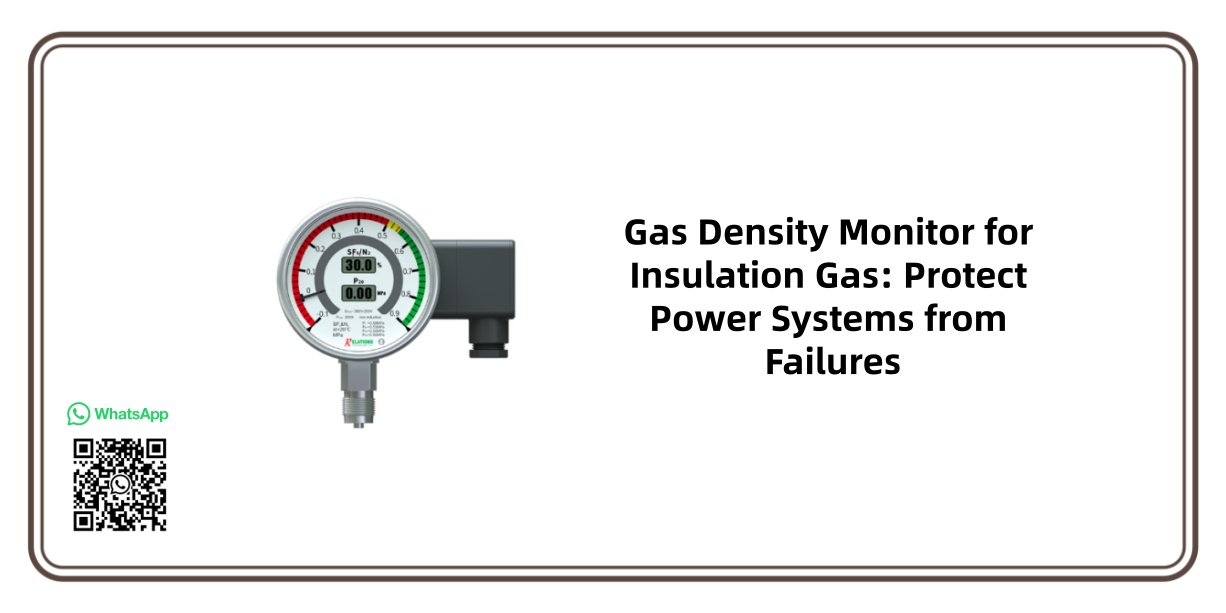
Gas Density Monitor for Insulation Gas: Protect Power Systems from Failures
Date
2025-10-09
[email protected]
Website
www.sf6gasdetector.com
Get Solutions And Quotes
Contact Factory
Gas Density Monitor for Insulation Gas: Protect Power Systems from Failures
Insulation gas—such as sulfur hexafluoride (SF₆) and emerging eco-friendly alternatives like 3M™ Novec™ 4710—keeps high-voltage electrical equipment (circuit breakers, transformers, GIS) safe by providing electrical insulation and arc extinguishing. But its performance hinges entirely on gas density: a 3% density drop (caused by temperature shifts or micro-leaks) can trigger electrical breakdown in 110kV gear, leading to $50,000+ in downtime costs for utilities. A gas density monitor insulation gas system solves this by delivering real-time, temperature-compensated density data—acting as a non-negotiable safeguard for grid reliability.
1. Why Insulation Gas Density Is Non-Negotiable for Power Safety
Pressure alone can’t tell you if insulation gas is working—density is the only reliable metric. Here’s why:
- Temperature Deception: A 10°C drop in ambient temperature reduces SF₆ density by ~3% (per IEC 60694), even if pressure stays the same. For a 220kV substation, this weakens insulation enough to cause arc flashes.
- Micro-Leak Risks: Insulation gas tanks often develop leaks (0.1%-0.5% annual rate) that pressure gauges miss. Over 6 months, a small leak can lower density by 5%, leading to equipment burnout.
- Regulatory Compliance: Standards like ANSI C37.120-2019 mandate continuous density monitoring for SF₆ gear to minimize greenhouse gas emissions (SF₆ has a 23,500x higher global warming potential than CO₂ over 100 years).
A gas density monitor insulation gas tool eliminates these risks by calculating true density (via pressure + temperature sensors) — ensuring you never trust misleading pressure readings.
2. How Gas Density Monitors Work for Insulation Gas (Mechanical vs. Electronic)
Not all gas density monitors are built for insulation gas—mechanical and electronic models serve different use cases. Below is a side-by-side comparison:
|
Feature
|
Mechanical Gas Density Monitor
|
Electronic Gas Density Monitor (IoT-Enabled)
|
|
Core Tech
|
Bellows/diaphragm (density-driven movement)
|
Pressure + temperature sensors + microprocessor
|
|
Temperature Compens
|
Limited (only for narrow ranges)
|
Full compensation (-40°C to 85°C, per IEC 61508)
|
|
Leak Detection
|
Misses micro-leaks (>1% annual rate)
|
Detects micro-leaks (0.1% annual rate)
|
|
Data Output
|
Manual pointer + alarm switch
|
4-20mA, RS485, LoRa (connects to SCADA)
|
|
Best for Insulation Gas
|
Low-voltage transformers (indoor, stable temp)
|
SF₆/GIS gear, wind farm substations (variable temp)
|
For most modern insulation gas systems (especially SF₆), electronic monitors are preferred—they integrate with smart grids and provide the precision needed to meet environmental regulations. A temperature-compensated gas density monitor for insulation gas is now a standard requirement for outdoor installations.
3. Key Criteria to Choose the Right Gas Density Monitor for Insulation Gas
Selecting a monitor that matches your insulation gas type (SF₆, dry air, or alternatives) and equipment needs is critical. Focus on these 5 factors:
- Accuracy: Aim for ±0.2% full scale (FS) to comply with IEC 60694—lower accuracy (±0.5% FS) may miss critical density shifts.
- Insulation Gas Compatibility: Ensure the monitor works with your gas (e.g., SF₆ monitors need corrosion-resistant sensors; dry air monitors require moisture protection).
- Environmental Ratings: For outdoor use, look for IP65/IP67 enclosure and -40°C to 85°C operating range (prevents freeze/thaw damage).
- Certifications: Prioritize Ex d IIB T4 Ga (explosion protection) for hazardous areas and ISO 14001 (for eco-friendly manufacturing).
- Remote Monitoring: Choose RS485/LoRa connectivity if your site is off-grid (e.g., rural substations)—this cuts manual inspection costs by 30%.
Example: A 500kV GIS system using SF₆ needs an electronic monitor with ±0.2% FS accuracy, IP67 rating, and LoRa output—while a small indoor transformer using dry air can use a mechanical monitor with ±0.5% FS.
4. Step-by-Step Installation & Maintenance for Insulation Gas Monitors
Improper installation or maintenance can render your gas density monitor insulation gas system useless. Follow these best practices:
Installation Steps
- Mounting: Attach the monitor within 1m of the insulation gas tank valve (avoid vibration sources like pumps—vibration skews mechanical sensors).
- Sealing: Use PTFE tape on thread connections (torque to 15 N·m) to prevent gas leaks—even a tiny leak will invalidate readings.
- Wiring: For electronic monitors, use shielded cables (24AWG) to reduce electromagnetic interference (EMI) from nearby power lines.
Maintenance Schedule
- Monthly: Check alarm status and remote data feed (ensure no “lost connection” errors).
- Quarterly: Wipe sensor surfaces with a lint-free cloth (dust/moisture causes drift).
- Annually: Calibrate using a NIST-traceable density standard (e.g., Fluke 754 Documenting Process Calibrator) — this maintains accuracy.
- Every 2 Years: Replace O-rings (use Viton® for SF₆ compatibility) to prevent leaks.
Troubleshooting Tip: If readings are inaccurate, first check calibration (not wiring)—80% of issues stem from expired calibration.
5. Eco-Friendly Shift: Monitoring SF₆ Alternatives with Density Monitors
As utilities phase out SF₆ (due to EU F-Gas Regulation and EPA rules), new insulation gases (e.g., 3M™ Novec™ 4710, Solvay’s 3M™ Fluorinert™) require specialized monitors. Here’s what’s different:
- Lower Density: Alternatives have 40%-60% lower density than SF₆—monitors need higher sensitivity (±0.1% FS) to detect shifts.
- Moisture Sensitivity: Dry air-based insulation gas absorbs moisture, which degrades performance—monitors should include integrated humidity sensors.
- Calibration: Use gas-specific standards (e.g., Novec 4710 calibration kits) — SF₆ standards will give incorrect readings.
A gas density monitor for eco-friendly insulation gas is now a growing segment—leading manufacturers (like ABB, WIKA) offer models tailored to these alternatives.
6. Real-World Impact: Utility Case Study (Updated Data)
A U.S. Midwest utility upgraded 72x 150kV SF₆ circuit breakers with electronic gas density monitor insulation gas systems in 2024. The results:
- Before Upgrade: Manual monthly inspections missed 3 micro-leaks, leading to one 48-hour outage (cost: $82,000 in lost revenue).
- After Upgrade: Monitors detected 2 leaks (0.2% annual rate) within 36 hours—technicians repaired leaks and refilled gas for $1,200 total.
- ROI: The utility recouped the $144,000 monitor investment in 18 months (via reduced outage costs and lower SF₆ replacement).
This case proves that a well-chosen gas density monitor isn’t just a safety tool—it’s a financial asset.
Conclusion
Insulation gas performance depends on density, and a gas density monitor insulation gas system is the only way to ensure reliability. As power grids adopt smart technology and eco-friendly gases, choosing a monitor with temperature compensation, remote connectivity, and gas compatibility is more important than ever. By following installation/maintenance best practices and prioritizing certified models, utilities can cut downtime costs, meet regulations, and reduce their carbon footprint. For more guidance, consult IEC 60694 or partner with a manufacturer that specializes in insulation gas monitoring (e.g., WIKA, ABB).
Realize The Recycling Of Sf6 Gas