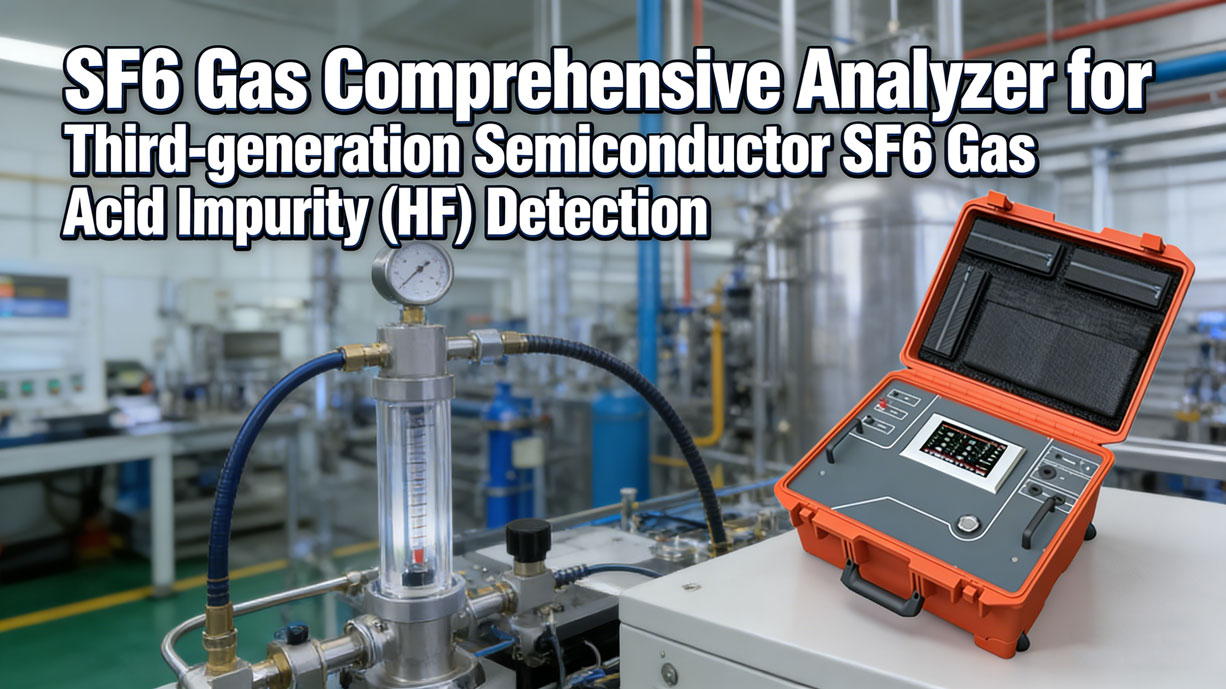
SF6 Gas Comprehensive Analyzer for Third-generation Semiconductor SF6 Gas Acid Impurity (HF) Detection
Date
2026-02-27
[email protected]
Website
www.sf6gasdetector.com
Get Solutions And Quotes
SF6 Gas Comprehensive Analyzer for Third-generation Semiconductor SF6 Gas Acid Impurity (HF) Detection
The rapid evolution of the semiconductor industry has shifted focus toward third-generation semiconductors, such as Silicon Carbide (SiC) and Gallium Nitride (GaN). These materials are the backbone of high-frequency, high-temperature, and high-power applications, ranging from electric vehicle power trains to 5G infrastructure. However, the manufacturing process for these advanced semiconductors requires ultra-high-purity process gases. Among these, Sulfur Hexafluoride (SF6) is frequently used in plasma etching and chamber cleaning.
The presence of even trace amounts of acid impurities, specifically Hydrogen Fluoride (HF), can compromise the structural integrity of the semiconductor wafer and lead to device failure. Consequently, the SF6 gas comprehensive analyzer for Third-generation semiconductor SF6 gas acid impurity (HF) detection has become an indispensable tool in the semiconductor fabrication facility (FAB).
1. The Role of SF6 in Third-Generation Semiconductor Manufacturing
Third-generation semiconductors are defined by their wide bandgap properties. To process these robust materials, plasma etching techniques utilize SF6 as a source of fluorine radicals. In the plasma environment, SF6 molecules are dissociated to provide the fluorine atoms necessary to etch away substrates.
The Threat of HF Impurities
During this process, if the SF6 gas contains moisture (H2O) or if there are leaks in the delivery system, a chemical reaction occurs that generates Hydrogen Fluoride (HF).
-
Corrosion: HF is highly corrosive to the specialized gas delivery lines and the reaction chamber itself.
-
Yield Loss: Trace HF can cause non-uniform etching and introduce defects into the crystal lattice of SiC or GaN wafers.
-
Safety Risks: HF is extremely toxic to personnel and poses significant environmental hazards.
For these reasons, semiconductor manufacturers must utilize an SF6 gas comprehensive analyzer for Third-generation semiconductor SF6 gas acid impurity (HF) detection to monitor gas quality at the point of use.
2. Technical Requirements for HF Detection in Semiconductor Grade SF6
Traditional SF6 analyzers used in power substations are often insufficient for semiconductor applications. Semiconductor-grade SF6 requires sub-ppm (parts per million) sensitivity.
Key Performance Indicators (KPIs) for Analyzers
A professional-grade SF6 Gas Comprehensive Analyzer, such as the RA912F series, must address several technical pillars:
-
High Sensitivity to HF and SO2: Since HF is a primary acid byproduct, the sensor must be able to detect it at levels below 1 ppm.
-
Moisture Cross-Sensitivity Management: HF is often formed in the presence of moisture. The analyzer must simultaneously measure dew point to provide a complete picture of the gas chemistry.
-
Chemical Resistance: The internal components of the analyzer must be resistant to the very acid impurities it is designed to measure.
3. RA912F SF6 Gas Comprehensive Analyzer: Optimized for Acid Detection
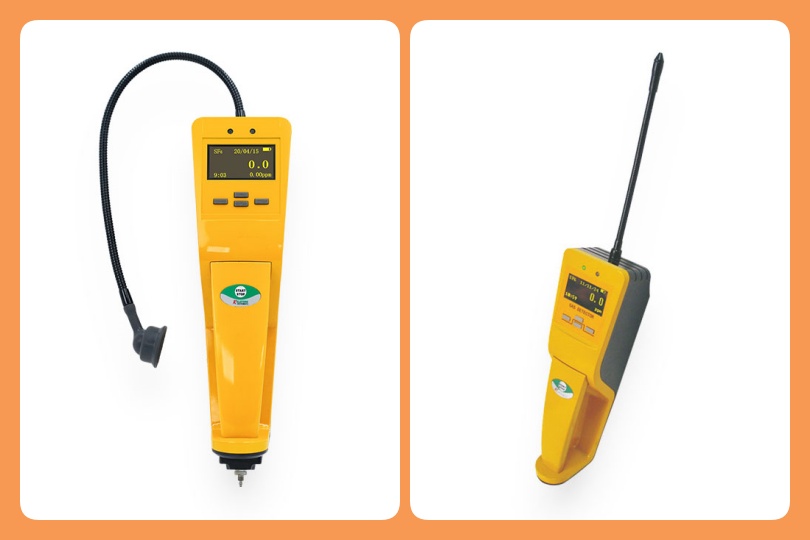
The RA912F SF6 Gas Comprehensive Analyzer represents the pinnacle of field-testing technology, adapted for the rigorous demands of the semiconductor industry. It offers a specialized suite of features designed to detect acid impurities with laboratory-grade accuracy.
Advanced Sensor Integration
The RA912F utilizes a combination of electrochemical and capacitive sensing technologies:
-
Acid Gas Detection (HF/SO2): The electrochemical sensors are calibrated to detect SO2 and HF, which are the most common markers of SF6 degradation and contamination.
-
Range and Accuracy: With a maximum permissible error of +/- 0.5 uL/L for low concentrations, the RA912F provides the high-resolution data required to maintain SiC and GaN production standards.
-
Purity Verification: Using thermal conductivity principles, the device ensures the SF6 purity remains above the 99.9% threshold required for plasma processes.
4. Why Rigorous HF Detection is Persuasive for Plant Managers
For a semiconductor FAB manager, the decision to implement an SF6 gas comprehensive analyzer for Third-generation semiconductor SF6 gas acid impurity (HF) detection is driven by ROI and risk mitigation.
Protecting Capital Investment
The tools used in SiC and GaN production, such as MOCVD (Metal-Organic Chemical Vapor Deposition) and ICP (Inductive Coupled Plasma) etchers, cost millions of dollars. Allowing HF-contaminated gas into these systems can cause irreversible damage to quartz components and vacuum seals.
Standard Compliance: IEC and SEMI
The semiconductor industry adheres to strict SEMI standards, while the gas handling protocols often mirror IEC 60376 and IEC 60480. The RA912F ensures that the gas used in the facility—whether it is virgin gas or gas recovered from the cleaning process—complies with these international benchmarks.
5. The Link Between Moisture and Acid Impurity
In the context of the SF6 gas comprehensive analyzer for Third-generation semiconductor SF6 gas acid impurity (HF) detection, moisture (H2O) is the “facilitator” of acid formation.
The chemical reaction is typically:
SF6 + H2O (Moisture) + Energy (Plasma/Heat) -> SOF2 + 2HF
By monitoring H2O and HF simultaneously, the RA912F allows technicians to identify the root cause of contamination. If H2O is high, it suggests a leak or a failure in the gas drying system. If HF is high but H2O is low, it suggests a contamination issue during the gas refilling or regeneration process.
6. Operational Advantages of the RA912F in the Cleanroom Environment
The RA912F SF6 Gas Comprehensive Analyzer is designed for portability and ease of use within the complex layout of a semiconductor facility.
-
Zero-Emission Testing: To prevent the release of toxic HF and expensive SF6 into the FAB environment, the RA912F features a return-type pump. This allows the sample gas to be reclaimed after analysis, maintaining cleanroom air quality.
-
Intelligent Diagnostics: The built-in expert system provides an immediate “Pass/Fail” based on pre-set semiconductor industry thresholds, reducing the need for specialized chemical analysis staff on the floor.
-
Data Traceability: Each test can be logged with a digital timestamp and equipment ID, which is essential for the “Quality Traceability” requirements of automotive-grade SiC chip manufacturing.
7. Conclusion
The transition to SiC and GaN semiconductors is a revolution in power electronics, but it is a revolution that requires uncompromising gas quality. The SF6 gas comprehensive analyzer for Third-generation semiconductor SF6 gas acid impurity (HF) detection is not merely a piece of testing equipment; it is a vital safeguard for the production yields of tomorrow.
The RA912F series provides the precision, safety, and compliance features necessary to detect trace HF before it impacts the wafer. For manufacturers aiming to lead in the 5G and EV markets, rigorous SF6 analysis is the foundation of a reliable and high-performance product.
Equipment Summary Table: RA912F for Semiconductor Applications
| Parameter | Measurement Principle | Range | Accuracy |
| HF/SO2 (Acid) | Electrochemical | 0-100 uL/L | +/- 0.5 uL/L (low range) |
| SF6 Purity | Thermal Conductivity | 0-100% | +/- 0.5% |
| Moisture (H2O) | Capacitive | -60 to +20 C | +/- 2 C |
| H2S | Electrochemical | 0-100 uL/L | +/- 0.5 uL/L |