SF6 Leak Detection Equipment Price Egypt | Buying Guide & Quotes 2026
Date
2026-06-25
[email protected]
Website
www.sf6gasdetector.com
Get Solutions And Quotes
Contact Factory
SF6 Leak Detection Equipment Price Egypt | Buying Guide & Quotes 2026
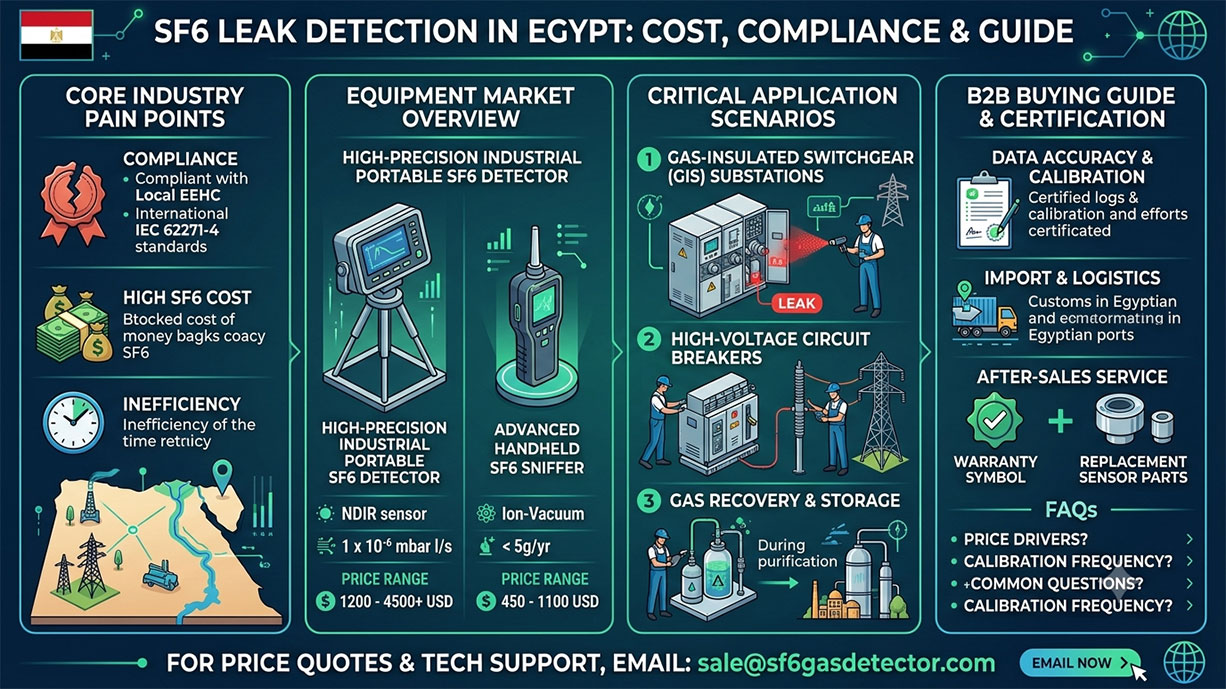
How much does SF6 leak detection equipment price in Egypt typically run? For B2B procurement managers and substation engineers in 2026, the market price ranges from $450 to $1,100 USD for reliable handheld pinpoint sniffers, and upwards of $1,200 to $4,500+ USD for high-precision, compliance-grade industrial portable systems. The final cost fluctuates based on the underlying sensor technology, detection limits, and localized Egyptian import tariffs.
Directing Solutions to Core Industry Pain Points
International trade buyers and substation engineers consistently run into three massive operational hurdles when managing Sulfur Hexafluoride (SF6) infrastructure:
-
Compliance: Meeting rigorous environmental regulations set by global standards (IEC 62271-4) and local authorities like the Egyptian Electricity Holding Company (EEHC).
-
Cost: Balancing the upfront SF6 leak detection equipment price in Egypt against the high expense of replacing leaked, expensive insulating gas.
-
Efficiency: Locating microscopic, low-ppm (parts per million) leaks quickly before they trigger localized arc-faults or emergency switchgear shutdowns.
If you are currently evaluating models for an upcoming substation upgrade, you can email our technical team directly at [email protected] for a customized price quote or to request detailed product brochures.
Technical Specifications & Market Overview
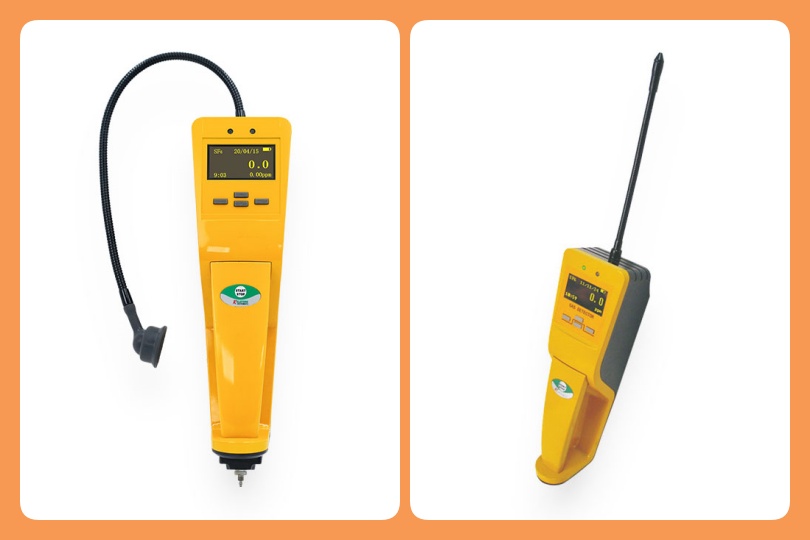
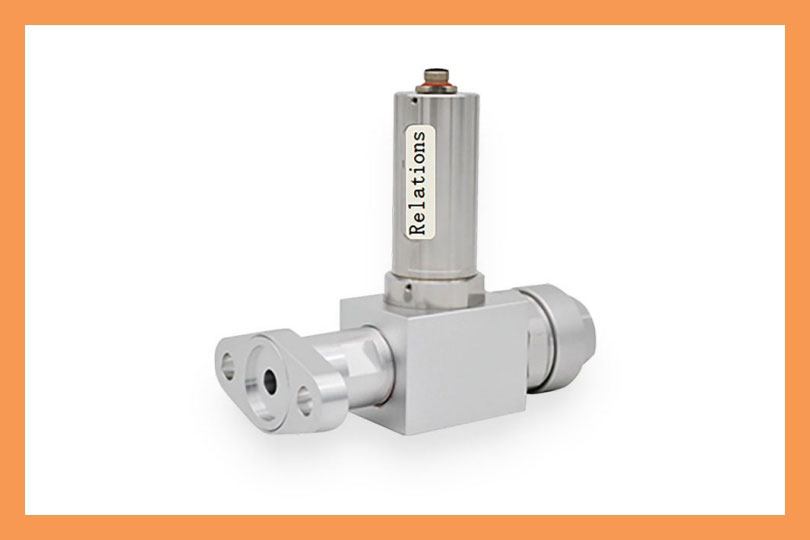
Portable and handheld SF6 leak detectors typically use specialized Non-Dispersive Infrared (NDIR) or advanced Ion-Vacuum sensors to isolate halogenated molecules safely without cross-interfering with atmospheric gases.
| Feature / Metric | Industrial Portable Spec | Advanced Handheld Spec |
| Detection Principle | Non-Dispersive Infrared (NDIR) | Enhanced Ion-Vacuum / Heated Diode |
| Sensitivity / Leak Rate | Down to 1 x 10^-6 mbar l/s | Less than 5g to 7g / year |
| Measurement Range | 0 ppm to 1,000 ppm | 1 ppm to 1,000 ppm |
| Response Time | Fast (less than 3 seconds) | Instantaneous (approx. 1 second) |
| Certifications | CE, ISO 9001-2015, EMC Compliant | CE, Calibration Certified |
| Estimated B2B Price Range | $1,200 – $4,500 USD | $450 – $1,100 USD |
Note: While navigating the SF6 leak detection equipment price in Egypt, remember that landing prices fluctuate based on custom import tariffs, local agent service contracts, and specific calibration documentation required for EEHC submittals.
Core Application Scenarios in Egypt
Investing in reliable detection equipment directly protects critical regional infrastructure:
1. Gas-Insulated Switchgear (GIS) Substations
New urban grid expansions and heavy transmission lines across Cairo and the New Administrative Capital rely heavily on GIS systems. Finding the right affordable SF6 gas analyzer or sniffer allows regular preventative maintenance sweeps to pinpoint failing seals and flange gaskets before they degrade system pressure.
2. High-Voltage Circuit Breaker Inspections
Field service teams use flexible sniffer probes during routine maintenance cycles to audit circuit breaker bushings, ensuring insulation density matches design specifications.
3. Industrial Storage & Gas Recovery
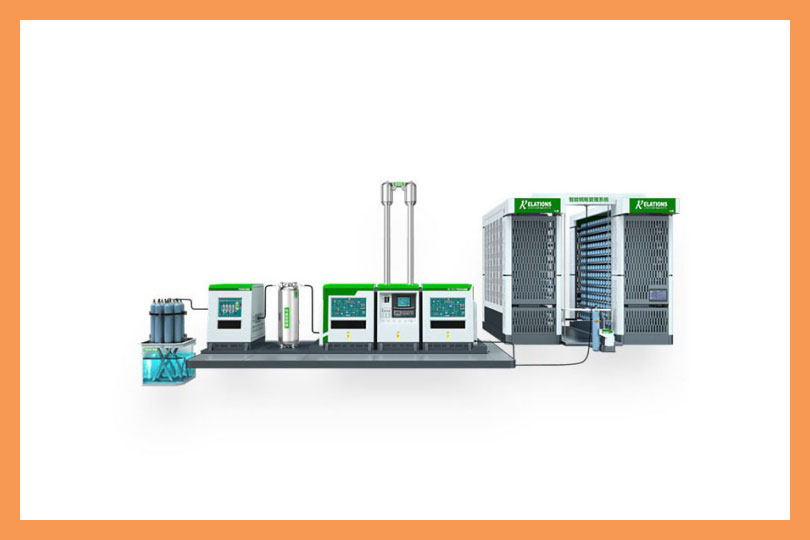
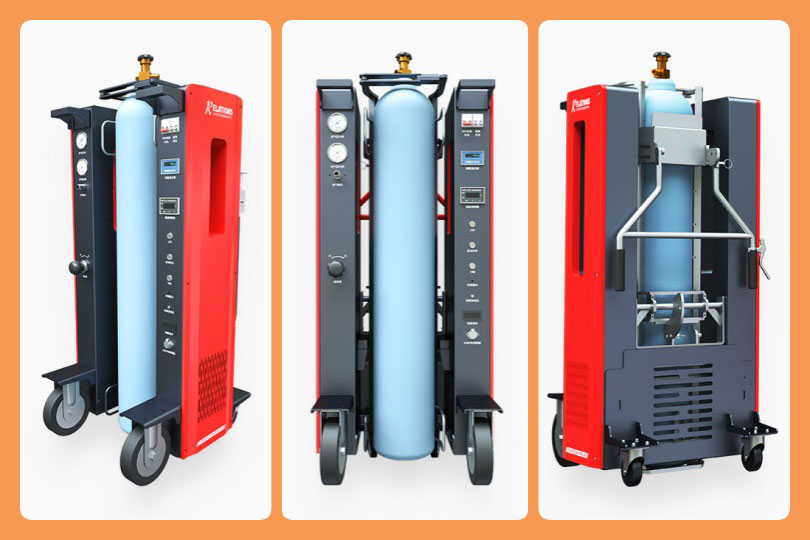
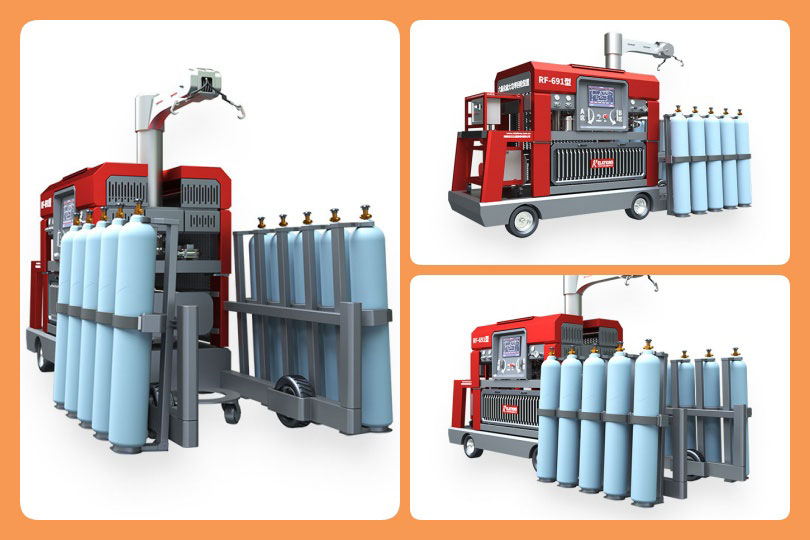
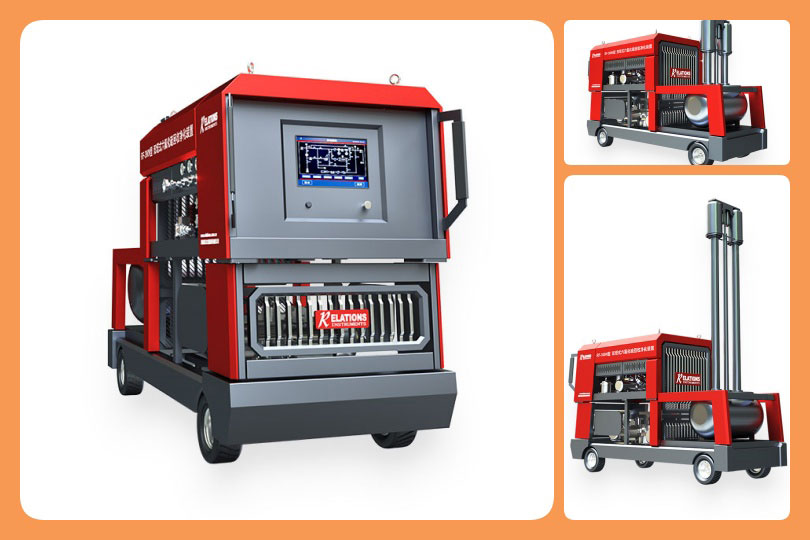
During gas recycling and purification procedures, handheld tools quickly verify that gas-tight coupling valves on recovery carts are completely sealed, preventing accidental venting into the atmosphere.
B2B Buying Guide: Choosing the Best SF6 Gas Detector Manufacturer
When evaluating international suppliers for deployment inside Egypt, cross-reference your quote with these three trade priorities:
-
Data Accuracy & Calibration Certificates: Ensure every unit ships with an individual, dated factory calibration certificate. Local audit bodies in North Africa will reject field test logs generated by uncertified instruments.
-
Import Compliance & Logistics: Confirm whether your SF6 gas detector manufacturer provides full documentation (including HS codes for testing equipment) to ease clearance through customs ports like Alexandria or Port Said.
-
After-Sales Service Quality: Prioritize manufacturers who offer extended warranties (such as 2-year extensions) and sell plug-and-play, pre-calibrated replacement sensor heads to minimize shipping down-time for routine maintenance.
Frequently Asked Questions (FAQs)
What factors drive the final SF6 leak detection equipment price in Egypt?
The price is primarily driven by the underlying sensor technology (highly selective NDIR sensors carry a premium over heated diode sensors) and the required sensitivity threshold. Secondary factors include international shipping costs, localized import tariffs, and whether local on-site training is bundled into the agreement.
How often do these detectors require sensor calibration?
For standard compliance reporting, devices should undergo comprehensive calibration once every 12 months. Choosing a system featuring self-diagnostic hardware alerts helps operations teams monitor sensor health dynamically between formal calibration periods.
Can these units detect other industrial or refrigerant gases?
Many entry-level and intermediate handheld sniffers use general halogen-sensitive sensors, meaning they will also alert to common HVAC refrigerants (CFCs, HCFCs, and HFCs). Premium NDIR instruments are tuned specifically to the infrared absorption spectrum of Sulfur Hexafluoride to guarantee zero false positives in complex industrial settings.
Looking for a Reliable SF6 Leak Detection Partner?
Securing accurate equipment is essential to avoiding costly grid downtime and maintaining environmental compliance. For formal commercial bids, volume discounts, or assistance choosing between portable infrared and handheld options, please reach out to [email protected]. Our engineering team will provide a tailored quote matching your exact technical parameters within 24 hours.