Power Grid Maintenance SF6 Detector Price Inquiry: A Practical Guide for Utility Buyers

Date
2026-07-07
[email protected]
Website
www.sf6gasdetector.com
Get Solutions And Quotes
Power Grid Maintenance SF6 Detector Price Inquiry: A Practical Guide for Utility Buyers
In modern power grid maintenance, sulfur hexafluoride (SF6) gas monitoring is a critical part of ensuring the safe, reliable, and compliant operation of gas-insulated switchgear (GIS), circuit breakers, substations, and high-voltage transmission assets. Because SF6 is widely used as an insulating and arc-quenching medium, even small leaks can affect equipment performance, increase operational risks, and create environmental compliance concerns. For procurement teams, maintenance engineers, and utility asset managers, a power grid maintenance SF6 detector price inquiry is not only about finding the lowest cost—it is about selecting a detector that matches field conditions, detection sensitivity, regulatory requirements, and long-term maintenance value.
Why SF6 Detection Matters in Power Grid Maintenance
SF6 has excellent dielectric properties, making it highly effective for medium- and high-voltage electrical equipment. However, it is also a potent greenhouse gas, and many countries require strict monitoring, reporting, and reduction of SF6 emissions. International frameworks and regional regulations increasingly encourage utilities and industrial operators to implement effective leak detection and gas management practices.
In practical maintenance work, SF6 leak detection helps operators:
- Identify micro-leaks before equipment pressure drops to unsafe levels
- Reduce unplanned outages and emergency repairs
- Improve worker safety around high-voltage equipment
- Support environmental reporting and emissions reduction programs
- Extend the service life of GIS, breakers, and sealing components
- Maintain compliance with utility maintenance standards and internal inspection procedures
A reliable SF6 detector is therefore a preventive maintenance tool, not just a troubleshooting device.
Core Advantages of Professional SF6 Leak Detectors
When conducting a power grid maintenance SF6 detector price inquiry, buyers should evaluate the technical advantages that directly affect field efficiency and measurement reliability.
High Sensitivity for Early Leak Identification
Professional SF6 detectors are designed to detect very low gas concentrations, allowing maintenance teams to locate small leaks around flanges, valves, density monitors, pipe joints, and sealing surfaces. High sensitivity is especially important in GIS rooms and outdoor substations where leakage points may be difficult to isolate visually.
Fast Response and Recovery Time
In power grid inspection, speed matters. A detector with rapid response and quick recovery helps technicians scan large equipment areas efficiently. This reduces inspection time and improves the accuracy of leak source positioning.
Portable and Field-Ready Design
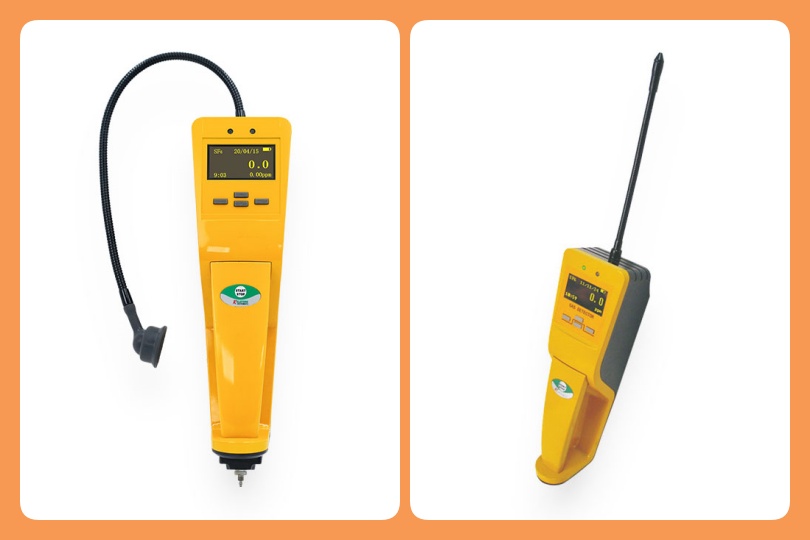
Power grid maintenance often involves outdoor substations, elevated equipment, narrow GIS compartments, and complex cable areas. A lightweight handheld SF6 detector with a flexible probe, clear display, audible alarm, and rechargeable battery improves usability during routine inspections and emergency checks.
Stable Performance in Harsh Environments
Substation environments may include temperature fluctuations, humidity, dust, electromagnetic interference, and outdoor wind conditions. Industrial-grade SF6 detectors should offer stable readings, strong anti-interference performance, and durable construction suitable for field maintenance operations.
Data Logging and Traceability
For utilities with strict maintenance documentation requirements, detectors with data storage, USB export, or software reporting functions can support inspection records, compliance audits, and long-term equipment condition tracking.
Typical SF6 Detector Parameters for Price Evaluation
Different models vary in sensitivity, response speed, sensor technology, and software functions. The following table summarizes common parameters buyers should compare during a power grid maintenance SF6 detector price inquiry.
| Parameter | Typical Range or Feature | Why It Matters |
|---|---|---|
| Detection Gas | SF6 / sulfur hexafluoride | Ensures the unit is optimized for electrical insulation gas |
| Detection Principle | Infrared, electrochemical, semiconductor, or negative corona | Affects sensitivity, stability, selectivity, and maintenance cost |
| Sensitivity | ppm level or lower depending on model | Determines ability to detect small leaks early |
| Response Time | Usually within seconds | Improves field inspection efficiency |
| Alarm Mode | Audible, visual, vibration, or display alarm | Helps operators identify leaks in noisy substations |
| Sampling Method | Pump suction or diffusion | Influences detection distance and leak pinpointing accuracy |
| Display | LCD/OLED digital display | Provides real-time concentration or alarm indication |
| Battery Life | Several hours of continuous operation | Supports full-shift maintenance work |
| Data Storage | Optional logging and export | Useful for reports and compliance documentation |
| Operating Environment | Industrial temperature and humidity range | Ensures reliable performance in substations |
| Calibration | Periodic calibration required | Maintains measurement accuracy and traceability |
Key Application Scenarios in Power Grid Maintenance
GIS Substation Leak Inspection
Gas-insulated substations use SF6-filled compartments to achieve compact, reliable high-voltage insulation. Regular SF6 leakage inspection helps detect sealing degradation, flange leakage, valve problems, and abnormal gas loss before they cause operational risk.
High-Voltage Circuit Breaker Maintenance
SF6 circuit breakers require stable gas pressure to interrupt fault currents safely. During scheduled maintenance, technicians use SF6 detectors to inspect gas filling ports, density relay connections, pipe joints, and breaker tank seals.
Transformer and Switchgear Rooms
Although SF6 is mainly used in switchgear and breakers rather than traditional oil transformers, many power facilities contain SF6-insulated equipment installed near transformer bays. Portable detectors help maintenance teams confirm whether gas alarms or pressure drops are caused by leakage.
Commissioning and Acceptance Testing
Before new GIS or breaker equipment is put into operation, SF6 leak detection is commonly performed as part of installation verification. A suitable SF6 detector helps confirm sealing quality and supports acceptance documentation.
Emergency Fault Location
When an SF6 density monitor indicates pressure loss, a handheld SF6 detector allows rapid leak localization, reducing outage duration and helping repair teams prioritize sealing or component replacement.
Factors That Influence SF6 Detector Price
A power grid maintenance SF6 detector price inquiry should consider the total value of the device rather than only the initial purchase price. Major cost factors include:
Sensor Technology
Infrared SF6 detectors are often valued for selectivity, stability, and reduced cross-sensitivity, while other sensor technologies may offer different cost-performance advantages. Higher-end sensors generally increase purchase cost but may reduce false alarms and improve long-term reliability.
Detection Limit and Accuracy
Models capable of detecting lower concentrations usually require more advanced sensors and signal processing. For critical GIS and high-voltage maintenance, higher sensitivity can be worth the investment.
Brand, Certification, and Quality Control
Industrial buyers should prioritize manufacturers with clear technical documentation, calibration support, quality management procedures, and compliance with applicable electrical safety and environmental standards.
Function Configuration
Data logging, wireless transmission, built-in pump systems, rugged casing, multilingual interfaces, and software reporting may affect price. Buyers should match these features to actual maintenance workflows.
After-Sales Service and Calibration Support
A lower upfront price may become expensive if calibration, spare parts, training, or technical support are unavailable. Reliable after-sales service is especially important for utility and industrial maintenance teams.
Purchasing Guide for Industrial Buyers
Define the Maintenance Environment
Before requesting a quotation, clarify whether the SF6 detector will be used in indoor GIS rooms, outdoor substations, high-altitude locations, coastal areas, or confined spaces. Environmental conditions influence the required protection level and detector stability.
Confirm Required Sensitivity
For routine inspections, a standard portable SF6 detector may be sufficient. For micro-leak identification in GIS compartments, a higher-sensitivity model may be more appropriate. Always align sensitivity with maintenance standards and inspection objectives.
Check Calibration Requirements
Ask whether the instrument supports factory calibration, third-party calibration certificates, and periodic recalibration. Traceable calibration is important for regulated industries and professional inspection records.
Compare Total Cost of Ownership
Consider purchase price, sensor service life, calibration cost, battery replacement, accessories, warranty, and technical support. A professional SF6 detector with stable performance may reduce downtime and maintenance risk over its service life.
Request Application-Based Recommendations
Instead of requesting only a generic price list, provide equipment type, voltage level, inspection frequency, required sensitivity, and site conditions. This allows suppliers to recommend a suitable configuration and provide a more accurate quotation.
Sample Price Inquiry Checklist
| Buyer Information to Provide | Example Details |
|---|---|
| Application | GIS inspection, circuit breaker maintenance, emergency leak locating |
| Equipment Voltage Level | Medium voltage, high voltage, or ultra-high voltage |
| Working Environment | Indoor substation, outdoor yard, humid or dusty area |
| Detection Requirement | Routine leak check or micro-leak pinpointing |
| Preferred Features | Pump suction, data logging, rechargeable battery, alarm modes |
| Quantity Required | Single unit, maintenance team batch order, project procurement |
| Documentation Needed | Calibration certificate, user manual, technical datasheet |
| Service Requirement | Training, on-site support, customized inspection plan |
Frequently Asked Questions
How often should SF6 leak detection be performed in power grid maintenance?
Inspection frequency depends on equipment type, operating conditions, regulatory requirements, and utility maintenance policy. Many operators perform SF6 leak checks during scheduled maintenance, after installation, after repair work, and whenever gas pressure abnormalities are detected.
What is the best SF6 detector for GIS maintenance?
The best SF6 leak detector is one that offers suitable sensitivity, fast response, stable performance, and practical portability for GIS conditions. For professional GIS maintenance, pump-suction models with high sensitivity and reliable calibration support are often preferred.
Why do SF6 detector prices vary so much?
Price differences are mainly caused by sensor technology, detection limit, accuracy, durability, data functions, certification, brand quality, and after-sales support. A detailed power grid maintenance SF6 detector price inquiry should compare technical parameters and service conditions, not price alone.
Can one SF6 detector be used for both routine inspections and emergency leak location?
Yes, many portable SF6 detectors can support both tasks if they provide sufficient sensitivity, fast response, and easy field operation. However, critical substations may require higher-performance instruments for micro-leak detection.
Is calibration necessary for SF6 detectors?
Yes. Regular calibration helps maintain measurement accuracy and reliability. Professional power grid operators should follow manufacturer recommendations and internal maintenance procedures for calibration intervals.
Professional Price Inquiry and Technical Support
Selecting the right SF6 detector can improve inspection efficiency, reduce gas loss, and support safer, more compliant power grid maintenance. For an accurate power grid maintenance SF6 detector price inquiry, buyers should provide application details, required sensitivity, working conditions, and documentation needs.
For free consultation, customized on-site SF6 leak detection solutions, or one-on-one engineering guidance, industrial buyers and utility maintenance teams can contact [email protected]. A professional technical team can help match detector specifications to real substation applications and provide practical recommendations for long-term maintenance planning.