Cost-Effective SF6 Recycling and Purification for Grid Operators
Date
2026-09-09
[email protected]
Website
www.sf6gasdetector.com
Get Solutions And Quotes
Contact Factory
Cost-Effective SF6 Recycling and Purification for Grid Operators
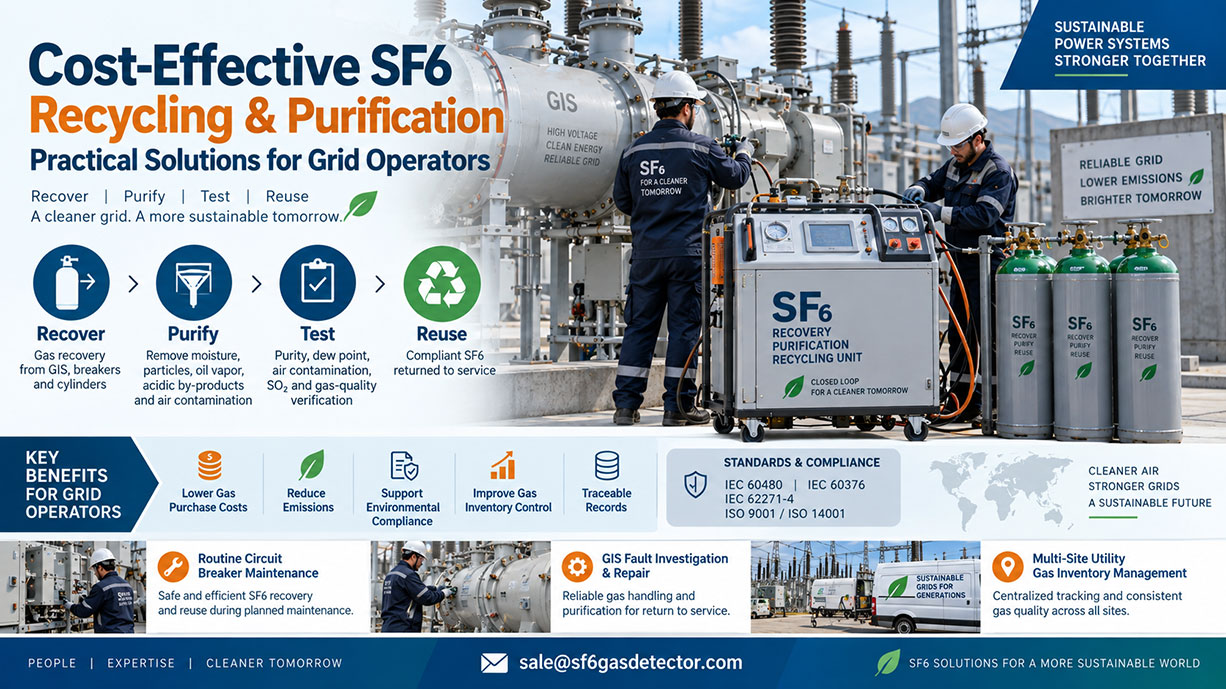
A cost-effective SF6 recycling and purification service for grid operators helps utilities maintain gas-insulated switchgear (GIS), circuit breakers, and other high-voltage assets while reducing operating costs, avoiding unnecessary gas purchases, and supporting environmental compliance. Instead of treating recovered sulfur hexafluoride as waste, grid operators can reclaim, test, purify, and return compliant SF6 to service under controlled technical procedures.
SF6 remains widely used in electrical transmission and distribution equipment because of its exceptional dielectric strength and arc-quenching performance. However, SF6 is also a greenhouse gas with a high global warming potential. Effective gas management is therefore an operational, financial, and environmental priority for transmission system operators, distribution network operators, substations, and maintenance contractors.
Why Grid Operators Need SF6 Recycling and Purification
A cost-effective SF6 recycling and purification service for grid operators provides a practical alternative to purchasing new gas for every maintenance cycle. During equipment overhaul, fault investigation, decommissioning, or leak-response work, gas may contain moisture, air, oil vapor, or decomposition products. Releasing this gas is not acceptable, while reusing it without testing can create reliability risks.
Professional SF6 recycling typically includes:
- Gas recovery from GIS compartments, breakers, and gas cylinders
- Vacuum evacuation of connected equipment where required
- Removal of particles, moisture, acidic by-products, and air contamination
- Laboratory or field analysis of gas quality
- Cylinder filling, labeling, traceability, and storage management
- Documentation supporting internal environmental reporting and maintenance records
By recovering and purifying usable SF6, operators can reduce gas procurement requirements and improve lifecycle control of their installed gas inventory.
Technical Standards That Support Safe SF6 Handling
A credible cost-effective SF6 recycling and purification service for grid operators should follow recognized international standards and established site safety procedures. The precise compliance obligations vary by jurisdiction, but several widely used technical references guide responsible SF6 management.
Key IEC Standards
IEC 60480 provides guidance on checking and treating SF6 taken from electrical equipment, including criteria for reuse, reclamation, and handling of contaminated gas. IEC 60376 defines specifications for new technical-grade SF6 used in electrical equipment. IEC 62271-4 addresses handling procedures for SF6 and its mixtures in high-voltage switchgear.
These standards support important decisions, including whether recovered gas can be reused directly, requires purification, or must be sent to an authorized destruction or treatment facility.
Quality Parameters to Verify
Before purified gas is returned to high-voltage equipment, technical teams should verify parameters appropriate to the equipment manufacturer’s requirements and applicable standards. Typical tests may include:
- SF6 volume fraction or purity
- Moisture content and dew point
- Air or nitrogen contamination
- Acidic decomposition products, such as SO2
- Oil contamination and particulate matter
Where electrical arcing or internal faults have occurred, decomposition products may be hazardous. Personnel must use suitable personal protective equipment, sealed recovery systems, approved filters, and waste-handling procedures. A qualified service provider will also maintain calibration records for analyzers and recovery equipment.
How a Cost-Effective Service Reduces Total Ownership Cost
The value of a cost-effective SF6 recycling and purification service for grid operators extends beyond the price of gas. The largest savings often come from avoiding unplanned outages, reducing disposal expenses, preventing cross-contamination, and minimizing the need to buy virgin SF6.
Recover More Gas During Maintenance
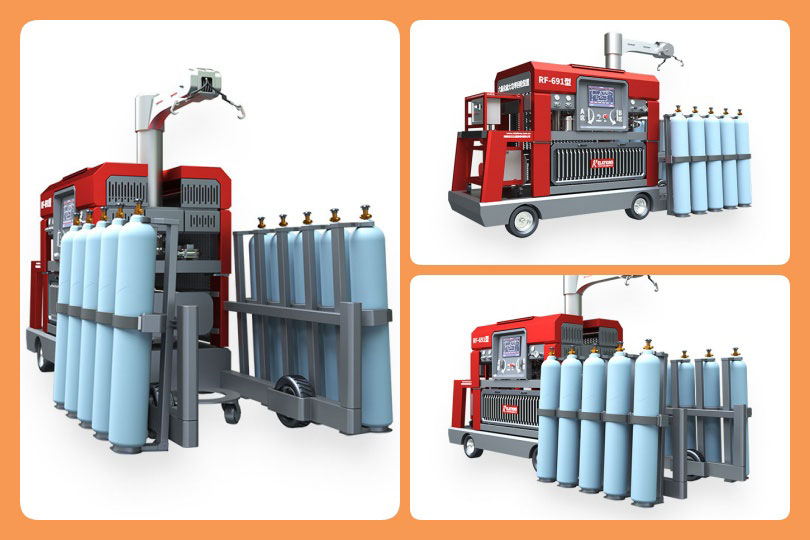
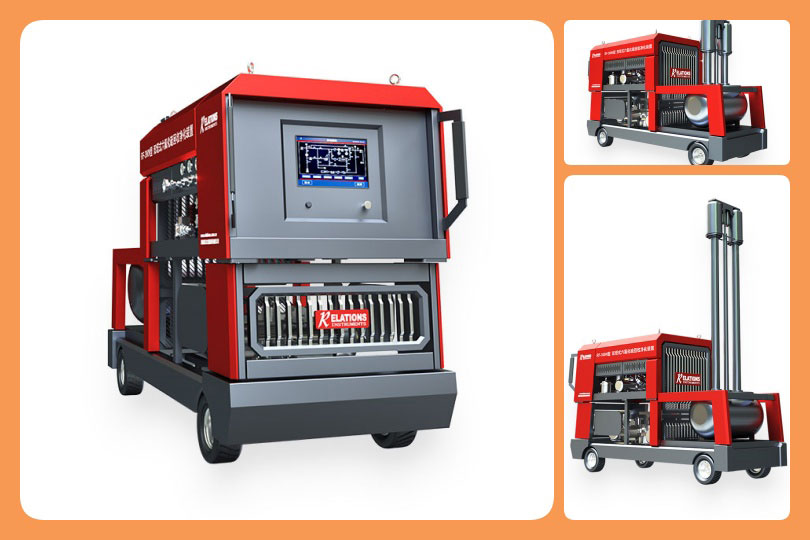
Modern recovery units can transfer SF6 from equipment into approved cylinders under controlled pressure and vacuum conditions. Efficient recovery reduces residual gas losses in compartments, hoses, and service equipment. This is especially important during large GIS maintenance programs, where even small losses per bay can become significant across multiple sites.
Reuse Gas That Meets Specification
Not every recovered gas batch needs disposal. After analysis and purification, gas that meets applicable quality criteria can be returned to service. This creates a closed-loop SF6 management process that lowers replacement gas demand and improves inventory planning.
For project-specific pricing based on gas volume, contamination level, and site conditions, quickly obtain a product quotation from a technical sales team.
Scenario-Based SF6 Service Solutions
A cost-effective SF6 recycling and purification service for grid operators should be tailored to the condition of the gas and the criticality of the asset.
Routine Circuit Breaker Maintenance
For planned breaker maintenance, recovered SF6 is commonly tested for moisture and purity before purification. Clean gas may require only filtration and drying, while gas with elevated air content may need additional separation or replacement. A documented result enables maintenance teams to make defensible reuse decisions.
GIS Fault Investigation and Repair
After an internal arc or insulation failure, SF6 can contain corrosive and toxic decomposition products. In this situation, the priority is safe containment, controlled recovery, decontamination of affected components, and proper management of used filters and solid residues. Reuse should occur only after appropriate treatment and verification.
Multi-Site Utility Gas Inventory Management
For grid operators managing numerous substations, centralized cylinder tracking and batch-level test reports improve visibility over SF6 assets. A structured recycling program can identify reusable inventory, segregate off-spec gas, and support maintenance scheduling across regions.
Selecting a Reliable SF6 Service Partner
When evaluating a cost-effective SF6 recycling and purification service for grid operators, procurement teams should assess both technical capability and documentation quality. A low initial service price is not cost-effective if gas losses, unclear test results, or compliance gaps create additional operational risk.
Look for providers that can demonstrate:
- Experience with GIS, dead-tank breakers, live-tank breakers, and gas handling systems
- Calibrated SF6 analyzers and maintained recovery equipment
- Procedures aligned with IEC 60480 and IEC 62271-4
- Gas batch identification, test certificates, and chain-of-custody records
- Personnel training in hazardous decomposition-product handling
- Quality and environmental management systems, such as ISO 9001 and ISO 14001 where applicable
- Clear waste-routing arrangements for gas that cannot be reclaimed
For complex outage planning, contaminated gas assessment, or equipment-specific handling questions, request one-on-one guidance from engineers before mobilization.
Frequently Asked Questions
Can recovered SF6 always be reused?
No. Recovered SF6 must be analyzed before reuse. Gas that meets the applicable quality requirements may be reused, while contaminated or heavily degraded gas may require purification or authorized disposal.
What contaminants are removed during SF6 purification?
Depending on the treatment process, purification can reduce moisture, air contamination, oil vapor, particles, and certain decomposition by-products. The final gas quality must be verified through testing.
Does SF6 recycling help meet environmental obligations?
Yes. Controlled recovery and reuse can reduce emissions and improve gas accountability. Grid operators should also follow local environmental regulations, reporting rules, and site-specific operating procedures.
How often should SF6 gas quality be tested?
Testing frequency depends on equipment condition, maintenance schedules, leakage history, fault events, and manufacturer recommendations. Testing is especially important before returning recovered gas to critical high-voltage equipment.