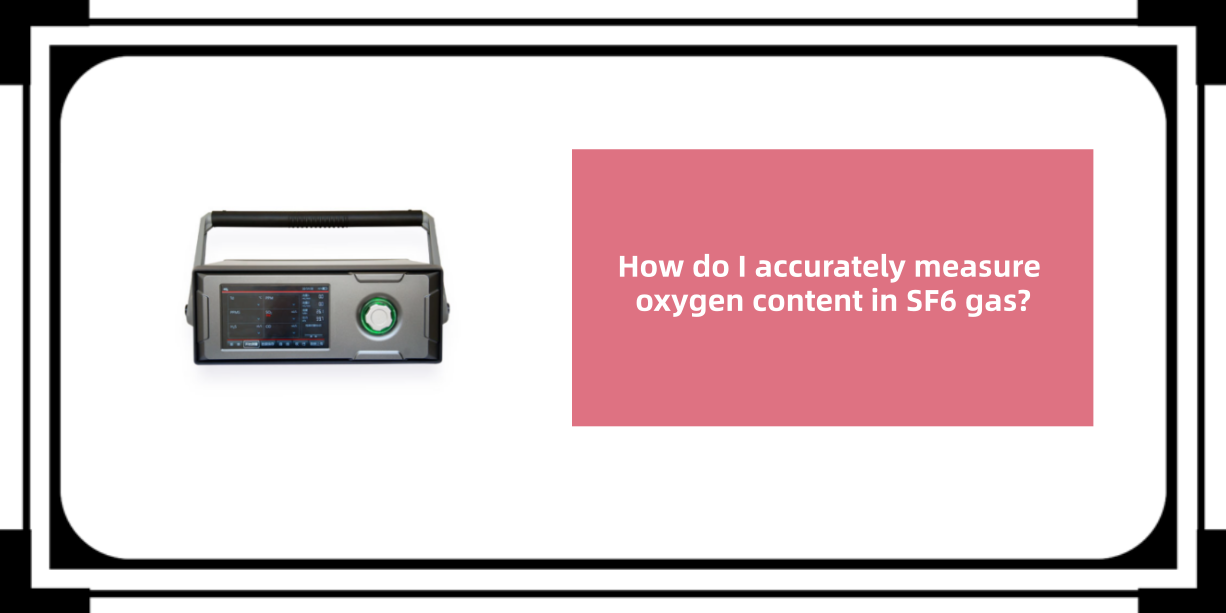
How do I accurately measure oxygen content in SF6 gas?
Date
2025-12-26
sale@sf6gasdetector.com
Website
www.sf6gasdetector.com
Get Solutions And Quotes
How do I accurately measure oxygen content in SF6 gas?
Accurately measuring oxygen (O₂) content in SF6 gas requires specialized instrumentation and a clear understanding of gas analysis principles—because standard SF6 purity testers cannot detect oxygen reliably. Here’s a professional, step-by-step guide to ensure precise, compliant, and safe measurement.
❌ Why Common SF6 Analyzers Fail to Measure Oxygen
Most basic handheld SF6 analyzers use NDIR (Non-Dispersive Infrared) technology to measure SF6 concentration. However:
- Oxygen (O₂) and nitrogen (N₂) are IR-inactive gases—they do not absorb infrared light.
- These analyzers often estimate “air content” as 100% – SF6 purity, which is inaccurate and misleading.
- This method cannot distinguish between O₂, N₂, CF₄, or other non-SF6 gases.
🔴 Result: You may believe your gas is pure when it actually contains dangerous levels of oxygen.
✅ How to Accurately Measure Oxygen in SF6: The Right Technology
To measure O₂ accurately, you need an SF6 gas analyzer equipped with a dedicated oxygen sensor. Two proven technologies are used:
1. Electrochemical (Galvanic) Oxygen Sensor
- How it works: O₂ diffuses through a membrane and undergoes a chemical reaction that generates a current proportional to O₂ concentration.
- Range: Typically 0–1,000 ppm or 0–25% O₂
- Accuracy: ±10 ppm or ±2% of reading (ideal for trace-level detection)
- Best for: Field use in circuit breakers, GIS, and recovery units
2. Paramagnetic or Zirconia Sensors (less common in portable units)
- Exploit oxygen’s magnetic susceptibility or ionic conductivity at high temperatures
- Higher stability but more expensive; used in lab or fixed systems
✅ Key Requirement: The analyzer must explicitly include an O₂ sensor—not just infer air content.
🔧 Step-by-Step Measurement Procedure
- Select the Right Analyzer
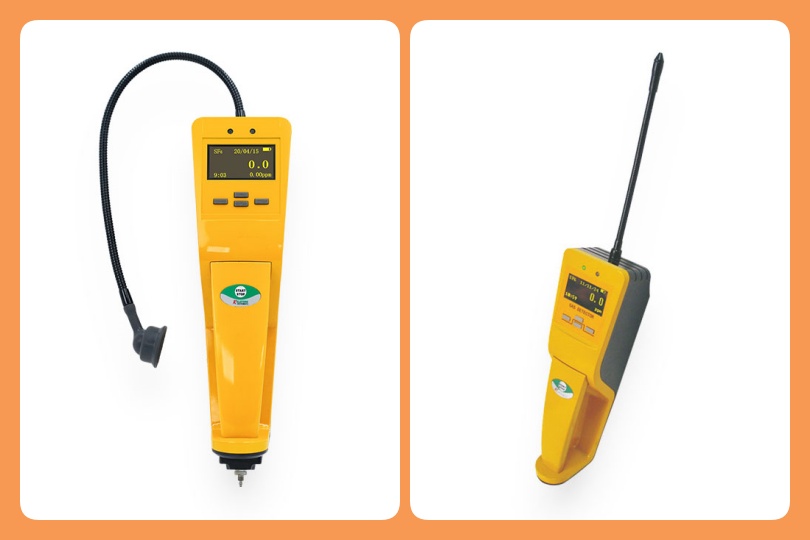
Use a certified portable SF6 gas analyzer with direct O₂ measurement, such as:- DILO 3-033-R002 (with O₂ module)
- WIKA GTC10
- MBtech SFA-400-O₂
- Prepare the Sample Source
- Connect to the SF6 cylinder, recovery unit, or GIS test port using clean, dry, leak-tight tubing (PTFE or stainless steel).
- Ensure the gas source is at stable pressure (typically 3–6 bar).
- Purge the Sampling Line
- Flush the line for 30–60 seconds to remove ambient air that could contaminate the reading.
- Start Measurement
- Turn on the analyzer and allow sensors to stabilize (usually 60–90 seconds).
- Record the direct O₂ reading in ppm or % volume.
- Validate Against Standards
- Compare results to IEC 60480: total air ≤ 0.2% → O₂ ≤ ~420 ppm.
- For critical applications, aim for < 200 ppm O₂.
- Document & Act
- Save or export the digital report (many analyzers support Bluetooth/USB).
- If O₂ exceeds limits, do not fill equipment—investigate leaks or purify the gas.
⚠️ Critical Best Practices
- Never rely on “calculated air” values from NDIR-only devices.
- Calibrate the O₂ sensor annually or per manufacturer guidelines—electrochemical sensors degrade over time.
- Avoid sampling in humid or windy conditions, which can introduce errors.
- Use intrinsically safe (ATEX/IECEx) analyzers in hazardous areas like chemical plants.
Real-World Impact
A utility in the UAE recently prevented a 220 kV GIS failure when their O₂-capable analyzer detected 580 ppm oxygen in supposedly “new” SF6 gas. Investigation revealed a compromised cylinder valve. Without direct O₂ measurement, the contaminated gas would have been used—risking internal arcing during peak summer load.
Final Recommendation
To accurately measure oxygen content in SF6 gas, you must:
Use a professional SF6 analyzer with a dedicated electrochemical oxygen sensor—not inferred purity.
This ensures compliance with IEC 60480/62271-4, protects high-voltage assets, and safeguards personnel from hidden risks.
Measure directly. Verify confidently. Operate safely.