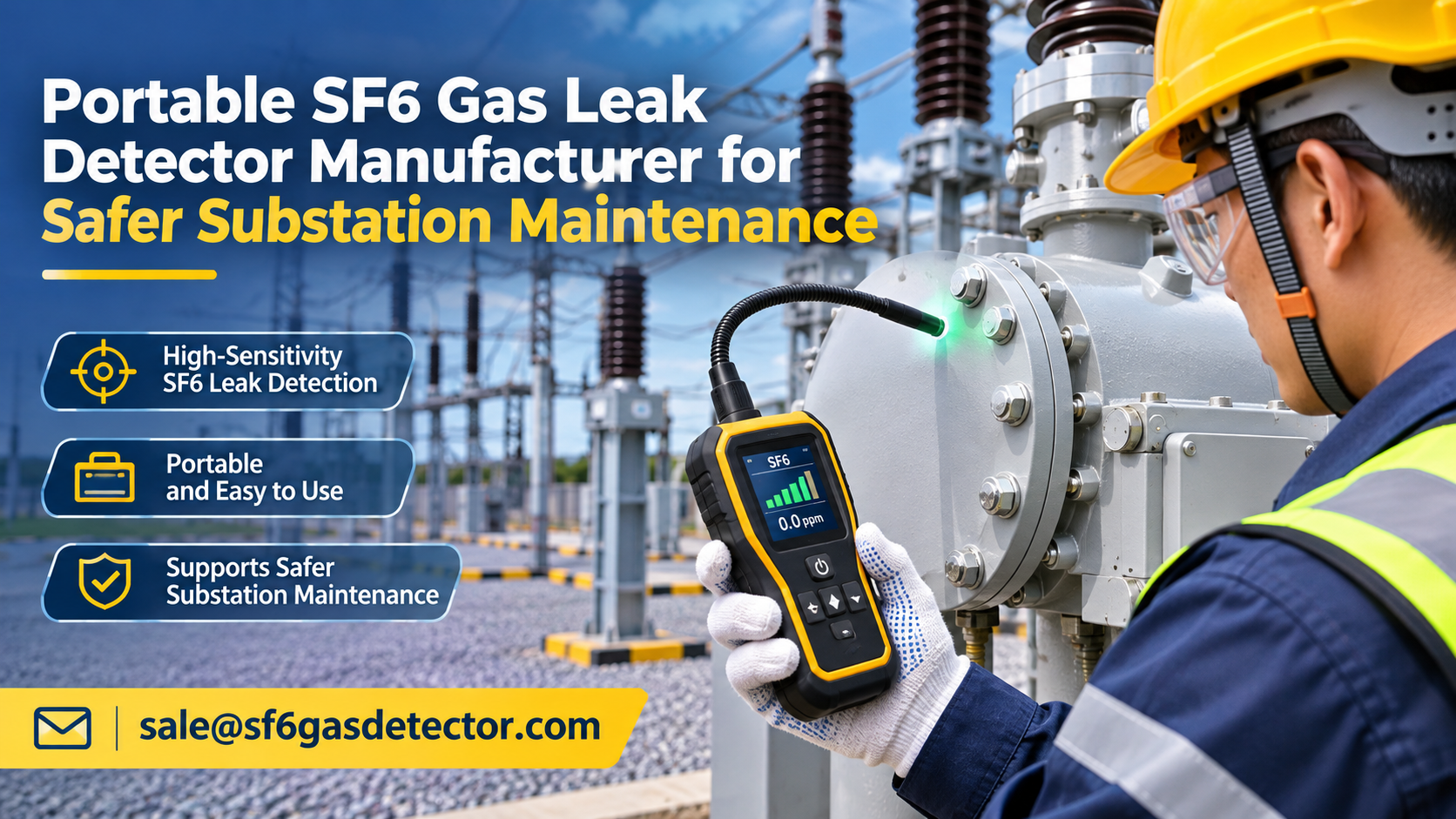
Portable SF6 Gas Leak Detector Manufacturer for Safer Substation Maintenance
Date
2026-11-23
[email protected]
Website
www.sf6gasdetector.com
Get Solutions And Quotes
Contact Factory
Portable SF6 Gas Leak Detector Manufacturer for Safer Substation Maintenance
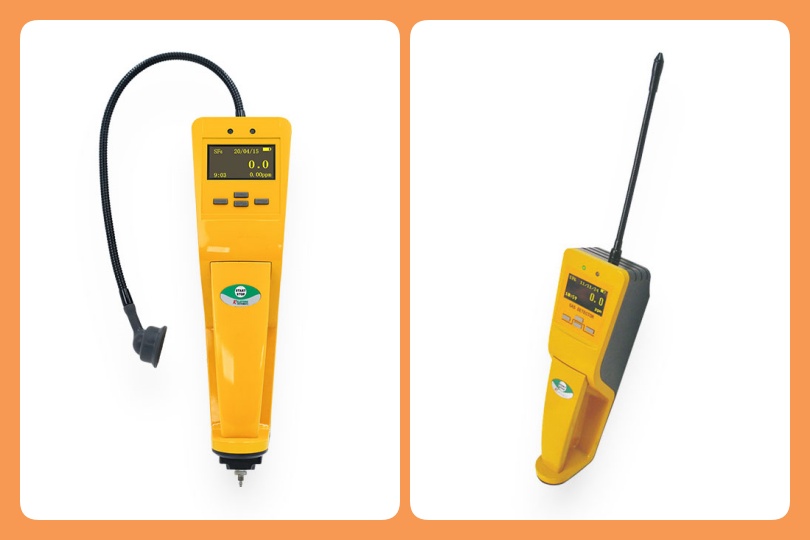
Selecting a portable SF6 gas leak detector manufacturer for substation maintenance requires more than comparing advertised sensitivity. Maintenance teams need instruments that locate small leaks around gas-insulated switchgear (GIS), circuit breakers, and gas connections while remaining reliable in electrically demanding environments. The right supplier should provide application-specific performance data, traceable calibration, documented safety compliance, and dependable service. These factors help utilities reduce avoidable SF6 emissions, investigate falling gas density, and plan repairs without compromising personnel safety or equipment availability.
What Substation Maintenance Teams Actually Need
A handheld SF6 detector identifies localized gas concentrations near potential leak points. It does not replace installed density monitors, determine insulation condition, or directly measure an equipment compartment’s annual leakage rate.
For substation maintenance, its primary role is pinpointing leaks after an alarm, during scheduled inspections, or following authorized repairs. Typical inspection points include flange joints, valve stems, filling connections, seals, and accessible monitoring connections.
A qualified portable SF6 gas leak detector manufacturer should explain these application boundaries clearly. Claims that one handheld instrument can simultaneously verify gas purity, moisture, decomposition products, and leakage require scrutiny: these measurements normally involve distinct sensing methods and sampling arrangements.
Technical Parameters That Deserve Verification
Compare instruments using documented test conditions, not isolated headline figures.
| Parameter | What to request | Practical significance |
|---|---|---|
| Detection principle | Infrared, photoacoustic, or other technology, with selectivity data | Helps assess suitability and potential interference |
| Minimum detectable concentration | Specification in ppmv with test conditions | Defines concentration sensitivity at the probe |
| Leak-rate sensitivity | Test gas, calibrated leak, distance, and scanning method | Makes mass-per-time claims interpretable |
| Response and recovery | Defined response metric and recovery conditions | Influences scanning speed and repeated measurements |
| Environmental limits | Temperature, humidity, and condensation restrictions | Supports reliable field operation |
| Sampling arrangement | Probe length, flow monitoring, filters, and tubing requirements | Affects access, response delay, and contamination control |
| Battery and enclosure | Runtime conditions, charging restrictions, and verified IP rating | Supports outdoor inspection planning |
Distinguish Concentration From Leak Rate
A ppmv reading describes the sampled gas concentration. A specification expressed in grams per year describes a leak-rate detection capability under particular conditions. These values are not directly interchangeable without a defined sampling geometry and flow model.
Ask the portable SF6 gas leak detector manufacturer to demonstrate performance using a traceable reference leak. Background concentration, ventilation, probe distance, and scanning speed should be recorded.
Evaluate Selectivity and Recovery
Infrared-based instruments can offer useful SF6 selectivity, but performance depends on the optical design, compensation methods, and operating conditions. Request interference data rather than assuming every infrared detector behaves identically.
For substation maintenance, rapid recovery after elevated exposure is particularly important. A saturated or contaminated sampling path can delay subsequent inspections and produce misleading residual indications.
Standards, Certifications, and Regulatory Responsibilities
No single certification proves that a detector is suitable for every substation.
IEC 62271-4 provides procedures for handling gases used for insulation and switching in high-voltage equipment. It is relevant to maintenance practices, but it is not a universal product certification for handheld leak detectors.
Where applicable, request evidence against:
- IEC 61010-1: safety requirements for electrical measurement, control, and laboratory equipment.
- IEC 61326-1: electromagnetic compatibility requirements for relevant measurement and control equipment.
- IEC 60529: enclosure ingress-protection ratings.
- ISO/IEC 17025: competence of laboratories providing calibration or testing within their accredited scope.
A portable SF6 gas leak detector manufacturer should identify the exact product model, applicable standard editions, and supporting reports. ISO 9001 certification addresses a supplier’s quality management system; it does not independently establish detector accuracy.
In the European Union, Regulation (EU) 2024/573 governs fluorinated greenhouse gases, including relevant obligations and restrictions affecting electrical switchgear. Requirements depend on equipment, activity, exemptions, and implementation dates. Substation maintenance procedures must also follow local electrical safety rules, equipment instructions, and applicable personnel qualification requirements.
Scenario-Based Selection for Substation Maintenance
Investigating a GIS Density Alarm
First assess temperature-compensated density information and equipment operating instructions. A density alarm warrants investigation, but it does not identify the leak location.
Use an approved inspection route to examine accessible joints and connections. Confirm suspected points through repeated measurements with consistent probe positioning. Do not cross electrical approach boundaries or remove protective barriers solely to improve detector access.
Inspecting Outdoor Circuit Breakers
Wind can dilute escaping SF6 and make small leaks harder to locate. Choose a probe arrangement suitable for restricted access, then standardize scanning speed and distance.
A temporary collection method may improve detection where the equipment manufacturer and site procedure permit it. Never obstruct ventilation or create electrical hazards. Outdoor demonstrations help validate suitability for substation maintenance more effectively than laboratory sensitivity figures alone.
Working in Enclosed GIS Buildings
Elevated background SF6 can reduce localization confidence. Establish background conditions and ventilation status before scanning.
SF6 can displace oxygen, and gas exposed to electrical arcing may contain hazardous decomposition products. A leak detector is not an oxygen monitor or a complete occupational exposure assessment system. Confined-space controls and appropriate protective measures remain separate requirements.
Supplier Qualification and Lifecycle Support
Before selecting a portable SF6 gas leak detector manufacturer, request a field trial, sample calibration documentation, operating instructions, and a written service plan.
Compare ownership costs, including filters, batteries, calibration, repairs, and loan instruments. For substation maintenance programs spanning multiple sites, consistent instrument settings and reporting templates improve repeatability and audit readiness.
Frequently Asked Questions
How often should an SF6 detector be calibrated?
Follow manufacturer guidance, usage history, and the organization’s quality system. Verification checks between calibrations help identify performance changes; recalibration may be necessary after damage or failed checks.
Can the detector inspect energized equipment?
Only where the equipment design and approved electrical safety procedure permit access. A flexible probe does not provide electrical insulation or authorization to approach live parts.
Does a zero reading prove equipment is leak-free?
No. Leakage may be below detection capability, inaccessible, intermittent, or dispersed by airflow. Record inspection conditions and method limitations.
A Defensible Purchasing Decision
The strongest choice combines verified detection performance, appropriate compliance evidence, and practical service support. Selecting a portable SF6 gas leak detector manufacturer on this basis makes substation maintenance more repeatable, strengthens emissions documentation, and supports timely, evidence-based repair decisions.