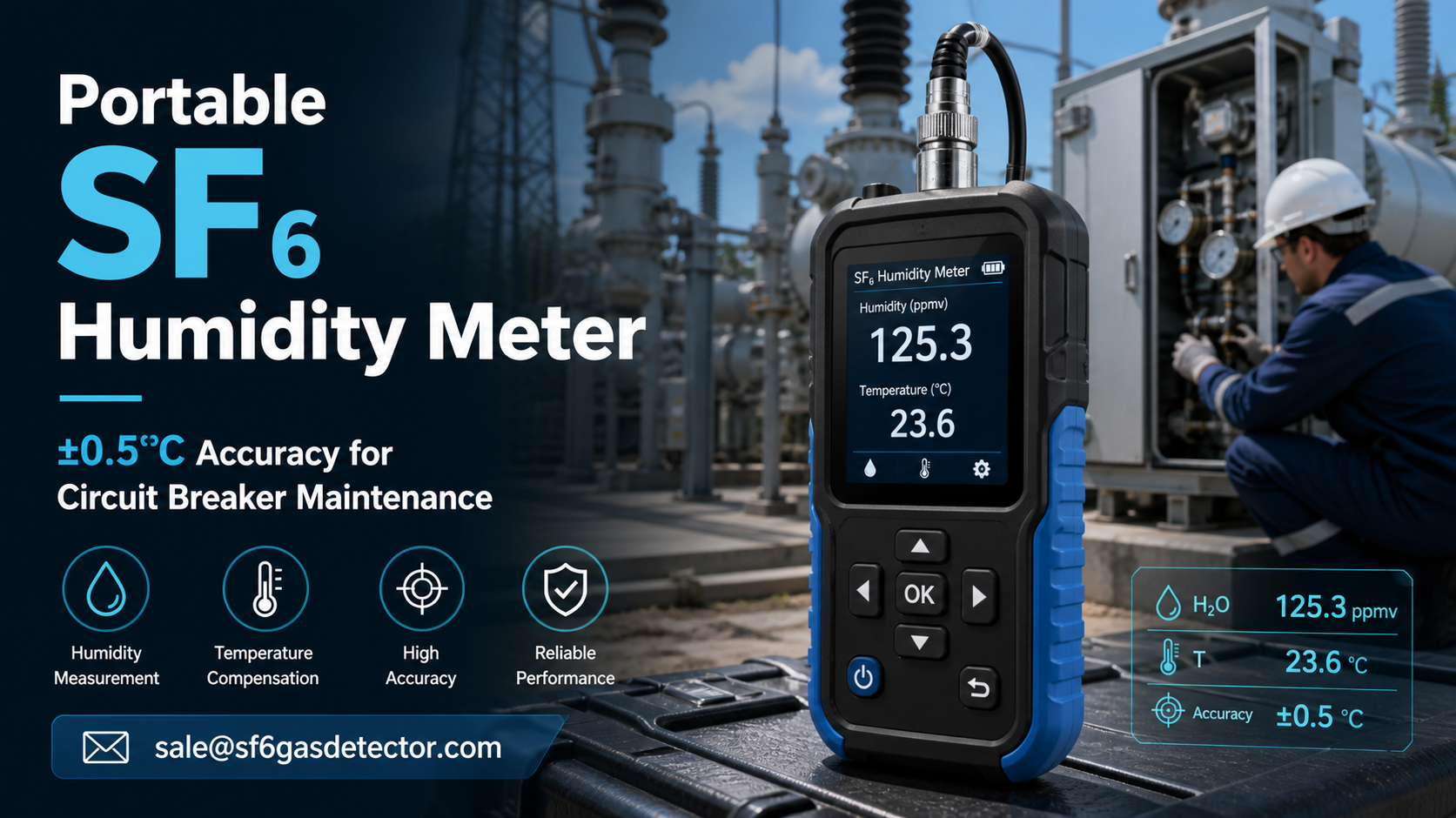
Portable SF6 Humidity Meter: ±0.5°C Accuracy for Circuit Breaker Maintenance
Date
2026-09-02
[email protected]
Website
www.sf6gasdetector.com
Get Solutions And Quotes
Contact Factory
Portable SF6 Humidity Meter: ±0.5°C Accuracy for Circuit Breaker Maintenance
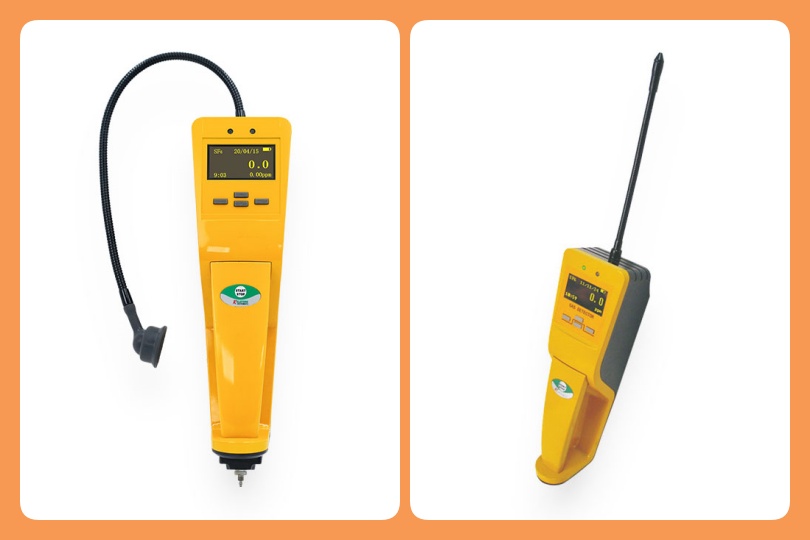
A portable SF6 humidity meter is an essential diagnostic instrument for verifying moisture levels in SF6-insulated circuit breakers. In high-voltage substations, excessive water vapor can reduce dielectric strength, accelerate insulation aging, and increase the risk of condensation under changing temperature conditions. For effective circuit breaker maintenance, technicians need fast, repeatable moisture measurements in ppmv, ppmw, and dew-point temperature, supported by an accuracy level such as ±0.5°C where specified for dew-point measurement.
Why SF6 Moisture Measurement Matters
SF6 gas is widely used in gas-insulated switchgear and live-tank circuit breakers because of its excellent dielectric and arc-quenching properties. However, the gas must remain dry and clean throughout its service life. A portable SF6 humidity meter helps maintenance teams identify moisture ingress caused by leaking seals, improper gas handling, residual humidity after filling, or aging internal materials.
For planned circuit breaker maintenance, moisture testing supports condition-based decisions instead of relying only on fixed maintenance intervals. A stable moisture trend may confirm that the gas compartment remains sealed, while an unexpected increase can trigger targeted leak checks, gas recovery, filtration, or inspection before a failure develops.
Understanding ppmv, ppmw, and Dew-Point Results
A professional portable SF6 humidity meter may display moisture in several formats. Each format is useful, but technicians should understand the measurement basis before comparing results with site limits or manufacturer documentation.
ppmv: Parts Per Million by Volume
ppmv expresses water vapor concentration by volume. It is widely used for SF6 gas-quality reporting and is convenient for comparing readings between gas compartments when the measurement conditions are controlled.
ppmw: Parts Per Million by Weight
ppmw expresses the water content by mass. Conversion between ppmv and ppmw depends on the molecular weight of water and SF6. Because SF6 has a much higher molecular weight than water, ppmw values are lower than ppmv values for the same water-vapor concentration. For accurate reporting, the portable SF6 humidity meter should apply the correct gas-specific conversion algorithm.
Dew Point and Frost Point
Dew point indicates the temperature at which moisture begins to condense at a stated pressure. For SF6 systems, instruments may report pressure dew point, atmospheric-pressure dew point, or frost point. During circuit breaker maintenance, always confirm the reference pressure and test method before comparing readings. A stated accuracy of ±0.5°C normally refers to dew-point accuracy within a defined operating range, not necessarily to every ppm value across the full measurement span.
Selecting a Portable SF6 Humidity Meter for Field Use
A suitable portable SF6 humidity meter should be designed for practical substation conditions, including outdoor testing, limited access points, and the need to minimize SF6 gas losses. Important selection parameters include:
- Dew-point measurement accuracy, such as ±0.5°C within the manufacturer’s specified range
- Direct display of ppmv, ppmw, and dew-point or frost-point values
- Compatibility with SF6 and appropriate pressure regulation
- Low gas consumption or gas-recovery capability
- Fast stabilization time for efficient circuit breaker maintenance routes
- Data logging, time stamps, and USB or digital reporting options
- Traceable calibration documentation from an ISO/IEC 17025-accredited calibration laboratory, where required by the customer’s quality system
For procurement teams comparing instruments, a clear specification sheet should define the measurement range, repeatability, response time, inlet pressure limits, sensor technology, and recommended calibration interval. Request a quick product quotation when selecting a meter for a new maintenance program or replacement project.
Recommended Testing Workflow for Circuit Breakers
Correct sampling technique is as important as meter accuracy. A portable SF6 humidity meter can only provide dependable results when the gas sample is representative and the connection path is dry, clean, and leak-free.
1. Prepare the Sampling Point
Confirm the circuit breaker is in the approved maintenance condition and follow the site’s lockout/tagout procedure. Inspect the service valve, hose, fittings, and seals. Purge or evacuate the sampling line according to the instrument manual to prevent ambient moisture from influencing the result.
2. Stabilize the Reading
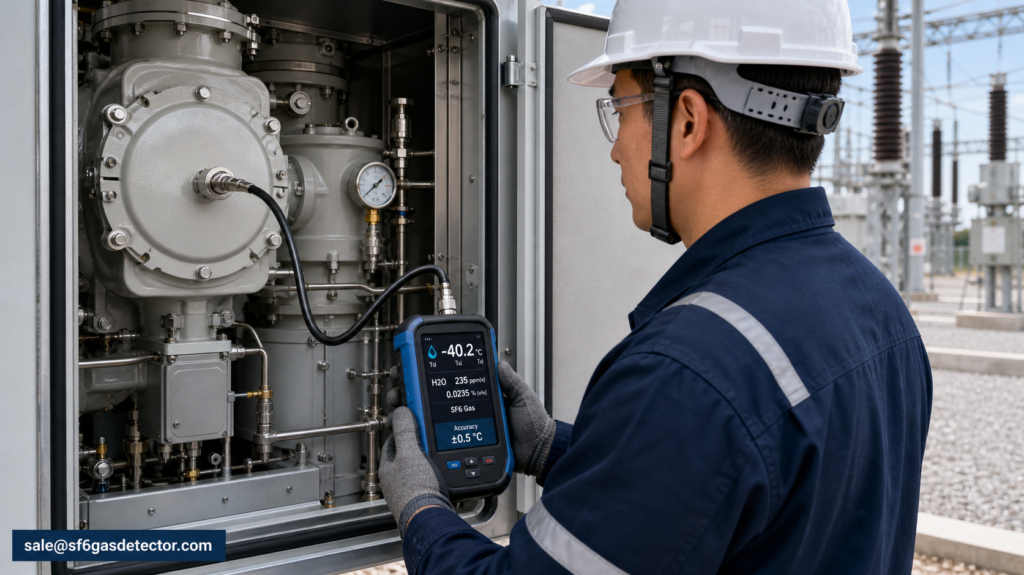
Connect the portable SF6 humidity meter using compatible self-sealing couplings. Allow sufficient time for the sensor reading to stabilize. Do not record the initial value immediately after connection, as residual moisture in hoses or fittings can create a false high reading.
3. Record Complete Test Conditions
For traceable circuit breaker maintenance records, log the compartment identification, date, ambient temperature, gas pressure, dew point, ppmv, ppmw, operator, and instrument serial number. Trend analysis is often more valuable than a single isolated reading.
4. Recover or Minimize Sample Gas
SF6 is a potent greenhouse gas. Follow applicable environmental procedures and use recovery equipment where required. A low-consumption portable SF6 humidity meter supports responsible testing by reducing the amount of gas released or transferred during sampling.
Compliance and Industry Standards
Moisture measurement should be integrated into a documented gas-quality and maintenance procedure. Relevant international references include IEC 60376 for new SF6 technical-grade gas, IEC 60480 for reused SF6 and handling guidance, and the IEC 62271 series for high-voltage switchgear requirements. Site procedures may also reference utility-specific acceptance limits and OEM recommendations.
A portable SF6 humidity meter does not replace the need for a complete gas analysis when contamination is suspected. Moisture testing should be combined with SF6 purity and decomposition-product assessment when there has been internal arcing, abnormal operation, or evidence of insulation distress. This integrated approach improves the quality of circuit breaker maintenance decisions.
Practical Maintenance Scenarios
Newly Filled Gas Compartments
After gas filling or topping up, use a portable SF6 humidity meter to verify that the final moisture level meets the project or manufacturer requirement. Elevated readings may indicate insufficient evacuation, contaminated gas-handling equipment, or moisture retained in the compartment.
Repeated Moisture Increase During Service
If trend data show a gradual increase, circuit breaker maintenance teams should inspect seals, flanges, density-monitor connections, and service valves. Moisture ingress can occur without an immediately visible pressure loss.
Post-Repair Verification
Following replacement of a bushing, interrupter component, or sealing assembly, a portable SF6 humidity meter confirms whether evacuation and refilling were completed correctly. For complex applications, obtain one-on-one guidance from engineers to match the testing configuration with your gas compartment design.
Frequently Asked Questions
Is ±0.5°C accuracy sufficient for circuit breaker maintenance?
For many field applications, ±0.5°C dew-point accuracy is suitable when paired with proper sampling practice and a calibrated portable SF6 humidity meter. Always compare the stated accuracy at the required measurement range and pressure condition.
Should results be reported in ppmv or ppmw?
Both are valid when the basis is clear. ppmv is commonly used in gas analysis, while ppmw may be required by specific procedures. A quality portable SF6 humidity meter should provide transparent conversion and clear reporting.
How often should moisture be tested?
Testing intervals depend on equipment criticality, service history, leakage trends, OEM guidance, and utility procedures. Routine circuit breaker maintenance often includes periodic gas-quality checks, with additional testing after repairs, alarms, or abnormal switching events.
Can a humidity meter detect SF6 decomposition products?
No. A portable SF6 humidity meter measures moisture only. Separate analyzers are required for SF6 purity and decomposition products such as SO₂, HF-related indicators, or other by-products specified by the maintenance program.