Professional C4F7N/C5F10O Insulated Gas Leak Detector Supplier

Date
2026-09-21
[email protected]
Website
www.sf6gasdetector.com
Get Solutions And Quotes
Contact Factory
Professional C4F7N/C5F10O Insulated Gas Leak Detector Supplier
Choosing a Professional C4F7N/C5F10O insulated gas leak detector supplier is essential for operators of gas-insulated switchgear, high-voltage substations, clean-energy facilities, and advanced electrical equipment. As C4F7N-based and C5F10O-based gas mixtures become more widely used as lower-GWP alternatives to traditional SF6 insulation, maintenance teams need detection equipment that can identify small leaks accurately, support traceable testing, and perform reliably in demanding industrial environments.
A qualified Professional C4F7N/C5F10O insulated gas leak detector supplier should provide more than a sensing instrument. The supplier should help users define the gas mixture, target sensitivity, site conditions, alarm requirements, and applicable safety certifications before selecting a solution.
Why C4F7N and C5F10O Leak Detection Requires Specialized Expertise
C4F7N (fluoronitrile) and C5F10O (fluoroketone) are typically used in carefully engineered insulating-gas mixtures rather than as pure gases. Depending on the equipment design, they may be blended with CO2, N2, O2, or dry air. Therefore, a Professional C4F7N/C5F10O insulated gas leak detector supplier must understand both the target component and the complete background-gas composition.
Conventional SF6 leak detectors are not automatically suitable for every alternative insulating-gas application. Cross-sensitivity, humidity, ambient airflow, gas pressure, and the physical location of the leak can all affect the measurement result. A Professional C4F7N/C5F10O insulated gas leak detector supplier should verify detector compatibility through gas-specific testing and documented calibration procedures.
Key Performance Parameters to Review
When evaluating a portable or fixed leak detection system, users should confirm the following technical parameters:
- Target gas capability: validated response to the relevant C4F7N or C5F10O mixture.
- Detection sensitivity: the minimum detectable concentration or leak rate under defined test conditions.
- Response and recovery time: important for scanning flanges, valves, cable terminations, and enclosure joints.
- Cross-sensitivity: response behavior in the presence of CO2, moisture, cleaning agents, or other process gases.
- Operating conditions: temperature range, relative humidity, altitude, IP protection rating, and battery endurance.
- Data traceability: calibration records, event logging, alarm history, and downloadable inspection reports.
A dependable Professional C4F7N/C5F10O insulated gas leak detector supplier will clearly state these values in product documentation instead of relying on generic “high sensitivity” claims.
Detection Technologies and Calibration Requirements
The best sensing method depends on the gas chemistry, required detection limit, and operating environment. Infrared-based, photoacoustic, electrochemical, thermal-conductivity, and mass-spectrometry-based methods may be considered depending on the application. A Professional C4F7N/C5F10O insulated gas leak detector supplier should recommend technology based on verified selectivity and field practicality, not on sensor type alone.
Calibration is equally important. For credible results, calibration gas should be traceable, properly labeled, and representative of the actual insulating-gas formulation wherever practical. The Professional C4F7N/C5F10O insulated gas leak detector supplier should define zeroing procedures, bump-test intervals, calibration frequency, and acceptable drift limits in the operating manual.
Compliance, Certifications, and Industrial Readiness
Compliance requirements vary by region and installation environment. A professional procurement review should include the relevant electrical, environmental, and hazardous-area obligations. A capable Professional C4F7N/C5F10O insulated gas leak detector supplier can provide documentation aligned with the intended deployment conditions.
Common Documentation to Request
- ISO 9001 quality-management documentation for manufacturing and service processes.
- CE conformity documentation where equipment is supplied to the European Economic Area.
- EMC compliance information, commonly assessed against relevant IEC 61326 series requirements for measurement and control equipment.
- Electrical safety evidence appropriate to the equipment category, such as IEC 61010-1 where applicable.
- Ingress-protection classification in accordance with IEC 60529.
- ATEX or IECEx certification when the detector is intended for use in a classified hazardous location.
- Calibration certificates with stated test gas, concentration, uncertainty, date, and traceability information.
A Professional C4F7N/C5F10O insulated gas leak detector supplier should never imply that a general industrial detector is approved for hazardous areas without a valid, application-specific certification.
Scenario-Based Selection for Electrical Asset Maintenance
GIS and Gas-Insulated Substations
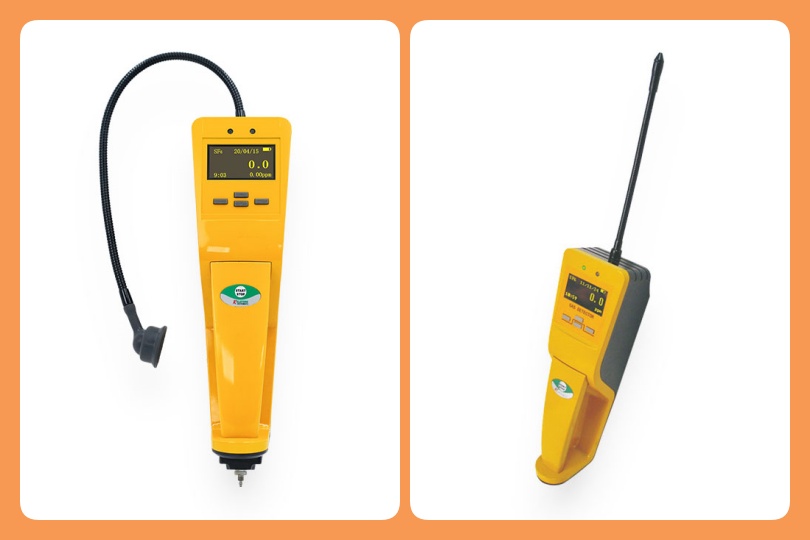
For GIS maintenance, a Professional C4F7N/C5F10O insulated gas leak detector supplier should offer a portable unit with a flexible probe, rapid response, stable baseline performance, and clear audible and visual alarms. Technicians often need to inspect gas compartments, sealing flanges, density-monitor connections, filling ports, and valve assemblies during planned outages or routine inspections.
Factory Acceptance Testing and Assembly Lines
In manufacturing environments, a Professional C4F7N/C5F10O insulated gas leak detector supplier may recommend a bench-mounted or fixed monitoring configuration. These systems can support repeatable acceptance tests, operator alarm limits, data logging, and quality-control records for each assembled unit.
Long-Term Fleet Monitoring
For critical substations and large asset fleets, a Professional C4F7N/C5F10O insulated gas leak detector supplier can help define a preventive-maintenance program that combines scheduled handheld inspections with permanent area monitoring where risk assessment justifies it. Trend data helps maintenance teams prioritize repairs before leakage affects insulation performance or operational availability.
What to Expect From a Reliable Supplier
A high-value Professional C4F7N/C5F10O insulated gas leak detector supplier provides application review, instrument selection, operating training, calibration support, spare parts, and responsive technical service. Before ordering, provide the gas-mixture composition, detection objective, installation area classification, expected ambient conditions, and required reporting format.
For project budgeting and procurement planning, teams can quickly obtain product quotations with the required gas specification, quantity, and delivery destination. For complex GIS, substation, or production-line applications, request one-on-one guidance from engineers to match sensitivity, certification, and installation requirements.
Frequently Asked Questions
Can one detector measure both C4F7N and C5F10O?
Not always. A Professional C4F7N/C5F10O insulated gas leak detector supplier should confirm the detector’s validated gas list, measurement range, and calibration method. The ability to detect one fluorinated insulating gas does not prove equivalent performance for another.
How often should a leak detector be calibrated?
Calibration frequency depends on manufacturer instructions, usage intensity, site risk, and quality procedures. Many industrial programs perform a functional check before use and schedule formal calibration at defined intervals. Your Professional C4F7N/C5F10O insulated gas leak detector supplier should provide written recommendations and calibration records.
Is a fixed detector better than a portable detector?
Portable instruments are ideal for targeted inspections and maintenance routes. Fixed systems are better suited to continuous monitoring in designated areas. A Professional C4F7N/C5F10O insulated gas leak detector supplier can help determine whether one approach or a combined strategy best supports operational risk control.