SF6 Gas Density Transmitter: Factory Price & Remote Output for Circuit Breakers

Date
2026-11-17
[email protected]
Website
www.sf6gasdetector.com
Get Solutions And Quotes
Contact Factory
SF6 Gas Density Transmitter: Factory Price & Remote Output for Circuit Breakers
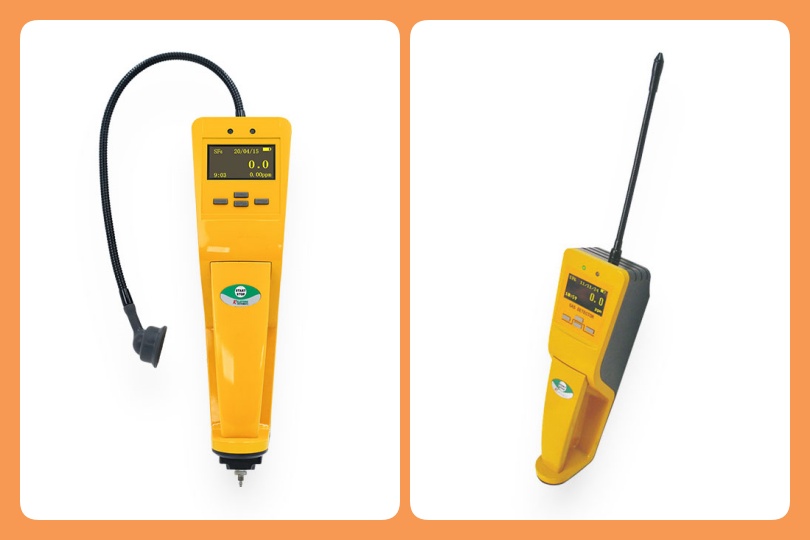
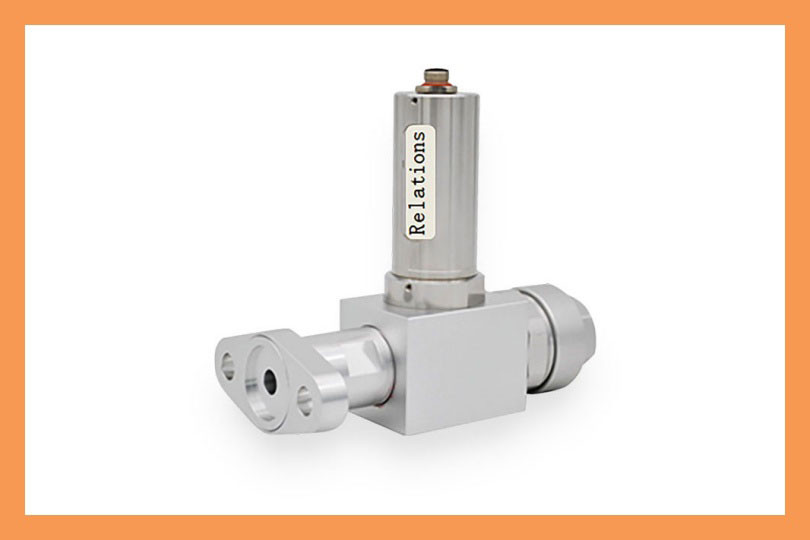
Selecting an SF6 gas density transmitter for circuit breakers requires more than comparing purchase prices. The instrument must provide reliable, temperature-compensated measurements, compatible remote output, and a leak-tight connection suited to the equipment. When evaluating SF6 gas density transmitter manufacturer price, buyers should compare equivalent specifications, documented testing, and installation costs rather than headline quotations alone. This guide explains the parameters, compliance considerations, and application requirements that determine a technically sound purchase.
Why SF6 Density Monitoring Matters for Circuit Breakers
SF6 provides insulation and supports arc interruption in equipment designed for this gas. Insufficient gas density can compromise dielectric performance and interrupting capability. Monitoring therefore supports maintenance decisions and equipment protection.
Pressure alone is not a reliable indication of gas quantity because it changes with temperature. A density transmitter measures or derives gas density using pressure and temperature data, often reporting equivalent pressure at a specified reference temperature.
For circuit breakers, distinguish between three functions:
- Local indication: An on-site display or mechanical dial.
- Remote measurement: A continuous signal sent to monitoring equipment.
- Protective contacts: Discrete alarm or lockout signals associated with defined thresholds.
A remote transmitter does not automatically replace the breaker manufacturer’s approved density monitor or protective interlocks.
Technical Parameters That Define a Comparable Quotation
A meaningful SF6 gas density transmitter manufacturer price comparison starts with a common technical specification. Without one, apparently similar quotations may cover substantially different instruments.
| Parameter | What to specify | Why it matters |
|---|---|---|
| Measurement range | Operating density or equivalent pressure range | Prevents unsuitable scaling |
| Reference conditions | Reference temperature and absolute or gauge basis | Makes readings comparable |
| Accuracy | Total compensated error across the operating range | Establishes usable measurement performance |
| Temperature limits | Ambient and gas-temperature ranges | Supports outdoor operation |
| Remote output | 4–20 mA, digital communication, or both | Determines system compatibility |
| Electrical supply | Voltage range, consumption, and protection | Matches station power |
| Gas connection | Thread, flange, seal, and valve arrangement | Controls fit and leakage risk |
| Environmental protection | Required IP rating and corrosion resistance | Matches installation exposure |
| Alarm functions | Contacts, setpoints, hysteresis, and ratings | Supports approved control logic |
Check Compensation, Not Just Room-Temperature Accuracy
Ask whether stated accuracy covers the complete compensated output or only the pressure sensor. Performance should be documented over the specified temperature range.
Rapid temperature changes and differences between the transmitter and gas-compartment temperatures can affect calculated density. Installation location and thermal coupling therefore matter, particularly on outdoor circuit breakers.
For gas mixtures, confirm the compensation algorithm matches the actual composition. A transmitter calibrated for pure SF6 should not be assumed suitable for alternative insulating gases.
Choosing Remote Output for the Installation
4–20 mA for Conventional Substation Monitoring
An SF6 gas density transmitter with 4–20 mA output is often suitable for existing analog input systems. Check loop power, maximum load, isolation, grounding, and cable shielding.
Define the measurement scaling and fault behavior before commissioning. A low-density condition must be distinguishable from a broken cable or transmitter failure through the monitoring system’s documented diagnostics.
Digital Communication for Asset Management
Digital transmitters can provide density, pressure, temperature, and diagnostic information, depending on the model. For devices using Modbus RTU over RS-485, verify register definitions, addressing, termination, and supported communication settings.
Connection to an IEC 61850-based substation system may require an intelligent electronic device or gateway. An RS-485 interface alone does not establish IEC 61850 compatibility.
Remote density monitoring for circuit breakers can help identify leakage trends, but alarm thresholds and protective actions must remain consistent with the equipment manufacturer’s instructions.
What Determines Manufacturer Price?
The principal SF6 gas density transmitter manufacturer price drivers are compensated accuracy, environmental qualification, output configuration, gas-interface design, and testing documentation.
Basic transmitters generally involve fewer components than assemblies incorporating local displays, switching contacts, multiple outputs, or service valves. Small orders, customized connectors, special materials, and witnessed testing can also increase unit cost.
Request an itemized quotation covering:
- Transmitter model and configured options.
- Calibration and routine test documentation.
- Connection adapters, cables, and accessories.
- Minimum order quantity and delivery schedule.
- Warranty, technical support, and replacement availability.
- Shipping terms, taxes, and commissioning responsibilities.
There is no dependable universal price for this equipment. Compare current written quotations against identical requirements and calculate total installed cost, including any gateway or control-system modifications.
Standards, Certifications, and Environmental Responsibilities
IEC 62271-1 and IEC 62271-100 provide relevant requirements for high-voltage switchgear and AC circuit breakers. Their relevance to the equipment does not automatically certify an individual transmitter.
For instrument selection, request applicable electromagnetic compatibility evidence and enclosure testing to IEC 60529 where an IP rating is claimed. ISO 9001 certification supports assessment of a manufacturer’s quality management system; it does not establish product measurement accuracy.
Calibration documentation should identify traceability and measurement uncertainty. Where accredited calibration is required, verify that the laboratory’s ISO/IEC 17025 accreditation scope covers the relevant measurements.
SF6 handling should follow applicable legislation, equipment instructions, and relevant guidance such as IEC 62271-4. In the EU, Regulation (EU) 2024/573 includes fluorinated-gas obligations and phased switchgear restrictions. Confirm requirements for the jurisdiction and installation date rather than assuming existing practices remain permissible.
Frequently Asked Questions
Can one transmitter fit all circuit breakers?
No. Gas connections, operating ranges, reference conditions, electrical interfaces, and protective arrangements differ. Obtain equipment-manufacturer approval for retrofits.
Does remote output eliminate local inspection?
No. Remote data supports condition monitoring, but inspections, leak investigations, and functional checks remain necessary under the maintenance plan.
How should alarm thresholds be selected?
Use the breaker manufacturer’s specified thresholds and approved protection philosophy. Do not derive lockout settings from transmitter range alone.
What should a manufacturer provide before purchase?
Request a datasheet, dimensional drawing, wiring diagram, communication documentation, relevant test evidence, and a clearly defined calibration package.
Making a Defensible Procurement Decision
The best-value transmitter is the one that matches the application, integrates predictably, and provides verifiable performance. Assess SF6 gas density transmitter manufacturer price alongside documentation, compatibility, serviceability, and environmental obligations to support dependable monitoring throughout the equipment lifecycle.