SF6 Gas Recovery Service Cost for GIS Applications: What to Expect
Date
2026-10-13
[email protected]
Website
www.sf6gasdetector.com
Get Solutions And Quotes
Contact Factory
SF6 Gas Recovery Service Cost for GIS Applications: What to Expect
Understanding the SF6 gas recovery service cost for GIS applications is essential for utilities, substations, EPC contractors, and industrial power operators planning maintenance, retrofit, fault repair, or end-of-life decommissioning work. Gas-insulated switchgear (GIS) depends on controlled SF6 handling to maintain equipment reliability, prevent unnecessary emissions, and meet environmental obligations. While pricing varies by site and scope, a professional recovery service should always include trained personnel, certified equipment, documented gas quantities, and compliant handling procedures.
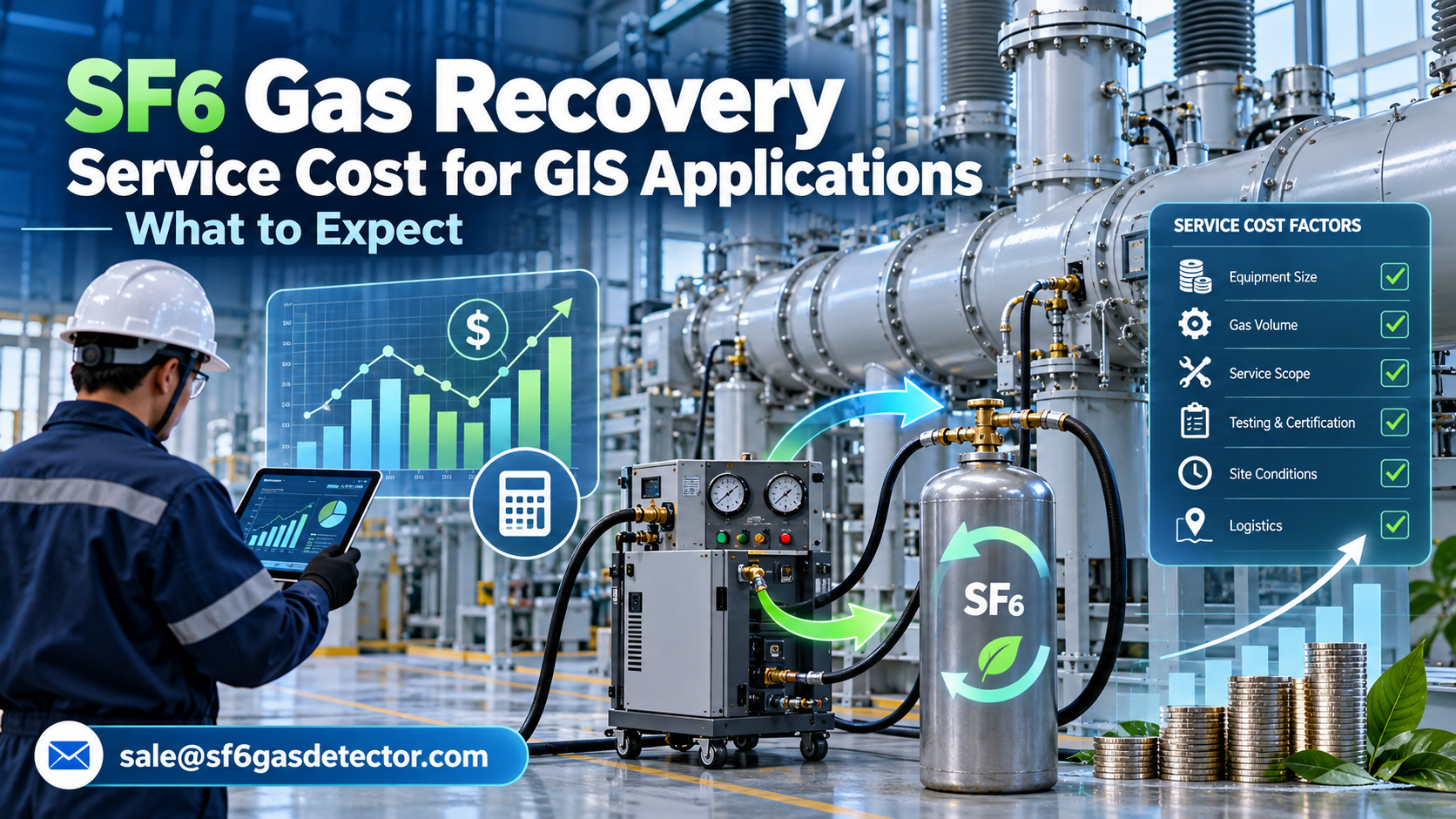
The total SF6 gas recovery service cost for GIS applications is not simply a charge for connecting a recovery cart. It reflects the gas volume, GIS voltage class, equipment accessibility, required purity testing, transport conditions, labor hours, and local regulatory requirements. Evaluating these factors in advance helps asset owners budget accurately and select a qualified service provider.
Key Cost Components of SF6 Recovery Work
SF6 Gas Volume and Compartment Configuration
The amount of gas contained in the GIS is usually the primary cost driver. A compact medium-voltage GIS panel may contain only a limited quantity of SF6, while a high-voltage transmission-class GIS installation can contain hundreds of kilograms distributed across multiple gas compartments. Therefore, the SF6 gas recovery service cost for GIS applications generally rises with total gas mass, the number of compartments, and the required evacuation depth.
Multi-compartment systems require additional valve connections, pressure verification, compartment identification, and leak-control procedures. Where gas cannot be transferred directly because of contamination or mixed gas conditions, additional recovery, separation, or disposal arrangements may be necessary.
Site Access, Safety Controls, and Outage Planning
Site conditions have a direct effect on the SF6 gas recovery service cost for GIS applications. Indoor substations, offshore platforms, remote renewable-energy sites, underground facilities, and restricted-access transmission stations may require more planning than a standard ground-level substation.
Costs can increase when the work requires outage coordination, permit-to-work documentation, confined-space precautions, lifting plans, security clearance, or night and weekend attendance. For energized substations, recovery work must be performed only after the relevant GIS section has been safely isolated, grounded, and released under the facility’s approved switching and safety procedures.
Recovery Equipment and Vacuum Performance
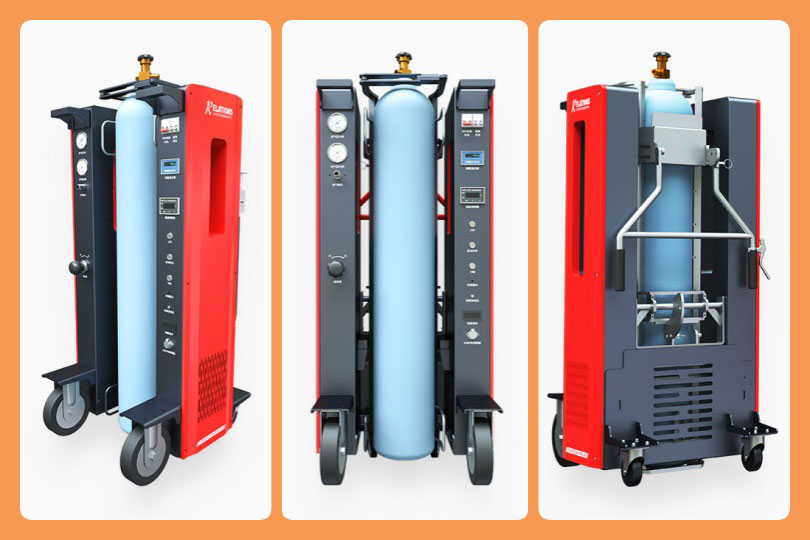
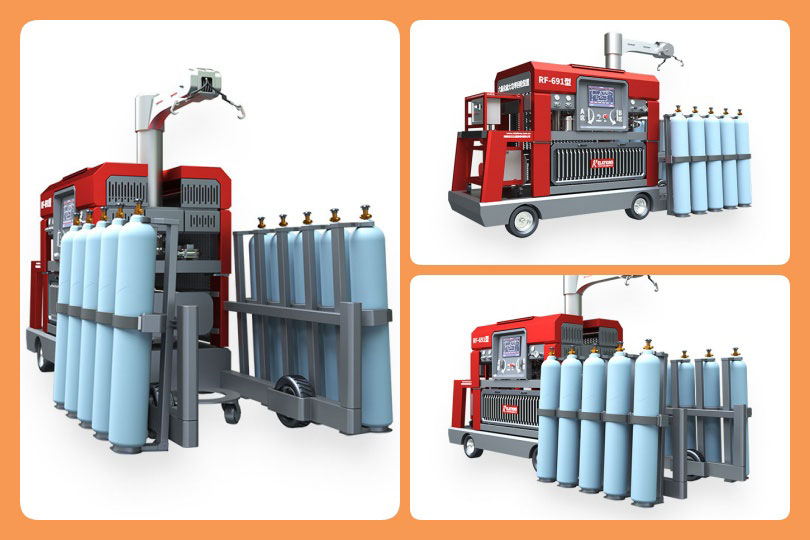
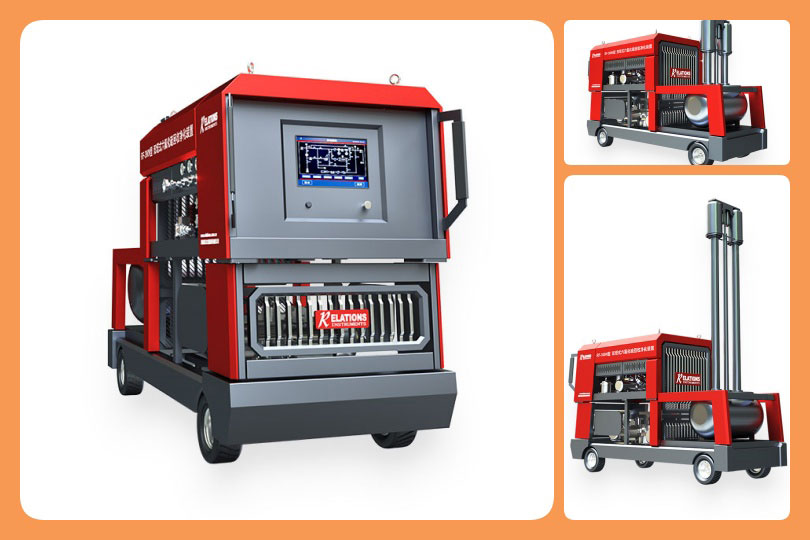
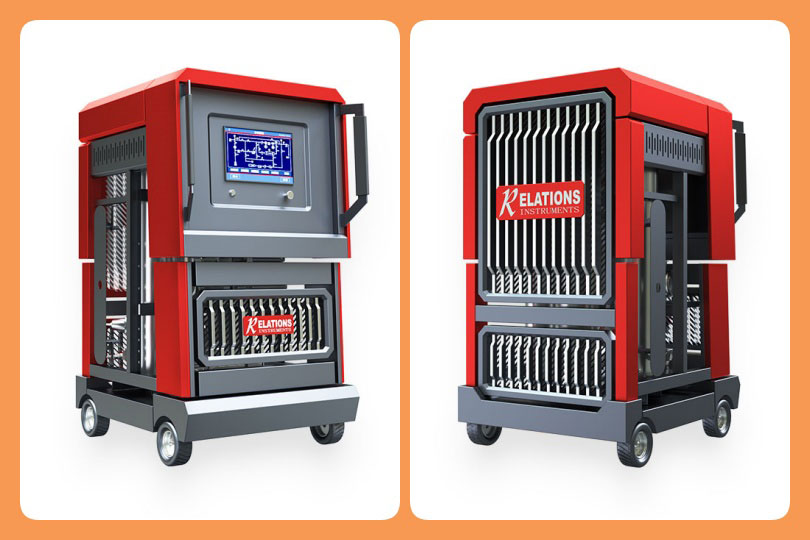
Professional SF6 recovery uses dedicated, leak-tight recovery and evacuation equipment designed for sulfur hexafluoride service. The SF6 gas recovery service cost for GIS applications may include mobilization of gas carts, calibrated weighing scales, storage cylinders, vacuum pumps, gas analyzers, hoses, fittings, and spill-prevention accessories.
A proper scope should state the target final pressure or vacuum requirement, because deeper evacuation cycles take more time and may be required before opening equipment for internal inspection or repair. The service provider should also prevent cross-contamination between gas batches by using suitable cylinders and documented handling practices.
Compliance Standards That Affect Service Pricing
A reliable SF6 gas recovery service cost for GIS applications should account for compliance, not just labor. SF6 is a fluorinated greenhouse gas with a very high global warming potential. Recovery work should be conducted in accordance with applicable local environmental rules and recognized technical guidance.
- IEC 62271-4: procedures for handling SF6 and its mixtures in high-voltage switchgear and controlgear.
- IEC 60480: guidance for the reuse, treatment, and assessment of used SF6 taken from electrical equipment.
- IEC 60376: specifications for new technical-grade SF6 intended for electrical equipment.
- ISO 14001: an environmental management framework often used by qualified service organizations.
- Regional F-gas requirements: such as EU Regulation (EU) 2024/573, where applicable, alongside national waste, transport, and personnel-certification obligations.
Documentation requirements can influence the SF6 gas recovery service cost for GIS applications, but they also reduce compliance risk. A complete service record should identify the equipment, recovered gas weight, cylinder numbers, measured gas condition, recovery date, technician details, and the final destination of the gas.
Typical Service Scenarios and Budget Considerations
Routine Preventive Maintenance
For planned maintenance, the SF6 gas recovery service cost for GIS applications is usually more predictable because the outage window, gas compartments, and access conditions are known. Combining recovery with gas analysis, leak investigation, vacuum drying, and refilling can reduce repeat mobilization costs.
Emergency Leak Repair or Internal Fault Investigation
Emergency work often carries a higher SF6 gas recovery service cost for GIS applications because rapid mobilization, fault isolation, additional safety controls, and contaminated gas handling may be required. If arcing by-products are suspected, technicians may need enhanced personal protective equipment and controlled decontamination procedures before the GIS compartment is opened.
GIS Decommissioning and Replacement Projects
During replacement or retirement of a GIS installation, the SF6 gas recovery service cost for GIS applications should be evaluated as part of the full decommissioning package. This may include compartment-by-compartment recovery, cylinder labeling, gas quality assessment, transport coordination, and certified reclamation or destruction through an authorized downstream facility where reuse is not appropriate.
For project-specific pricing, operators can quickly obtain product quotations by providing the GIS model, voltage rating, estimated SF6 inventory, site location, access restrictions, and desired service date.
How to Compare SF6 Recovery Service Quotations
When comparing proposals, do not select a provider based only on the lowest stated SF6 gas recovery service cost for GIS applications. Confirm whether the quotation includes mobilization, labor, cylinders, gas weighing, vacuum pumping, analysis, documentation, transport, and final gas treatment. An incomplete low-cost offer can create unplanned charges or leave the site without the records required for environmental reporting.
Ask whether technicians are trained in GIS-specific procedures, whether equipment calibration certificates are available, and how recovered gas will be segregated and tracked. For complex substations or unusual gas conditions, one-on-one guidance from engineers can help define the correct recovery scope before the outage begins.
Frequently Asked Questions
What information is needed to estimate SF6 gas recovery service cost for GIS applications?
Provide the GIS manufacturer and model, voltage class, number of compartments, estimated gas mass, current pressure, site address, access limitations, outage schedule, and whether gas analysis or disposal is required. These details allow a more accurate service plan and cost estimate.
Can recovered SF6 be reused?
Potentially, yes. Reuse depends on gas quality and the applicable technical and regulatory requirements. Used gas should be tested and, where necessary, treated in accordance with IEC 60480 before it is considered suitable for reuse.
Why is documentation important after SF6 recovery?
Recovery records demonstrate responsible gas management, support internal asset history, assist environmental reporting, and provide traceability for recovered cylinders. They are a critical part of a compliant SF6 gas recovery service cost for GIS applications package.
By defining the gas inventory, work environment, compliance requirements, and final gas destination early, organizations can control the SF6 gas recovery service cost for GIS applications while protecting equipment availability and environmental performance.