Supplier Inquiry H2S Gas Detection and Alarm Device | Industrial H2S Safety Monitor
Date
2026-07-02
[email protected]
Website
www.sf6gasdetector.com
Get Solutions And Quotes
Contact Factory
Supplier Inquiry H2S Gas Detection and Alarm Device | Industrial H2S Safety Monitor
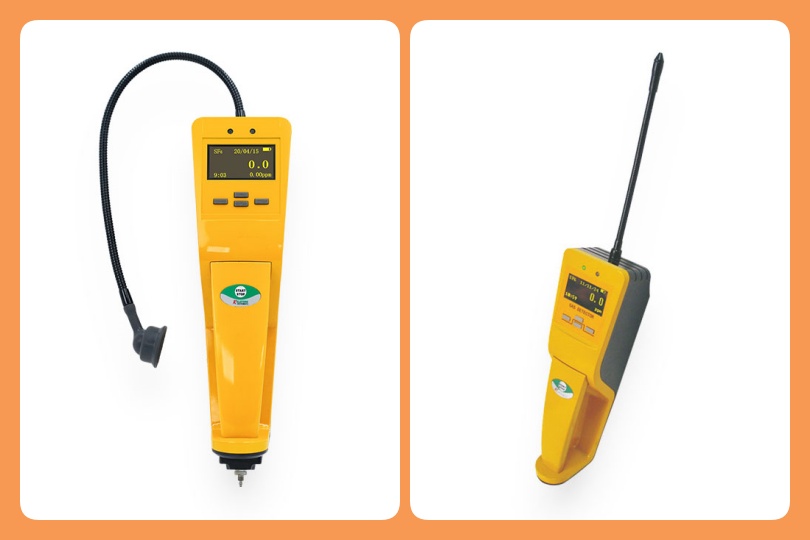
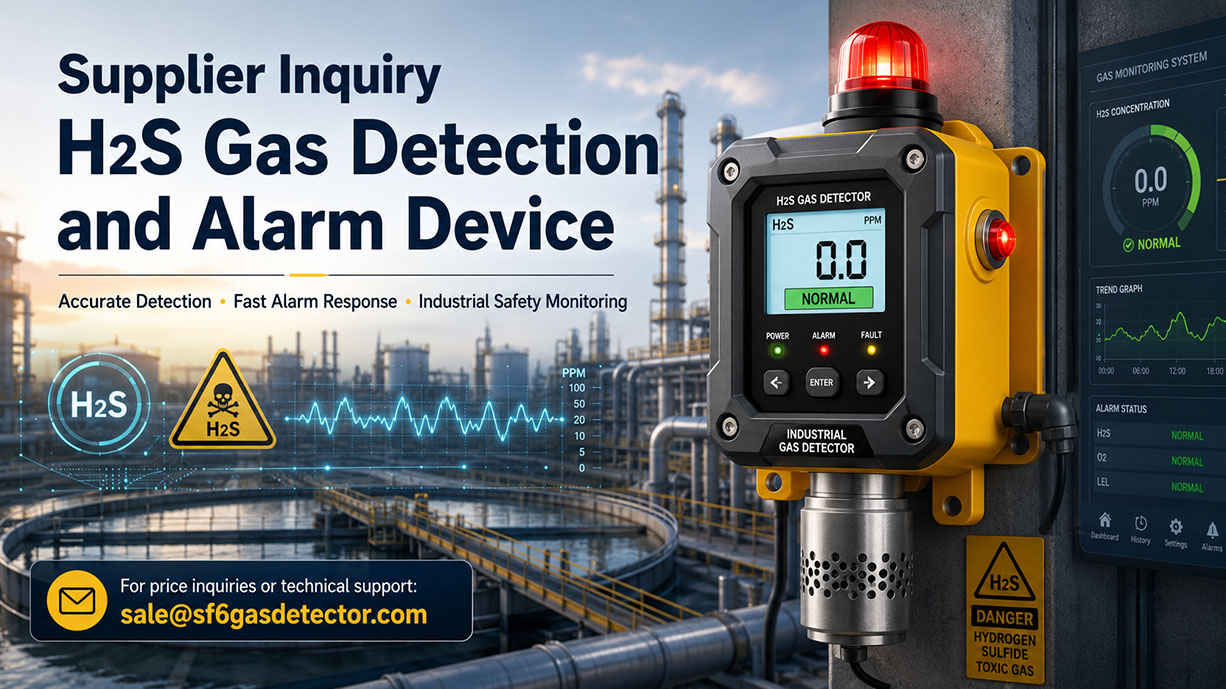
A supplier inquiry H2S gas detection and alarm device is designed for continuous hydrogen sulfide monitoring in industrial environments where toxic gas leakage may threaten worker safety, production stability, and compliance requirements. This device provides accurate H2S detection, fast audible and visual alarms, flexible signal output, and reliable integration with gas alarm controllers, PLC systems, ventilation systems, and centralized safety monitoring platforms.
What Is a Supplier Inquiry H2S Gas Detection and Alarm Device?
A supplier inquiry H2S gas detection and alarm device is an industrial safety instrument used to detect hydrogen sulfide concentration in the air and provide immediate alarm warnings when the gas level exceeds the preset safety threshold. Hydrogen sulfide, also known as H2S, is a highly toxic and flammable gas commonly found in oil and gas production, wastewater treatment, chemical processing, sewage systems, biogas plants, mining, and confined-space maintenance.
For buyers, choosing the right supplier inquiry H2S gas detection and alarm device means selecting a solution that supports accurate measurement, stable performance, easy installation, convenient maintenance, and dependable long-term operation.
Why Industrial Buyers Need an H2S Gas Detection and Alarm Device
Hydrogen sulfide exposure can cause serious health risks even at low concentrations. In industrial workplaces, early detection is essential for protecting personnel, reducing accident risks, and supporting safe production management. A professional supplier inquiry H2S gas detection and alarm device helps operators monitor hazardous areas in real time and respond quickly before gas concentration becomes dangerous.
This type of device is especially important for projects that require continuous monitoring, remote alarm transmission, automatic ventilation linkage, or centralized gas safety management.
Core Advantages of the Supplier Inquiry H2S Gas Detection and Alarm Device
High-Accuracy Hydrogen Sulfide Detection
The supplier inquiry H2S gas detection and alarm device uses a sensitive electrochemical sensor to detect H2S concentration quickly and accurately. It is suitable for low-level toxic gas monitoring in areas such as pump rooms, storage tanks, sewage treatment zones, chemical workshops, underground pipelines, and confined spaces.
Fast Alarm Response for Safer Operation
When H2S concentration exceeds the preset alarm value, the device can activate sound alarms, light alarms, relay output, and remote signal transmission. This fast alarm response helps workers evacuate, start ventilation systems, and take corrective action in time.
Flexible Signal Output and System Integration
A professional supplier inquiry H2S gas detection and alarm device can support 4–20mA, RS485, relay output, and other communication methods. It can be connected to gas alarm controllers, PLC systems, DCS systems, SCADA platforms, exhaust fans, and emergency shutdown systems.
Industrial-Grade Structure
The device is designed for demanding industrial environments. Depending on project requirements, buyers can choose explosion-proof housing, waterproof design, wall-mounted installation, digital display, and customized alarm configuration.
Lower Maintenance Cost
With stable sensor performance, easy calibration, and clear display, the supplier inquiry H2S gas detection and alarm device helps reduce daily maintenance workload while improving gas monitoring efficiency.
Technical Specifications of H2S Gas Detection and Alarm Device
| Item | Specification |
|---|---|
| Detecting Gas | H2S / Hydrogen Sulfide |
| Detection Principle | Electrochemical sensor |
| Measuring Range | 0–100 ppm, 0–200 ppm, or customized |
| Resolution | 0.1 ppm or customized |
| Response Time | Typically ≤30 seconds |
| Alarm Method | Audible alarm, visual alarm, relay output |
| Signal Output | 4–20mA, RS485, relay output |
| Display Type | LCD / LED display optional |
| Power Supply | DC 24V or customized |
| Installation Method | Wall-mounted / fixed installation |
| Protection Design | Industrial housing, optional explosion-proof structure |
| Application Areas | Oil and gas, wastewater, chemical plants, power plants, confined spaces |
Application Scenarios
Oil and Gas Industry
In drilling sites, refineries, natural gas processing plants, and pipeline stations, H2S leakage can create serious safety risks. A supplier inquiry H2S gas detection and alarm device can be installed near pipelines, valves, storage tanks, compressor areas, and processing units to provide continuous monitoring and early warning.
Wastewater Treatment Facilities
Hydrogen sulfide is often generated during sewage treatment, sludge processing, and wastewater collection. Installing a supplier inquiry H2S gas detection and alarm device in pump stations, sludge tanks, underground chambers, and treatment workshops helps protect workers from toxic gas exposure.
Chemical and Petrochemical Plants
Chemical production facilities require reliable gas detection systems to monitor toxic gas leakage around reaction tanks, storage areas, filling stations, and pipeline connections. The device supports stable detection and alarm linkage for high-risk production environments.
Confined Space Maintenance
Tanks, tunnels, pits, manholes, and underground facilities may accumulate H2S without obvious warning. A supplier inquiry H2S gas detection and alarm device supports safer confined-space operation by providing continuous gas concentration monitoring before and during maintenance work.
Power Plants and Industrial Facilities
In power generation, waste gas treatment, desulfurization systems, and industrial utility areas, H2S monitoring may be required for environmental safety and worker protection. The device can be integrated into broader plant safety systems.
Buying Guide: How to Choose the Right Supplier Inquiry H2S Gas Detection and Alarm Device
Before purchasing a supplier inquiry H2S gas detection and alarm device, buyers should confirm several key requirements.
First, determine the measuring range. Common options include 0–100 ppm and 0–200 ppm, while customized ranges may be required for special industrial environments.
Second, confirm the installation environment. If the device will be used in oil refineries, gas stations, chemical workshops, or hazardous zones, an explosion-proof H2S gas detection and alarm device is recommended.
Third, check the required output signal. For single-point monitoring, relay output may be enough. For centralized systems, 4–20mA or RS485 communication may be required.
Fourth, confirm alarm linkage requirements. The device may need to activate fans, warning lights, emergency shutdown systems, or remote alarm panels.
Fifth, evaluate supplier support. A reliable supplier should provide model selection guidance, calibration support, technical documents, warranty service, and export delivery assistance.
For price inquiries, model selection, or technical support, customers can email [email protected] with gas type, measuring range, quantity, installation conditions, and output signal requirements.
What to Include in a Supplier Inquiry
To receive a faster and more accurate quotation for a supplier inquiry H2S gas detection and alarm device, buyers should provide the following information:
| Inquiry Information | Recommended Details |
| Gas Type | H2S / Hydrogen Sulfide |
| Measuring Range | 0–100 ppm, 0–200 ppm, or customized |
| Quantity | Number of detection points |
| Installation Site | Indoor, outdoor, hazardous area, confined space |
| Output Signal | 4–20mA, RS485, relay output |
| Alarm Requirement | Sound, light, relay linkage, controller connection |
| Power Supply | DC 24V or customized |
| Certification Need | Explosion-proof, CE, or project-specific documents |
| Destination Country | For shipping and project support |
FAQs About Supplier Inquiry H2S Gas Detection and Alarm Device
1. What is the main function of an H2S gas detection and alarm device?
The main function is to continuously monitor hydrogen sulfide concentration and trigger alarms when the gas level exceeds the preset safety limit.
2. Where should the device be installed?
A supplier inquiry H2S gas detection and alarm device should be installed near possible leakage points, such as pipelines, tanks, valves, pump rooms, sewage treatment areas, and confined spaces.
3. Can the device connect to a gas alarm controller?
Yes. The device can support 4–20mA, RS485, and relay output, making it suitable for connection with gas alarm controllers, PLC systems, ventilation systems, and centralized safety platforms.
4. Is explosion-proof design available?
Yes. Explosion-proof design is available for hazardous areas such as oil and gas sites, chemical plants, refineries, and other industrial environments where flammable gases may be present.
5. How can I get a price quotation?
To request a quotation for a supplier inquiry H2S gas detection and alarm device, email [email protected] with your measuring range, quantity, signal output, installation environment, and technical requirements.
Conclusion
A supplier inquiry H2S gas detection and alarm device is a reliable solution for hydrogen sulfide monitoring in oil and gas, wastewater treatment, chemical production, power plants, and confined-space safety applications. With accurate detection, fast alarm response, flexible output signals, and industrial-grade design, the device helps improve workplace safety, reduce gas leakage risks, and support continuous industrial monitoring.
For price inquiries, technical support, or project model selection, please contact [email protected] and share your H2S detection range, installation site, quantity, and system integration requirements.