Top OEM ODM Insulating Gas Leak Detector Chinese Supplier Guide

Date
2026-09-14
[email protected]
Website
www.sf6gasdetector.com
Get Solutions And Quotes
Contact Factory
Top OEM ODM Insulating Gas Leak Detector Chinese Supplier Guide
An OEM ODM Insulating Gas Leak Detector Chinese supplier can help manufacturers, utilities, and service companies develop cost-effective gas monitoring equipment tailored to specific markets. However, selecting the right partner requires more than comparing unit prices. Buyers need proven engineering capability, reliable quality systems, applicable compliance documentation, stable component sourcing, and practical support throughout product development and after-sales service.
For SF₆, alternative fluorinated insulating gases, and mixed-gas applications, a professional OEM ODM Insulating Gas Leak Detector Chinese supplier should provide technically appropriate sensing solutions while helping customers meet local safety, environmental, and electrical requirements.
What Does an OEM ODM Insulating Gas Leak Detector Supplier Provide?
OEM and ODM services serve different business needs. An OEM project typically follows the customer’s defined specifications, including enclosure design, measurement range, branding, firmware logic, packaging, and user documentation. ODM service is usually based on an existing detector platform that can be customized with a private label, selected functions, or market-specific accessories.
A qualified OEM ODM Insulating Gas Leak Detector Chinese supplier may support:
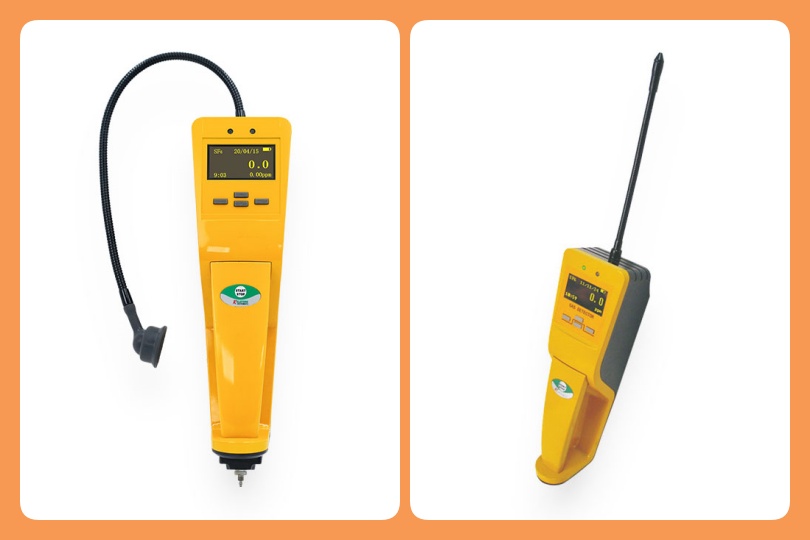
- Portable SF₆ gas leak detectors for switchgear inspection
- Fixed gas leak monitoring systems for substations and GIS rooms
- Infrared, thermal conductivity, electrochemical, or semiconductor sensor configurations
- Custom alarm thresholds, display languages, and data logging functions
- Bluetooth, Wi-Fi, RS-485, Modbus, or cloud-connected communication options
- Private-label housings, logos, manuals, cartons, and calibration labels
- Firmware adaptation for utility, laboratory, rental, or maintenance workflows
The best supplier does not simply assemble instruments. It should evaluate the target gas, detection principle, expected leak-rate sensitivity, temperature and humidity conditions, response time, and maintenance interval before recommending a configuration.
Key Technical Parameters to Evaluate
When comparing an OEM ODM Insulating Gas Leak Detector Chinese supplier, technical requirements should be defined in a clear specification sheet. This reduces ambiguity during sampling, validation, and mass production.
Detection Principle and Gas Compatibility
SF₆ leak detection often uses infrared absorption technology, because SF₆ has distinctive infrared absorption characteristics. The appropriate method depends on the gas type, expected concentration range, cross-sensitivity risk, and whether the application requires qualitative leak location or quantitative concentration monitoring.
For equipment designed around alternative insulating gases, such as fluoronitrile-based mixtures or fluoroketone-based mixtures, the supplier should verify sensor compatibility using the actual gas composition. A detector calibrated for pure SF₆ should not automatically be assumed suitable for every alternative-gas formulation.
Performance Specifications
A professional OEM ODM Insulating Gas Leak Detector Chinese supplier should state performance parameters transparently, including:
- Detection range and minimum detectable leak rate or concentration
- Accuracy, repeatability, and resolution
- Response and recovery time
- Warm-up time and zeroing method
- Operating temperature, humidity, and altitude limits
- Battery operating time and charging specifications
- Probe length, filter design, and ingress protection rating
- Calibration interval and recommended functional-check procedure
Buyers should request test conditions for all published values. For example, sensitivity performance may vary depending on gas concentration, airflow, probe distance, ambient temperature, and background contamination.
Compliance, Quality Control, and Documentation
Compliance should be evaluated according to the intended sales region and final product configuration. A dependable OEM ODM Insulating Gas Leak Detector Chinese supplier should maintain a documented quality process and provide traceable inspection records.
ISO 9001 certification is commonly used to demonstrate a structured quality management system. For products placed on the EU market, CE-related conformity assessment may involve the EMC Directive 2014/30/EU, the Low Voltage Directive 2014/35/EU where applicable, and the Radio Equipment Directive 2014/53/EU for wireless models. RoHS requirements may also apply to electrical and electronic equipment.
For industrial environmental robustness, relevant testing can be planned with reference to the IEC 60068 series, covering environmental tests such as temperature, vibration, and humidity exposure. For SF₆ gas quality and handling contexts, IEC 60376 and applicable local environmental regulations should be considered. Certifications must always match the final model, destination market, and installed components; they should never be treated as generic claims.
A capable OEM ODM Insulating Gas Leak Detector Chinese supplier will normally offer incoming inspection, sensor verification, functional testing, burn-in where required, final inspection, serial-number traceability, and calibration documentation.
Scenario-Based Solutions for Industrial Buyers
GIS and High-Voltage Switchgear Maintenance
Maintenance teams need lightweight, responsive instruments for routine inspections around gas-insulated switchgear, circuit breakers, flanges, valves, and cable terminations. A portable detector with a flexible probe, audible and visual alarms, rechargeable battery, and durable carrying case is typically suitable.
An experienced OEM ODM Insulating Gas Leak Detector Chinese supplier can customize alarm behavior, display units, and inspection accessories to match field maintenance procedures.
Fixed Monitoring for Substation Rooms
For enclosed rooms or high-risk areas, fixed monitoring systems can provide continuous concentration indication and alarm outputs. A practical solution may include wall-mounted detectors, relay contacts, RS-485/Modbus communication, local sound-and-light alarms, and integration with ventilation or supervisory systems.
In this scenario, customers should define sensor placement, room volume, ventilation patterns, alarm philosophy, and maintenance access before finalizing the design.
Distributor and Private-Label Product Programs
Distributors often require differentiated product appearance, multilingual manuals, branded packaging, and stable lead times. An OEM ODM Insulating Gas Leak Detector Chinese supplier with in-house firmware and mechanical engineering resources can help create a recognizable private-label product without requiring a completely new platform.
For faster sourcing decisions, request a product quotation with the required gas type, annual volume, target market, and preferred technical configuration.
How to Qualify a Chinese Supplier Before Ordering
Before placing a production order, evaluate samples under real operating conditions. Confirm gas response using an appropriate controlled test method, review calibration records, inspect mechanical construction, and verify charging, alarms, display readability, and communication functions.
A reliable OEM ODM Insulating Gas Leak Detector Chinese supplier should also provide a defined warranty policy, spare-parts availability, technical drawings where relevant, and a change-control process for critical components. For customized projects, establish approval milestones for industrial design, engineering samples, pilot production, and final mass production.
For complex gas-monitoring applications, one-on-one guidance from engineers can help align sensor selection, compliance planning, and field performance expectations before tooling or certification investment begins.
Frequently Asked Questions
Can an OEM detector be customized for alternative insulating gases?
Yes, but compatibility must be validated for the exact gas mixture. Sensor technology, calibration gas, response characteristics, and cross-sensitivity should be reviewed before production.
What is the typical minimum order quantity for ODM leak detectors?
MOQ varies by enclosure changes, firmware customization, packaging requirements, and certification scope. Private-label versions based on an existing platform generally require lower volumes than fully custom hardware.
Is CE marking enough for every export market?
No. CE marking applies to applicable European requirements. Other markets may require different approvals, documentation, labeling, radio certifications, or local safety evaluations.
What should buyers request from an OEM ODM insulating gas leak detector Chinese supplier?
Request specifications, test reports, quality certificates, sample evaluation procedures, calibration information, warranty terms, production lead times, and confirmation of applicable compliance responsibilities.