Buy SF6 Gas Detectors for UK Power Distribution Networks

Date
2026-08-14
[email protected]
Website
www.sf6gasdetector.com
Get Solutions And Quotes
Contact Factory
Buy SF6 Gas Detectors for UK Power Distribution Networks
To buy SF6 gas detector for power distribution networks in the UK, operators need more than a basic leak alarm. Modern electrical distribution assets rely on gas-insulated switchgear (GIS), ring main units (RMUs), circuit breakers, and other sealed equipment where sulphur hexafluoride supports reliable insulation and arc interruption. A suitable detector must identify SF6 leakage accurately, support safe maintenance decisions, and help network operators meet environmental, safety, and asset-management responsibilities.
SF6 is highly effective in high-voltage equipment, but it is also a potent greenhouse gas. For UK distribution network operators, utilities, contractors, and industrial power users, early leak detection is essential for reducing gas losses, preventing equipment deterioration, and maintaining auditable environmental controls.
Why UK Networks Need Reliable SF6 Detection
When organisations buy SF6 gas detector for power distribution networks, the primary objective is usually to locate leaks before they become costly operational or regulatory issues. SF6 losses can occur through degraded seals, valve connections, pressure-relief components, damaged pipework, enclosure joints, or ageing switchgear compartments.
In practice, a portable SF6 gas detector supports several critical tasks:
- Commissioning and acceptance testing of new GIS and RMU installations
- Routine inspections of substations and distribution switchgear
- Preventive maintenance during planned outages
- Fault investigation after low-pressure or density-monitor alarms
- Verification of repairs before equipment is returned to service
- Environmental leak-management records and emissions reduction plans
A SF6 gas detector with high sensitivity can reveal small leakage points that may not immediately trigger a density monitor. This allows maintenance teams to address the source of the problem rather than repeatedly topping up gas compartments.
Key Parameters When You Buy SF6 Gas Detector for Power Distribution Networks
Detection Principle and Sensitivity
The sensing principle determines whether an instrument is suitable for locating low-level leaks in the field. Common technologies include infrared sensing, electron capture methods, and proprietary gas-analysis systems. For routine UK power-distribution maintenance, select a detector designed specifically for SF6 rather than a general-purpose combustible-gas instrument.
Sensitivity should be appropriate for the inspection objective. Leak-location instruments are commonly specified in ppmv, g/year, or equivalent leak-rate units. A lower detection threshold helps engineers identify developing seal failures early, especially around compact GIS panels and enclosed RMUs.
However, sensitivity alone is not enough. The SF6 gas detector should remain stable in changing substation conditions, including moderate humidity, temperature variation, wind, and electrical interference.
Response Time and Recovery Time
Maintenance technicians need a fast indication when scanning valves, flanges, bushings, cable boxes, and enclosure seams. A short response time improves inspection efficiency, while rapid recovery prevents residual gas from affecting the next measurement point.
When you buy SF6 gas detector for power distribution networks, ask suppliers for both response and recovery specifications. A practical field instrument should provide clear audible, visual, or vibration alerts without forcing users to wait excessively between checks.
Probe Design and Field Usability
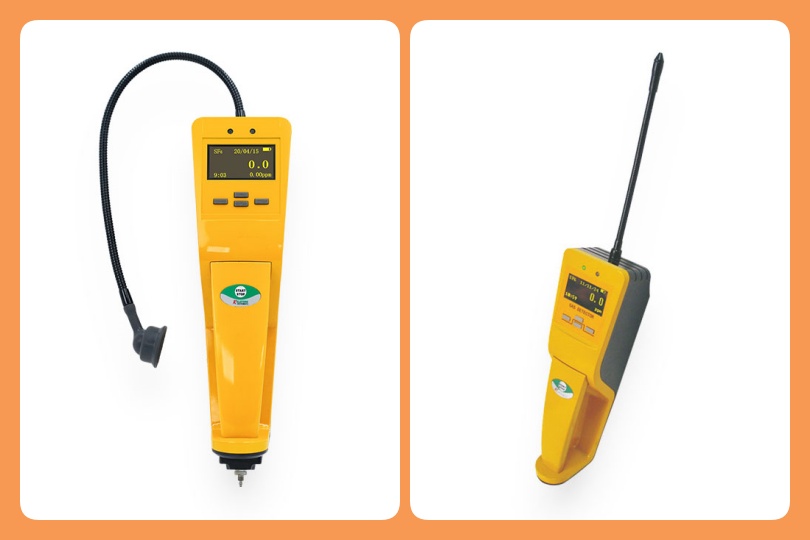
UK substations often have limited access around switchgear. A flexible probe, long gooseneck, or extension hose makes it easier to inspect difficult locations without dismantling protective covers unnecessarily.
Useful design features include:
- Ergonomic handheld construction for single-person inspections
- Replaceable filters and probe tips
- Bright display for indoor and outdoor use
- Adjustable alarm thresholds
- Rechargeable battery with sufficient runtime for a full shift
- Data logging, timestamps, and export capability
- Durable transport case for contractor and utility use
A robust detector reduces the risk of missed leaks during real maintenance work, where access, weather, and time constraints are common.
Compliance and Standards for UK Applications
A decision to buy SF6 gas detector for power distribution networks should be supported by documented product compliance. For equipment supplied to the UK market, check the applicable UKCA or CE marking requirements, depending on the market route and product status. Suppliers should also provide clear technical documentation, operating instructions, calibration guidance, and declarations of conformity where applicable.
For electrical network operations, SF6 management should align with the organisation’s environmental management system and gas-handling procedures. Relevant frameworks may include ISO 14001 for environmental management and ISO 9001 for quality management. Utilities may also apply internal asset-management systems based on ISO 55001 principles.
Switchgear maintenance procedures should consider relevant IEC standards, such as IEC 62271 series requirements for high-voltage switchgear and controlgear. While an SF6 detector does not replace gas-density monitoring, gas-quality analysis, or pressure testing, it is an important tool within a complete maintenance programme.
Scenario-Based Selection for Distribution Operators
Routine RMU and Secondary Substation Inspections
For compact RMUs in secondary substations, portability and rapid scanning are usually the priority. A lightweight handheld SF6 leak detector with a flexible probe enables technicians to check door seals, cable compartments, pressure valves, and accessible enclosure joints during scheduled inspections.
Choose an instrument with strong battery autonomy, quick warm-up, and easy pass/fail indication. Data logging is valuable where the operator needs traceable inspection evidence across a large asset base.
GIS Maintenance in Primary Substations
Primary substations may contain larger GIS assemblies, multiple gas compartments, and more complex interconnections. Here, sensitivity, probe reach, and repeatable measurement performance become especially important.
A professional detector should support systematic inspection routes around flanges, density-monitor connections, cable sealing ends, and gas-handling ports. Teams may also benefit from recorded readings that can be compared over time to identify recurring leakage locations.
For technical selection support, request one-on-one guidance from engineers before matching detector sensitivity, accessories, and reporting functions to your specific switchgear configuration.
Contractors Performing Repair Verification
After seals, valves, or fittings are repaired, contractors must confirm that leakage has been resolved before handover. A calibrated SF6 detector provides an immediate field check and supports repair documentation.
For this scenario, prioritise repeatability, calibration traceability, and a clear test procedure. The detector should be used according to the manufacturer’s instructions, with clean probe filters and verified battery condition to avoid false readings.
Calibration, Maintenance, and Safe Operation

A high-quality instrument only delivers dependable results when it is maintained correctly. Follow the manufacturer’s recommended calibration interval and retain calibration certificates for quality records. Where traceability is required, calibration should be linked to recognised reference standards and performed by a competent service provider.
Before use, inspect the probe, filters, battery, sensor status, and alarm settings. During leak surveys, avoid confusing SF6 detection with oxygen-deficiency monitoring. SF6 is non-flammable and chemically stable under normal conditions, but it is heavier than air and may displace oxygen in confined or poorly ventilated areas. Site risk assessments, ventilation controls, and confined-space procedures remain essential.
Frequently Asked Questions
What is the best detector sensitivity for SF6 switchgear leak detection?
The correct sensitivity depends on whether the goal is rapid fault finding, routine screening, or early-stage leak identification. For most power-distribution maintenance programmes, choose a purpose-built SF6 detector with documented low-level sensitivity and stable performance under field conditions.
Does an SF6 leak detector replace density monitoring?
No. Density monitors indicate gas condition within a sealed compartment, while a portable detector helps locate external leakage points. Both tools serve different but complementary maintenance functions.
How often should an SF6 detector be calibrated?
Follow the manufacturer’s stated calibration interval, typically based on annual service or operating hours. More frequent verification may be appropriate for heavily used contractor equipment or critical asset programmes.
Can I obtain a quotation for an SF6 detector quickly?
Yes. To compare suitable portable models, accessories, calibration options, and delivery arrangements, you can quickly obtain a product quotation based on your UK distribution-network application.