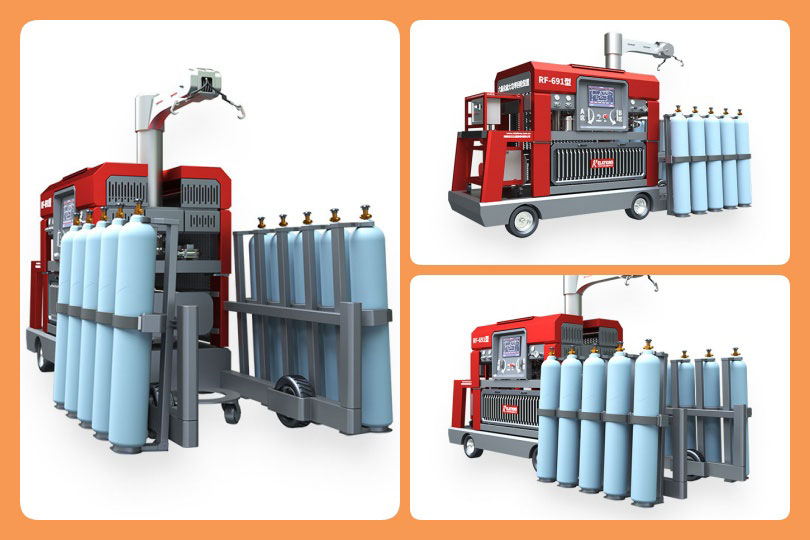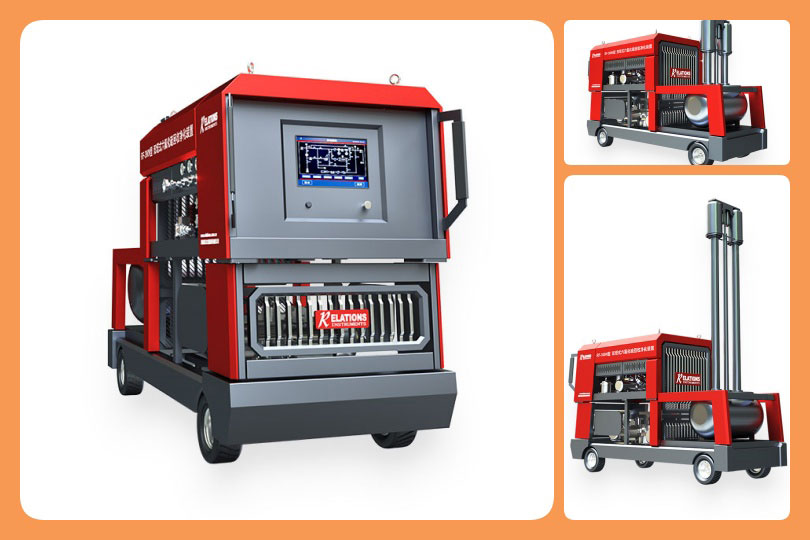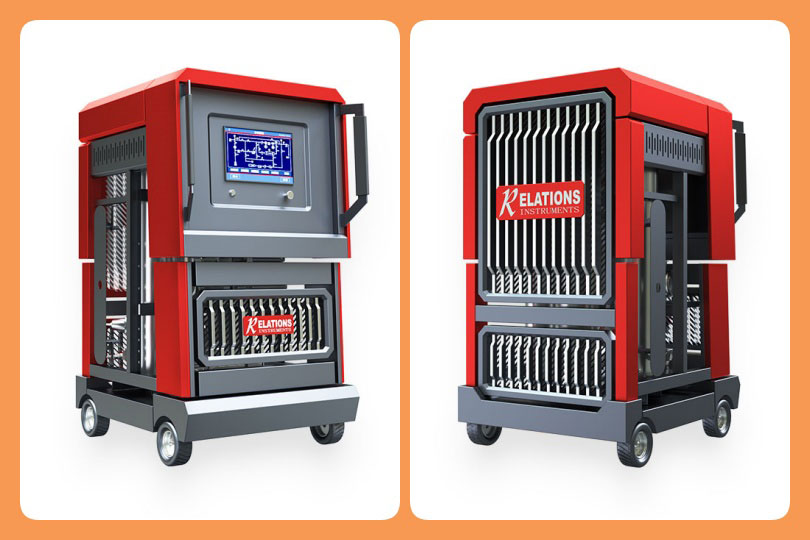
Get a Factory Quote for SF6 Leak Detection Equipment for Substations

Date
2026-08-10
[email protected]
Website
www.sf6gasdetector.com
Get Solutions And Quotes
Contact Factory
Get a Factory Quote for SF6 Leak Detection Equipment for Substations
SF6 leak detection equipment for substation maintenance is essential for utilities, electrical contractors, and industrial service teams responsible for gas-insulated switchgear (GIS), circuit breakers, transformers, and other SF6-filled assets. Reliable detection helps maintenance teams identify leaks early, protect equipment performance, reduce unnecessary SF6 emissions, and support regulatory reporting. When requesting a factory quote, buyers should evaluate more than purchase price: sensitivity, response time, calibration capability, compliance documentation, and field usability all affect the long-term value of the instrument.
Why SF6 Leak Detection Matters in Substation Maintenance
Sulfur hexafluoride (SF6) is widely used as an insulating and arc-quenching medium in high-voltage electrical equipment. Although it delivers excellent dielectric performance, SF6 has a high global warming potential. Even small leaks can create environmental, operational, and financial consequences.
A structured SF6 leak detection program enables maintenance teams to locate leakage points before gas pressure falls below the manufacturer’s operating limits. Typical leak sources include flange seals, valve connections, pressure-relief devices, filling ports, cable terminations, bushing interfaces, and aging gaskets.
For substation operators, routine use of SF6 leak detection equipment for substation maintenance can support:
- Preventive maintenance planning and reduced unplanned outages
- Improved gas inventory control
- Faster troubleshooting during inspections and commissioning
- Better compliance with environmental management procedures
- Documentation for asset-management and emissions-reporting systems
Key Parameters to Review Before Requesting a Factory Quote
A factory quote should be based on the actual equipment type, inspection environment, and required detection performance. Comparing models only by headline price may lead to unsuitable purchases, especially for large GIS installations or outdoor substations.
Detection Sensitivity and Measuring Range
Sensitivity determines whether the detector can identify small leaks before they become operationally significant. For precise substation work, buyers commonly seek instruments with ppm-level sensitivity or better, depending on the inspection procedure and gas concentration requirements.
The measuring range should also accommodate both trace leaks and more substantial leakage conditions. A practical SF6 leak detector provides stable readings across the expected range without excessive false alarms.
Response and Recovery Time
Field technicians often inspect multiple valves, flanges, and compartments during a maintenance window. Fast response time makes it easier to pinpoint the source of a leak, while short recovery time allows efficient movement between test points.
When comparing SF6 gas leak detectors, ask the supplier to specify:
- Typical response time at defined concentrations
- Recovery time after exposure
- Warm-up requirements
- Alarm thresholds and adjustment options
- Performance in wind or ventilated outdoor environments
Sensor Technology and Selectivity
Different instruments may use infrared, thermal conductivity, electrochemical, or other sensing approaches. For SF6 applications, the selected technology should provide dependable selectivity and be suitable for the intended operating environment.
A portable SF6 leak detector should be able to distinguish meaningful SF6 indications from background conditions as far as practical. The manufacturer should clearly state cross-sensitivity limitations, environmental operating ranges, and recommended inspection methods.
Probe Design and Field Ergonomics
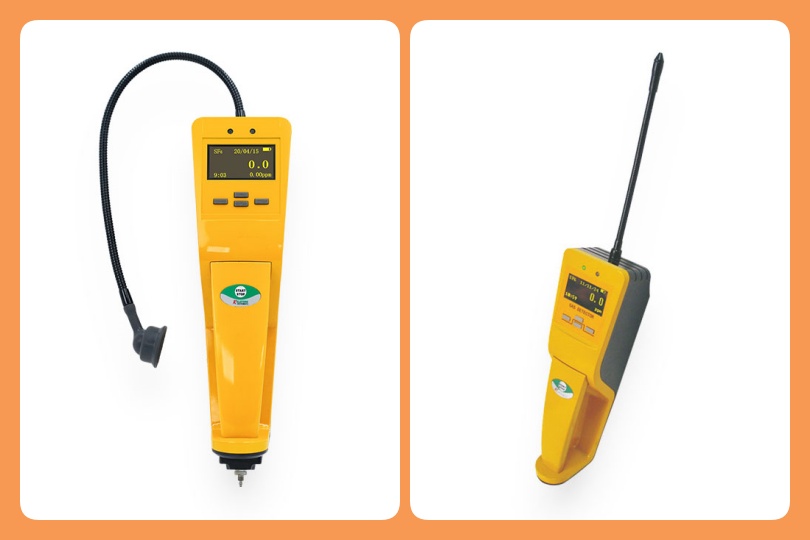
Substation assets often have confined inspection points, elevated pipework, and complex GIS layouts. A flexible probe, illuminated display, audible and visual alarms, and a durable enclosure can make a major difference in daily use.
For maintenance contractors, battery endurance and rapid charging are equally important. A device that cannot complete a full inspection route without interruption creates avoidable downtime.
Compliance, Calibration, and Quality Documentation
Professional buyers should request evidence that the equipment is manufactured under a documented quality management system, such as ISO 9001. Depending on the destination market and product configuration, relevant conformity documentation may include CE marking, RoHS declarations, EMC compliance, and electrical safety information.
Calibration traceability is another critical requirement. The detector should be supplied with a calibration certificate where applicable, along with a recommended calibration interval and clear instructions for functional checks. For organizations operating under ISO 14001 environmental management systems or formal utility maintenance procedures, traceable calibration records strengthen inspection credibility.
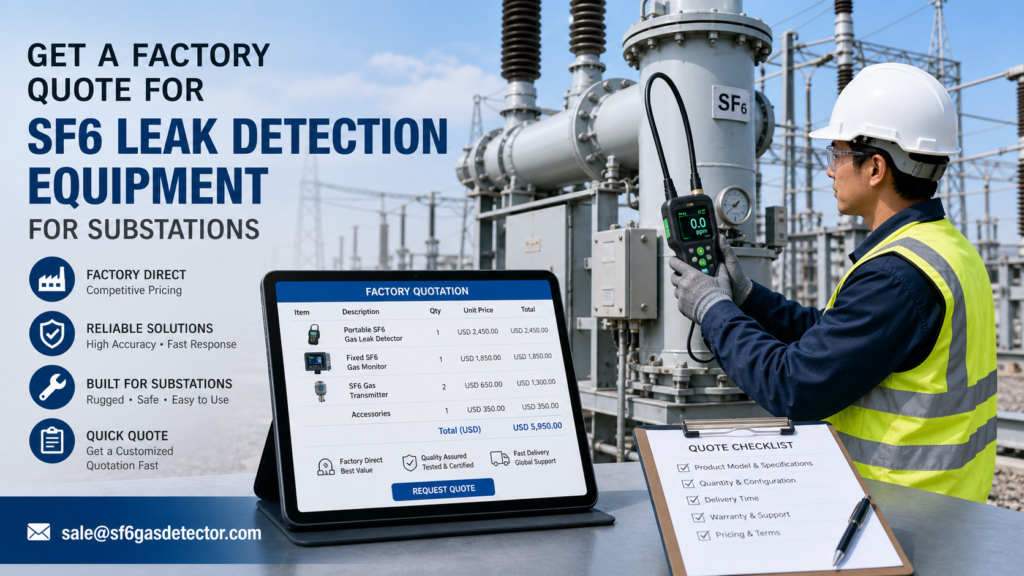
A credible factory quote for SF6 leak detection equipment should identify the model, technical specification, included accessories, calibration options, warranty terms, delivery conditions, and after-sales support scope. This makes procurement comparisons more transparent and helps prevent hidden costs.
Scenario-Based Equipment Selection
Routine GIS and Circuit Breaker Inspection
For scheduled maintenance of GIS bays and SF6 circuit breakers, a handheld detector with high sensitivity, an extended probe, and clear alarm indicators is typically the best choice. Technicians can scan valve assemblies, gas-density monitor connections, and compartment joints methodically while recording findings in the maintenance report.
Commissioning and Acceptance Testing
New installations and post-repair equipment require careful leakage checks before energization. In this scenario, a stable, high-sensitivity SF6 gas leak detection instrument helps verify sealing performance after assembly, gas filling, and pressure testing. A detector with data logging can simplify handover documentation for owners and engineering consultants.
Outdoor Substation Troubleshooting
Wind, rain exposure, temperature variation, and difficult access make outdoor troubleshooting more demanding. Teams should select robust portable SF6 leak detection equipment for substation maintenance with a suitable ingress-protection design, reliable battery capacity, and performance specifications covering the site’s expected ambient conditions.
For project-specific selection, procurement teams can request a factory quote with the substation voltage class, asset type, required sensitivity, and planned quantity. Providing these details helps suppliers recommend a configuration that fits the inspection workflow rather than simply offering a generic model.
Building an Effective SF6 Leak Inspection Procedure
The best detector delivers results only when used within a disciplined inspection process. Before testing, confirm that the instrument is charged, warmed up according to the manual, and passed its functional check. Inspect likely leak points systematically, moving the probe slowly around seals and connections while avoiding direct interference from strong airflow.
Record the equipment identification number, inspection date, location, indication level, and corrective action. If a leak is confirmed, isolate the issue according to approved site procedures and arrange qualified repair work. SF6 handling, recovery, and refilling should be completed by trained personnel using appropriate recovery equipment and in accordance with applicable local environmental regulations and the equipment manufacturer’s instructions.
Total Cost of Ownership Beyond the Purchase Price
A low initial price does not always result in the lowest operating cost. Consider spare sensors, replacement probes, calibration support, repair turnaround time, training materials, and technical response capability. A dependable manufacturer should provide accurate specifications, transparent warranty coverage, and support through the instrument’s working life.
For complex GIS maintenance projects or fleet standardization, one-on-one guidance from engineers can help define the right sensitivity level, accessories, calibration approach, and inspection procedure before purchasing.
Frequently Asked Questions
What sensitivity is suitable for SF6 leak detection in substations?
The appropriate sensitivity depends on the asset type, inspection objective, and internal maintenance standard. For preventive maintenance and pinpointing small leaks, ppm-level detection capability is commonly preferred. Always compare sensitivity values under clearly stated test conditions.
Can one detector be used for GIS, circuit breakers, and other SF6 equipment?
In most cases, yes. A suitable portable detector can inspect a range of SF6-filled electrical assets, provided its probe design, measuring range, and environmental rating match the site conditions. Review the manufacturer’s application guidance before deployment.
How often should an SF6 leak detector be calibrated?
Follow the manufacturer’s recommended interval and the requirements of your quality system. Many organizations also perform a documented functional check before critical inspections to confirm that the detector responds correctly.
What should be included in a factory quote?
A complete factory quote should include model number, detection specifications, accessories, calibration certificate options, compliance documents, warranty, lead time, shipping terms, and after-sales service details. This provides a reliable basis for technical and commercial evaluation.