SF6 Gas Recovery Service Price Quotes for Circuit Breakers
Date
2026-08-10
[email protected]
Website
www.sf6gasdetector.com
Get Solutions And Quotes
Contact Factory
SF6 Gas Recovery Service Price Quotes for Circuit Breakers
An accurate SF6 gas recovery service price quote for circuit breakers depends on far more than the volume of gas inside the equipment. Professional recovery work involves equipment isolation, leak prevention, moisture and purity assessment, compliant gas handling, vacuum treatment, cylinder management, documentation, and safe recommissioning support where required. For utilities, substations, industrial plants, and maintenance contractors, choosing a qualified service provider helps control operating costs while reducing SF6 emissions and protecting high-value gas-insulated equipment.
SF6 is widely used in high-voltage circuit breakers because of its excellent dielectric strength and arc-quenching performance. However, it is also a high-global-warming-potential greenhouse gas. Proper recovery is therefore both a technical maintenance requirement and an environmental responsibility. A well-prepared quote should clearly define the scope of work, gas condition, equipment rating, site conditions, and reporting requirements.
What Is Included in an SF6 Gas Recovery Service?
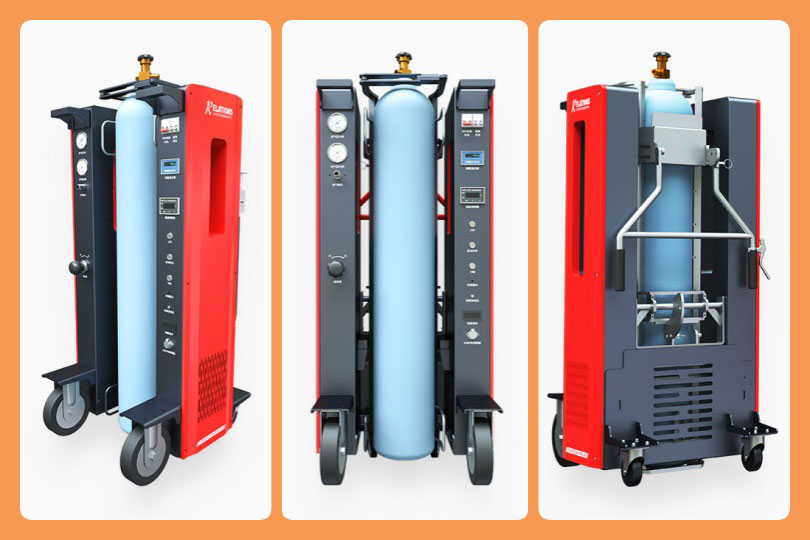
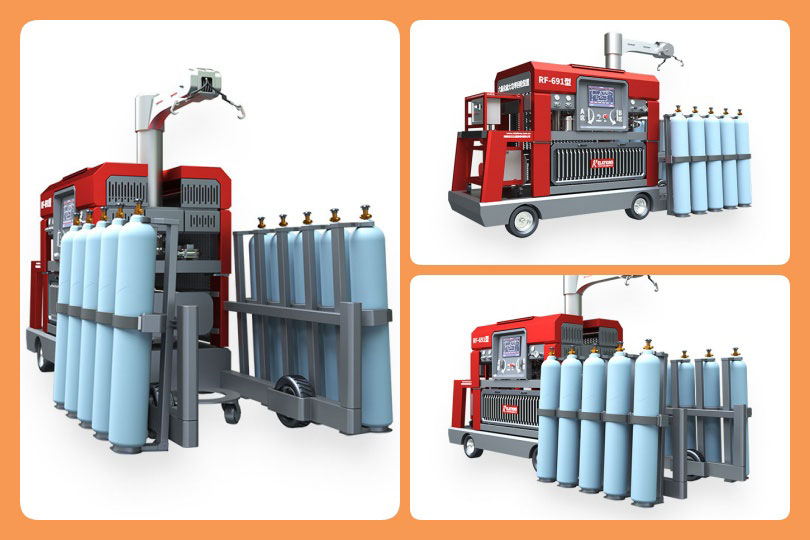
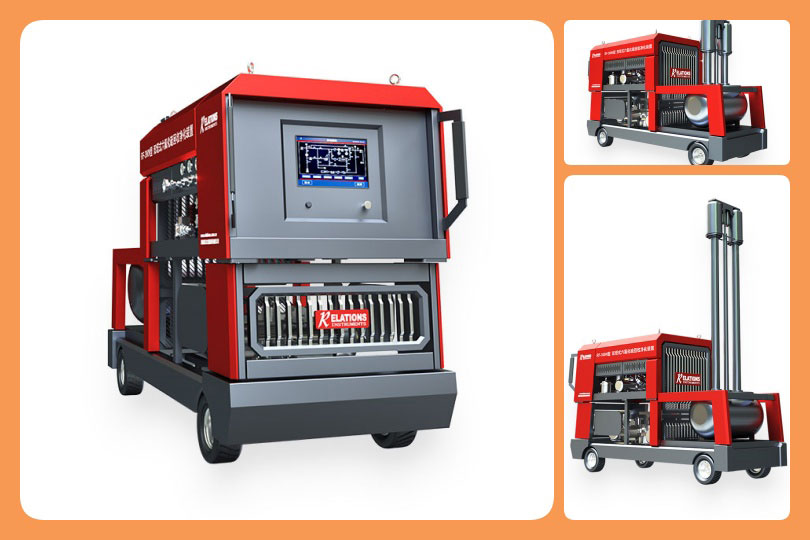
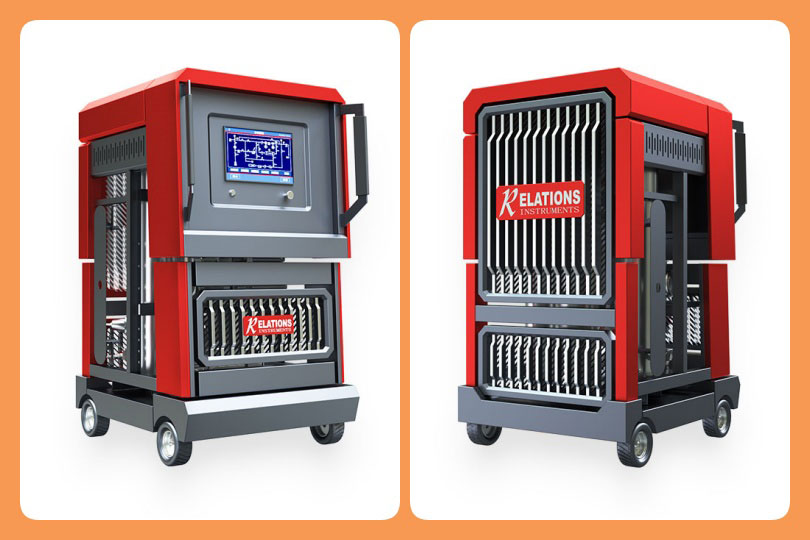
A professional SF6 recovery service typically removes gas from a circuit breaker or gas-insulated compartment using dedicated recovery equipment. The gas is transferred into approved storage cylinders or tanks for reuse, reclamation, analysis, or compliant disposal, depending on its quality and the project requirements.
Typical Service Scope
A standard circuit breaker SF6 recovery project may include:
- Site safety assessment and equipment isolation confirmation
- Connection of SF6 recovery hoses, couplings, and recovery unit
- Gas transfer from the breaker to certified storage cylinders
- Vacuum evacuation of the compartment to the agreed residual pressure
- Basic gas quantity recording and cylinder labeling
- Leak checks at service connections
- Documentation of recovered gas mass, equipment identification, and job completion
- Optional SF6 gas quality testing for purity, moisture, and decomposition by-products
For live substation environments, the work must be coordinated with the asset owner’s switching procedures, lockout/tagout requirements, and applicable electrical safety rules. Recovery personnel should use calibrated equipment and follow the manufacturer’s instructions for the specific circuit breaker model.
Main Factors Affecting SF6 Gas Recovery Service Price
The SF6 gas recovery service price is usually calculated from labor, equipment deployment, gas volume, logistics, testing needs, and project risk. Comparing quotes only by a single total amount can be misleading if the scope is not consistent.
| Pricing Factor | How It Affects the Quote | Why It Matters |
|---|---|---|
| Circuit breaker voltage class | Higher-voltage breakers often contain more SF6 and require more complex access | Larger gas compartments can increase recovery time |
| SF6 gas quantity | Pricing may be based partly on kilograms recovered or system capacity | More gas requires additional cylinder capacity and handling |
| Equipment condition | Contaminated or decomposed gas requires enhanced safety measures | Poor-quality gas may need reclamation or disposal |
| Recovery depth | Standard transfer and deep vacuum evacuation have different labor requirements | Lower residual pressure reduces emissions and supports maintenance |
| Site location | Travel, mobilization, accommodation, and access permits may apply | Remote substations commonly have higher logistics costs |
| Outage schedule | Emergency, night, weekend, or short-window work can increase labor rates | Planned outages generally offer better cost control |
| Testing and reporting | Moisture, purity, SO2, HF, and other by-product testing add value and cost | Results support maintenance decisions and compliance records |
| Cylinder supply | Rental, transport, certification, and return handling may be included separately | Approved cylinders are essential for safe gas storage |
A transparent quote should distinguish between fixed mobilization charges and variable charges, such as per-breaker service, per-kilogram gas handling, laboratory testing, or contaminated gas treatment.
Key Application Scenarios for Circuit Breaker SF6 Recovery
SF6 recovery services are used throughout the life cycle of high-voltage equipment. The most common scenario is scheduled maintenance, where gas must be removed before opening the breaker’s gas compartment for inspection, contact replacement, seal renewal, or mechanism repair.
Preventive Maintenance and Overhaul
During planned maintenance outages, SF6 gas recovery enables technicians to safely access internal components. Recovering reusable gas can reduce replacement-gas costs when the gas meets acceptable quality criteria after testing and filtration.
Leak Repair and Seal Replacement
A declining density alarm, repeated low-pressure indication, or confirmed external leak may require gas removal before replacing seals, valves, flanges, or damaged fittings. Recovery minimizes atmospheric release and helps create an auditable maintenance record.
Circuit Breaker Decommissioning
When a breaker reaches end of life, its SF6 inventory should be recovered before dismantling, transport, recycling, or disposal. This process is especially important for asset retirement projects with environmental reporting obligations.
Fault Investigation and Gas Analysis
After an internal fault or abnormal operation, SF6 may contain moisture or decomposition products. Controlled recovery and testing can support diagnosis while protecting personnel from exposure to potentially hazardous by-products.
How to Request an Accurate SF6 Recovery Quote
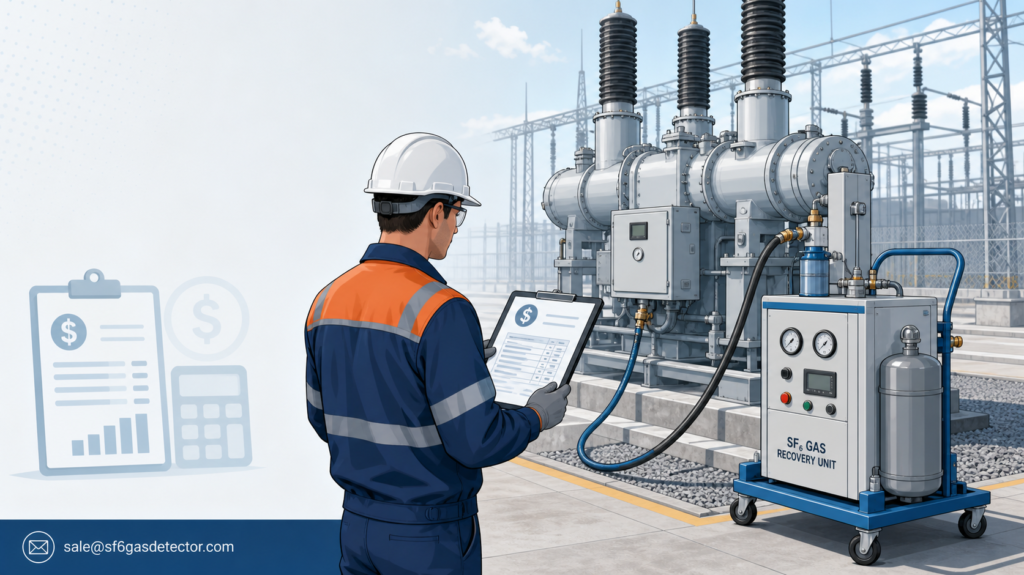
To receive a meaningful circuit breaker SF6 recovery quotation, provide the service provider with complete equipment and site information. This reduces the likelihood of change orders, delays, or unsuitable equipment arriving on site.
Information to Prepare Before Requesting a Quote
| Required Information | Example |
|---|---|
| Equipment type | Dead-tank, live-tank, GIS circuit breaker, or gas-insulated switchgear compartment |
| Manufacturer and model | OEM name, model number, and serial number |
| Voltage rating | 72.5 kV, 145 kV, 245 kV, 420 kV, or other class |
| Estimated SF6 quantity | Nameplate gas mass or compartment volume and filling pressure |
| Gas condition | Normal service gas, suspected moisture ingress, fault gas, or unknown condition |
| Work location | Substation address, indoor/outdoor installation, and access limitations |
| Service timing | Planned outage date, duration, and required completion time |
| Required deliverables | Recovery report, gas test certificate, waste documentation, or emissions record |
For a detailed SF6 gas recovery service price assessment, contact [email protected] for a free technical consultation. Sharing breaker data and outage details allows engineers to prepare a practical scope, appropriate equipment configuration, and realistic project schedule.
Compliance, Safety, and Environmental Considerations
SF6 service work should follow recognized environmental, occupational safety, and electrical maintenance practices. Gas recovery equipment should be designed to minimize emissions, use compatible couplings, and include suitable filtration and vacuum capability. Personnel must be trained in safe gas handling, pressure-system precautions, electrical isolation procedures, and the management of decomposition products.
Where gas is contaminated, additional protective measures may be necessary. Decomposition by-products can be corrosive or harmful, so proper personal protective equipment, controlled handling, labeling, and disposal routes are essential. Records should identify the source equipment, recovered mass, gas condition, destination cylinder, and final treatment route.
For projects requiring tailored procedures, site surveys, or contaminated-SF6 handling plans, request a customized on-site solution from [email protected].
Purchasing Guide: Selecting an SF6 Recovery Service Provider
The lowest quotation is not always the lowest total project cost. A capable provider reduces downtime, prevents avoidable gas losses, and supplies reliable documentation for maintenance and environmental management.
Choose a provider that can demonstrate:
- Experience with the relevant circuit breaker voltage class and manufacturer
- Calibrated SF6 recovery, vacuum, weighing, and testing equipment
- Certified cylinders and safe gas transport arrangements
- Clear procedures for normal, contaminated, and faulted SF6
- Detailed job records and transparent pricing structure
- Responsive scheduling for planned outages and urgent repairs
- Technical support for gas analysis, reclamation, and refilling coordination
One-on-one engineering guidance can be particularly valuable when the gas condition is unknown or when a recovery project involves multiple circuit breakers. Contact [email protected] to discuss equipment details, recovery targets, and the documentation required for your facility.
Frequently Asked Questions
How is SF6 gas recovery service price usually calculated?
Pricing commonly includes mobilization, labor, recovery equipment, cylinder handling, gas volume, vacuum requirements, testing, and any special handling for contaminated gas. Remote locations and emergency scheduling may also affect the total.
Can recovered SF6 gas be reused?
Yes, if testing confirms that the gas meets the required quality standard or can be reclaimed to an acceptable specification. Gas with excessive moisture, air contamination, or decomposition by-products may require treatment or disposal instead.
How long does circuit breaker SF6 recovery take?
Service duration depends on the breaker’s gas volume, access conditions, recovery equipment capacity, and required vacuum level. A single unit may be completed within several hours, while multi-breaker outages can require a larger planned work window.
Is SF6 recovery required before circuit breaker maintenance?
In most cases, yes. Gas must be safely recovered before opening a sealed SF6 compartment for internal maintenance, repair, or decommissioning. Proper recovery protects workers, prevents emissions, and preserves gas value where reuse is possible.