How to Safely Fill an SF6 Tank With an SF6 Cylinder Without Leaks
Date
2026-08-06
[email protected]
Website
www.sf6gasdetector.com
Get Solutions And Quotes
Contact Factory
How to Safely Fill an SF6 Tank With an SF6 Cylinder Without Leaks
Filling an SF6 tank from an SF6 cylinder is a controlled gas-handling procedure used when commissioning or servicing gas-insulated switchgear, circuit breakers, and related high-voltage equipment. To fill an SF6 tank with an SF6 cylinder safely, technicians need approved transfer equipment, verified gas quality, accurate pressure and temperature data, leak-tight connections, and a recovery plan that prevents sulfur hexafluoride emissions. Because SF6 is a powerful greenhouse gas and can displace oxygen in confined spaces, only trained and authorized personnel should perform this work in accordance with the equipment manufacturer’s instructions and applicable regulations.
Why Controlled SF6 Filling Matters
A professional SF6 filling process provides several operational advantages:
- Maintains the dielectric and arc-quenching performance specified by the equipment manufacturer
- Reduces moisture, air, and particle contamination inside the gas compartment
- Prevents overpressure caused by ignoring temperature compensation
- Minimizes SF6 releases through closed-loop transfer and recovery practices
- Creates traceable records for environmental reporting, maintenance, and quality control
SF6 is nonflammable and chemically stable under normal conditions, but it must never be treated as an ordinary compressed gas. Arc-decomposed gas may contain hazardous by-products, while liquid SF6 can cause severe cold burns. Local ventilation, personal protective equipment, and appropriate gas monitoring are therefore essential.
Equipment Required to Fill an SF6 Tank
Use components rated for SF6 service and compatible with the cylinder, filling cart, and gas compartment. Never improvise adapters or bypass safety devices.
| Equipment | Recommended requirement | Primary purpose |
|---|---|---|
| SF6 cylinder | Correct gas grade, identifiable batch, valid inspection status | Supplies verified SF6 |
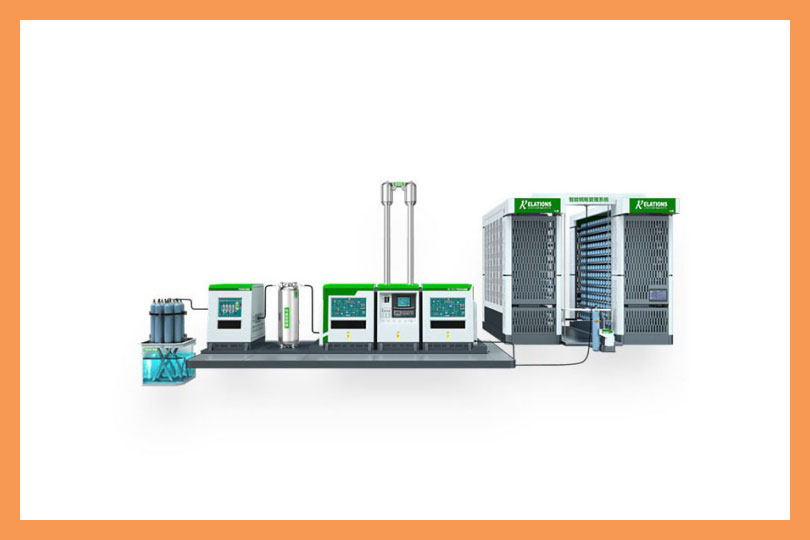
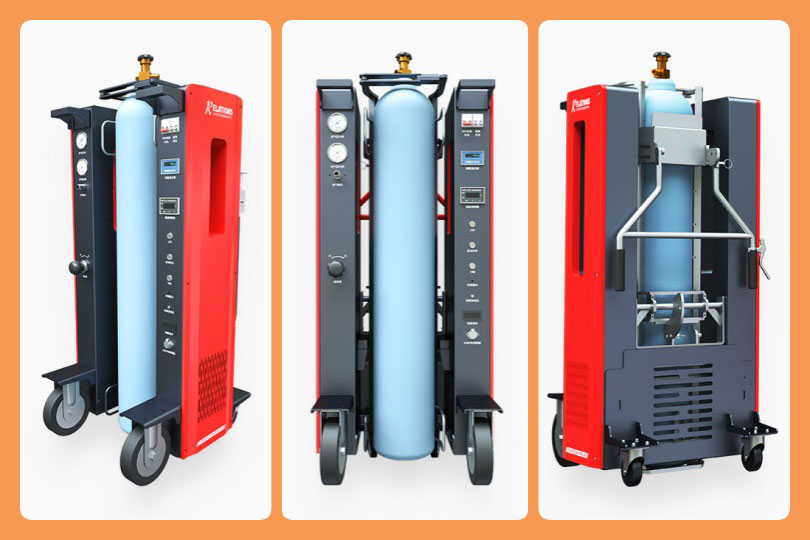
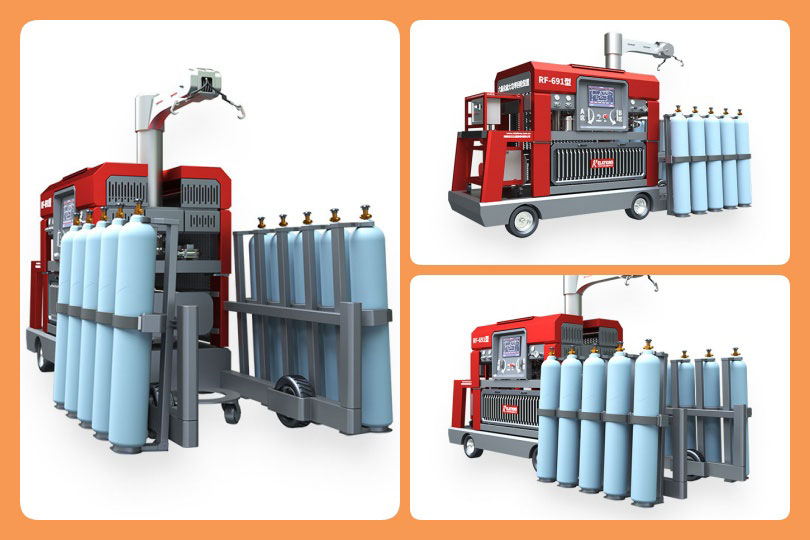
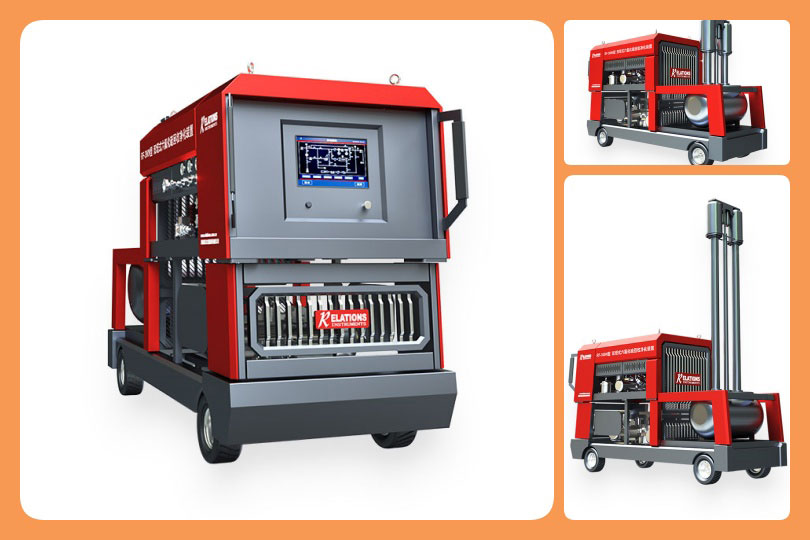
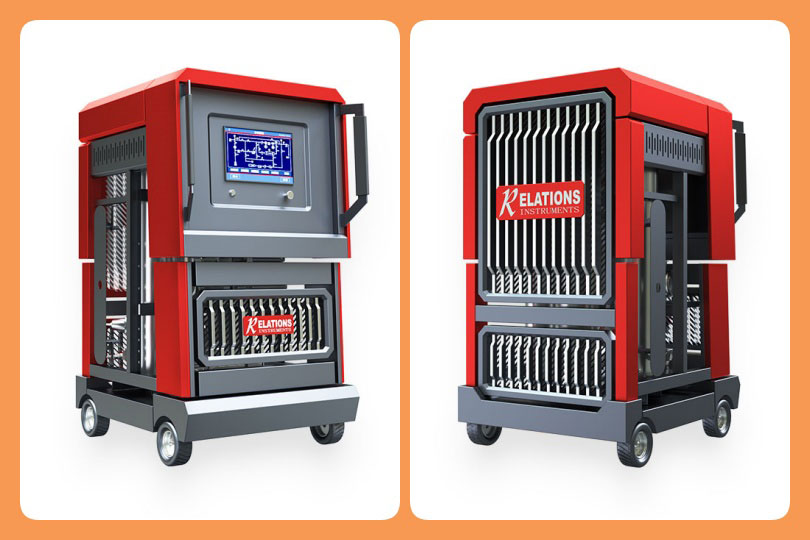
| Gas handling cart | Vacuum, filling, recovery, and filtration capability | Enables closed-loop handling |
| Pressure regulator | SF6-compatible and rated for cylinder pressure | Controls transfer pressure |
| Filling hose | Vacuum-tight, low-permeation, self-sealing couplings | Limits air ingress and emissions |
| Vacuum pump | Suitable ultimate vacuum and capacity for the compartment | Removes air and moisture |
| Digital pressure gauge | Calibrated for the specified range | Confirms actual filling pressure |
| Temperature sensor | Calibrated and placed near the gas compartment | Supports density correction |
| Gas analyzer | Measures purity, moisture, and decomposition products as required | Verifies gas condition |
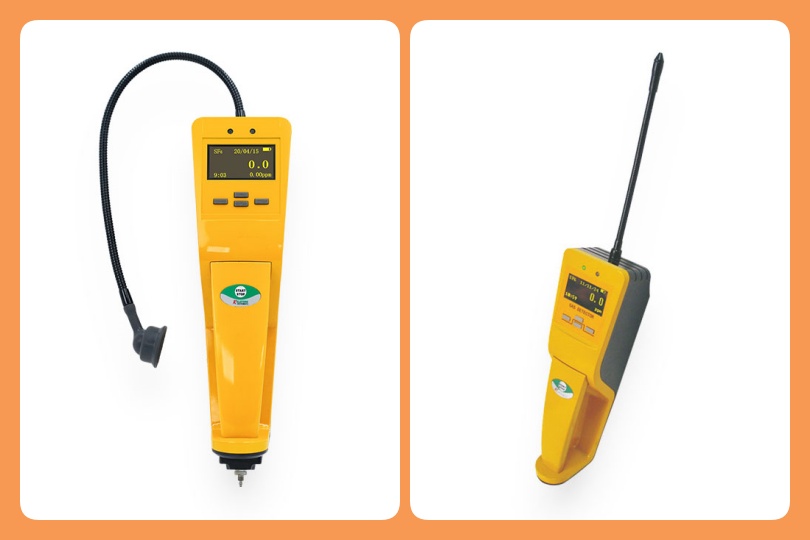
| Leak detector | Appropriate sensitivity for SF6 service | Confirms connection integrity |
| Weighing scale | Capacity suitable for the cylinder | Tracks transferred gas mass |
| PPE and ventilation | Based on risk assessment and safety data sheet | Protects personnel |
For help selecting compatible hoses, regulators, analyzers, and recovery equipment, request a free SF6 handling consultation.
How to Fill an SF6 Tank With an SF6 Cylinder
1. Verify Documentation and Safe Working Conditions
Review the switchgear manufacturer’s manual, nameplate, piping diagram, target filling density, allowable pressure, and specified gas quality. Confirm that the cylinder contains acceptable SF6 and that its valve and inspection markings are valid.
Isolate and de-energize the equipment according to the site’s lockout/tagout procedure. Establish an exclusion zone, provide ventilation, and test the atmosphere where oxygen displacement could occur. In many jurisdictions, SF6 handling and reporting are regulated; qualified personnel must follow applicable environmental rules, including relevant IEC guidance, regional fluorinated-gas requirements, and local pressure-system regulations.
2. Inspect and Connect the Transfer System
Check the cylinder, regulator, hoses, seals, couplings, and service port for damage or contamination. Position the cylinder upright, secure it against movement, and place it on a scale when mass tracking is required.
Connect the SF6 cylinder to the gas handling cart and connect the cart to the tank’s service valve. Use only the coupling specified by the original equipment manufacturer. Tighten connections to the prescribed torque; excessive force can damage sealing surfaces.
3. Evacuate Hoses and the Gas Compartment
Do not purge hoses by venting SF6 into the atmosphere. Evacuate the transfer lines with the filling cart before opening the cylinder connection to the equipment.
For a new, opened, or air-filled tank, evacuate the gas compartment to the vacuum level and holding time specified by the manufacturer. A stable vacuum helps indicate system tightness and removes air and moisture. If the vacuum cannot be maintained, stop and locate the leak rather than proceeding.
4. Transfer SF6 Gradually
Open valves slowly and in the sequence specified by the filling-cart and switchgear manufacturers. Introduce SF6 at a controlled rate to prevent rapid cooling, regulator icing, static effects, and pressure overshoot.
Monitor tank pressure, gas temperature, cylinder weight, and filling duration. Pressure alone is not sufficient because SF6 pressure varies with temperature. The final acceptance criterion may be stated as density, pressure corrected to a reference temperature, or total gas mass.
| Parameter | Acceptance basis |
|---|---|
| Final pressure or density | Equipment nameplate and manufacturer’s filling chart |
| Reference temperature | Manufacturer-defined, commonly shown on the density chart |
| Gas purity | Project specification and applicable gas-quality standard |
| Moisture/dew point | Equipment manufacturer’s maximum limit |
| Leak rate | Contractual requirement and applicable equipment standard |
| Filled mass | Nameplate, commissioning record, or calculated requirement |
Never exceed the tank’s maximum allowable working pressure. If gas transfer slows, use approved filling equipment; do not heat the cylinder with flames, uncontrolled heaters, or hot water.
5. Stabilize, Test, and Disconnect
Close the cylinder valve first, then isolate the gas compartment. Allow pressure and temperature to stabilize before checking the final reading against the manufacturer’s correction chart.
Test all disturbed connections with an SF6 leak detector. Recover residual gas from hoses into an approved recovery container or the filling cart before disconnecting. Fit protective caps, weigh the cylinder, and record the quantity transferred.
For a site-specific filling plan, pressure-correction review, or leak-testing arrangement, obtain a customized on-site SF6 solution.
Key Application Scenarios
New Equipment Commissioning
New gas-insulated equipment normally requires evacuation, controlled filling, stabilization, gas-quality verification, and baseline leak testing before energization.
Maintenance Refill After Repair
Following gasket, bushing, valve, or enclosure work, technicians must confirm repair integrity before refilling. Simply topping up a leaking compartment is not an acceptable long-term remedy.
Density Alarm Investigation
A low-density alarm may result from leakage, low ambient temperature, a faulty sensor, or incorrect reference settings. Diagnose the cause before adding gas to avoid accidental overfilling.
Purchasing Guide for SF6 Filling Equipment
Select a SF6 gas filling system according to compartment volume, required vacuum level, target transfer rate, cylinder connection standard, filtration capability, and measurement accuracy. Look for self-sealing couplings, automatic pressure control, recovery of hose gas, calibrated instruments, replaceable filters, and accessible service support.
Buyers should also evaluate conformity documentation, pressure ratings, spare-parts availability, calibration certificates, operator training, and compatibility with reclaimed SF6. For one-on-one equipment selection and workflow guidance, contact an SF6 application engineer.
Frequently Asked Questions
Can SF6 be transferred directly from a cylinder without a filling cart?
Direct transfer may be permitted by a specific manufacturer procedure, but a suitable regulator, evacuated hose assembly, self-sealing couplings, accurate instrumentation, and residual-gas recovery are still required. A filling cart provides better control and emission prevention.
Should the cylinder be inverted during filling?
Only when the cylinder, withdrawal arrangement, and filling equipment are explicitly designed for liquid transfer. Uncontrolled liquid delivery can cause rapid expansion, freezing, and overfilling. Follow the cylinder supplier’s instructions.
How is the correct filling pressure determined?
Use the equipment nameplate and manufacturer’s pressure-temperature or density chart. Ambient pressure readings must be corrected for gas temperature; a generic pressure value is unsafe.
What should be done if a leak is detected?
Stop filling, isolate the cylinder and tank, recover trapped SF6, ventilate the area, and repair the leak under an approved procedure. Refill only after a successful tightness test.
Can recovered SF6 be reused?
Yes, when regulations and project requirements allow it and testing confirms that the gas meets the required purity, moisture, and decomposition-product limits. Off-specification gas should be reclaimed or disposed of through an authorized service provider.