Industrial Insulating Gas Leak Detector: Smarter Power Plant Purchasing

Date
2026-10-21
[email protected]
Website
www.sf6gasdetector.com
Get Solutions And Quotes
Contact Factory
Industrial Insulating Gas Leak Detector: Smarter Power Plant Purchasing
An Industrial Insulating Gas Leak Detector for power plant purchase is a critical decision for utilities, substations, gas-insulated switchgear (GIS) operators, and high-voltage maintenance contractors. Insulating gases such as sulfur hexafluoride (SF₆), alternative fluorinated gases, and blended dielectric media are widely used in electrical equipment because of their excellent arc-quenching and insulation properties. However, even small leaks can affect equipment reliability, environmental compliance, maintenance costs, and personnel safety. Selecting the right detector requires more than comparing sensitivity figures; buyers must evaluate gas compatibility, operating conditions, calibration requirements, certifications, and long-term service support.
Why Power Plants Need an Industrial Insulating Gas Leak Detector
Power plants and transmission facilities rely on SF₆-filled equipment including GIS bays, circuit breakers, ring main units, transformers, and high-voltage test systems. A properly specified Industrial Insulating Gas Leak Detector for power plant purchase helps maintenance teams locate leaks before gas pressure falls below the manufacturer’s operating threshold.
Early leak detection supports several operational goals:
- Preventing insulation failures and unplanned outages
- Reducing insulating gas replenishment expenses
- Supporting greenhouse gas emission reduction programs
- Improving predictive and condition-based maintenance
- Protecting high-value GIS and circuit breaker assets
- Meeting internal environmental, health, and safety requirements
SF₆ has a high global warming potential, so utilities increasingly need documented leak-monitoring practices. While leak detector requirements vary by country and site, equipment selection should align with applicable environmental legislation, utility procedures, and recognized industrial standards.
Key Technical Parameters for Equipment Selection
Detection Sensitivity and Response Time
Sensitivity is one of the first parameters to review during an Industrial Insulating Gas Leak Detector for power plant purchase. For pinpoint leak location around valves, flanges, pressure gauges, bushings, and enclosure joints, portable instruments should provide low-level SF₆ detection suitable for field maintenance.
Typical procurement specifications may include:
- High sensitivity for trace leak identification
- Fast response and recovery time
- Audible, visual, and vibration alarm options
- Adjustable sensitivity settings for different inspection zones
- Stable readings in low-concentration conditions
A highly sensitive detector is useful only when it remains stable in real operating environments. Buyers should ask for repeatability data, warm-up time, response characteristics, and the effect of background gas concentration on measurements.
Sensor Technology and Gas Compatibility
Different leak detectors use different sensing principles, including infrared sensing, electron capture technology, corona discharge methods, and thermal conductivity approaches. For SF₆-focused inspections, infrared-based technology is often preferred because it can provide selective gas detection and may reduce interference from common industrial vapors.
Before completing an Industrial Insulating Gas Leak Detector for power plant purchase, confirm whether the instrument is designed for:
- Pure SF₆ gas
- SF₆ mixtures and alternative insulating gases
- C4-FN or C5-FK-based dielectric gas blends
- Refrigerant gases, if multi-gas functionality is required
- Use in enclosed GIS rooms or outdoor switchyards
A detector should be selected based on the actual gas type used in the plant, not only on general-purpose leak detection claims.
Probe Design and Field Accessibility
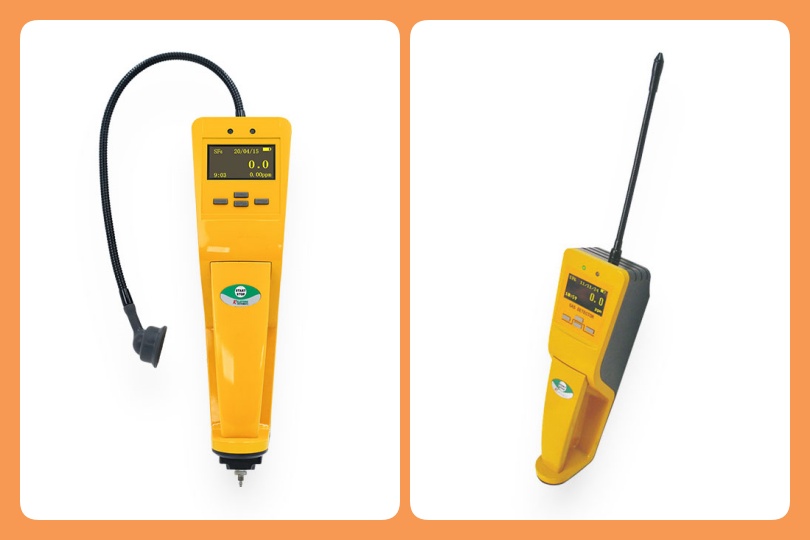
Leaks often occur in difficult-to-access locations. A flexible probe, extended gooseneck, or robust sampling hose can improve inspection efficiency around dense GIS assemblies and elevated breaker components. For outdoor power plant environments, choose an enclosure and probe design that can tolerate dust, humidity, vibration, and normal field handling.
Portable equipment should also have practical features such as rechargeable batteries, clear displays, ergonomic controls, data storage, and protective carrying cases.
Compliance, Calibration, and Quality Assurance
A reliable Industrial Insulating Gas Leak Detector for power plant purchase should be supported by traceable quality documentation. Although certification needs depend on the project location and operator requirements, procurement teams commonly review compliance with relevant IEC, ISO, CE, RoHS, and EMC requirements.
For power-sector applications, consider the following documentation:
- ISO 9001 quality management certification from the manufacturer
- CE conformity for products supplied into applicable markets
- RoHS compliance where required
- Electromagnetic compatibility documentation
- Factory inspection records and serial-number traceability
- Calibration certificates or calibration verification procedures
- User manuals with maintenance, alarm, and safety instructions
Equipment should be calibrated and function-checked according to the manufacturer’s instructions. A calibration schedule should be incorporated into the plant’s maintenance management system. Inaccurate leak detection can lead to missed defects, unnecessary repairs, or unreliable emissions records.
Selecting the Right Detector for Common Power Plant Scenarios
GIS Routine Inspection
For routine GIS inspections, a portable high-sensitivity SF₆ leak detector with a flexible probe is typically the most practical option. Maintenance personnel can inspect flanges, density monitors, gas compartments, filling ports, and sealing interfaces during scheduled rounds.
In this application, battery endurance, rapid response, and one-handed operation are often more valuable than laboratory-grade measurement functions.
Circuit Breaker Maintenance and Outage Work
During planned outages, technicians need a detector that can operate efficiently around dismantled components and temporary gas-handling equipment. Select a device with strong contamination resistance, robust housing, and adjustable sensitivity. A unit with data logging can also help create service reports for asset management records.
Continuous Environmental Monitoring
Large GIS buildings or enclosed electrical rooms may require fixed gas monitoring rather than handheld inspection alone. Fixed monitoring systems can provide continuous concentration tracking, remote alarm outputs, and integration with plant supervisory systems. These systems should be designed according to the site’s ventilation strategy, room layout, and emergency response procedures.
For project-specific recommendations, maintenance teams can request one-on-one guidance from engineers to match detector capability with equipment configuration and inspection frequency.
Procurement Checklist for Power Plant Buyers
When comparing suppliers, use a structured technical and commercial checklist:
- Confirm insulating gas type and required detection range.
- Define whether the application needs portable, fixed, or combined monitoring.
- Review sensitivity, response time, recovery time, and alarm functions.
- Verify calibration support, service availability, and spare-part access.
- Request compliance documents, test reports, and quality certificates.
- Check battery capacity, probe length, display readability, and enclosure durability.
- Evaluate training materials and after-sales technical support.
- Compare total cost of ownership, not only initial purchase price.
A detailed technical specification reduces the risk of purchasing an instrument that performs well in a demonstration but is unsuitable for plant operating conditions. To support budget planning and tender preparation, buyers can quickly obtain product quotations with required configurations, accessories, and calibration options.
Frequently Asked Questions
What sensitivity should an SF₆ leak detector have for power plant use?
The appropriate sensitivity depends on site policy, gas equipment design, and the need for pinpoint detection. For GIS and circuit breaker maintenance, select a detector capable of identifying small leaks early enough to support preventive maintenance. Always compare sensitivity with response stability, repeatability, and real field performance.
Can one detector identify both SF₆ and alternative insulating gases?
Not always. Some insulating gas leak detectors are designed specifically for SF₆, while others support selected alternative gases or gas blends. Verify the manufacturer’s stated compatibility and test method before purchase, especially for eco-efficient switchgear.
How often should a portable leak detector be calibrated?
Follow the manufacturer’s calibration interval and the power plant’s quality assurance procedure. Many organizations perform periodic verification before critical inspections and formal calibration at defined intervals. Maintain records for auditability and maintenance traceability.
Is a portable detector enough for an enclosed GIS room?
A portable detector is effective for scheduled inspections and leak pinpointing. However, enclosed areas with elevated risk, limited ventilation, or continuous environmental monitoring requirements may also need fixed gas sensors, alarms, and ventilation interlocks.
What documents should be included with an Industrial Insulating Gas Leak Detector for power plant purchase?
At minimum, request a user manual, factory test or inspection documentation, warranty terms, calibration information, applicable compliance declarations, and after-sales service details. For regulated projects, confirm all documentation requirements during the tender stage.