Mobile SF6 Recovery for UHV: Digital Monitoring, Near-Zero Emissions
Date
2026-11-25
[email protected]
Website
www.sf6gasdetector.com
Get Solutions And Quotes
Contact Factory
Mobile SF6 Recovery for UHV: Digital Monitoring, Near-Zero Emissions
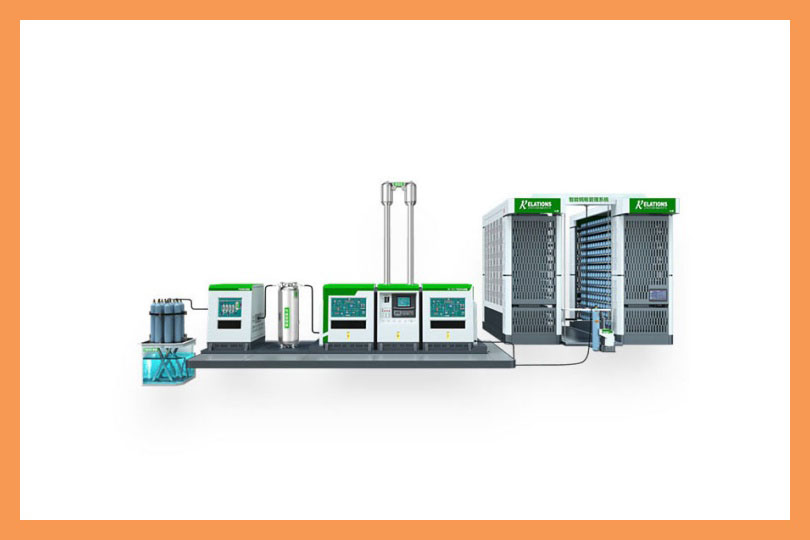
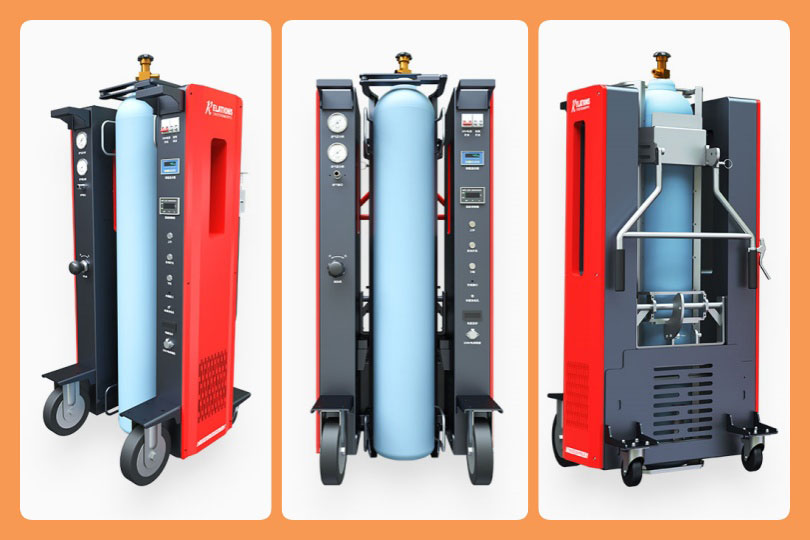
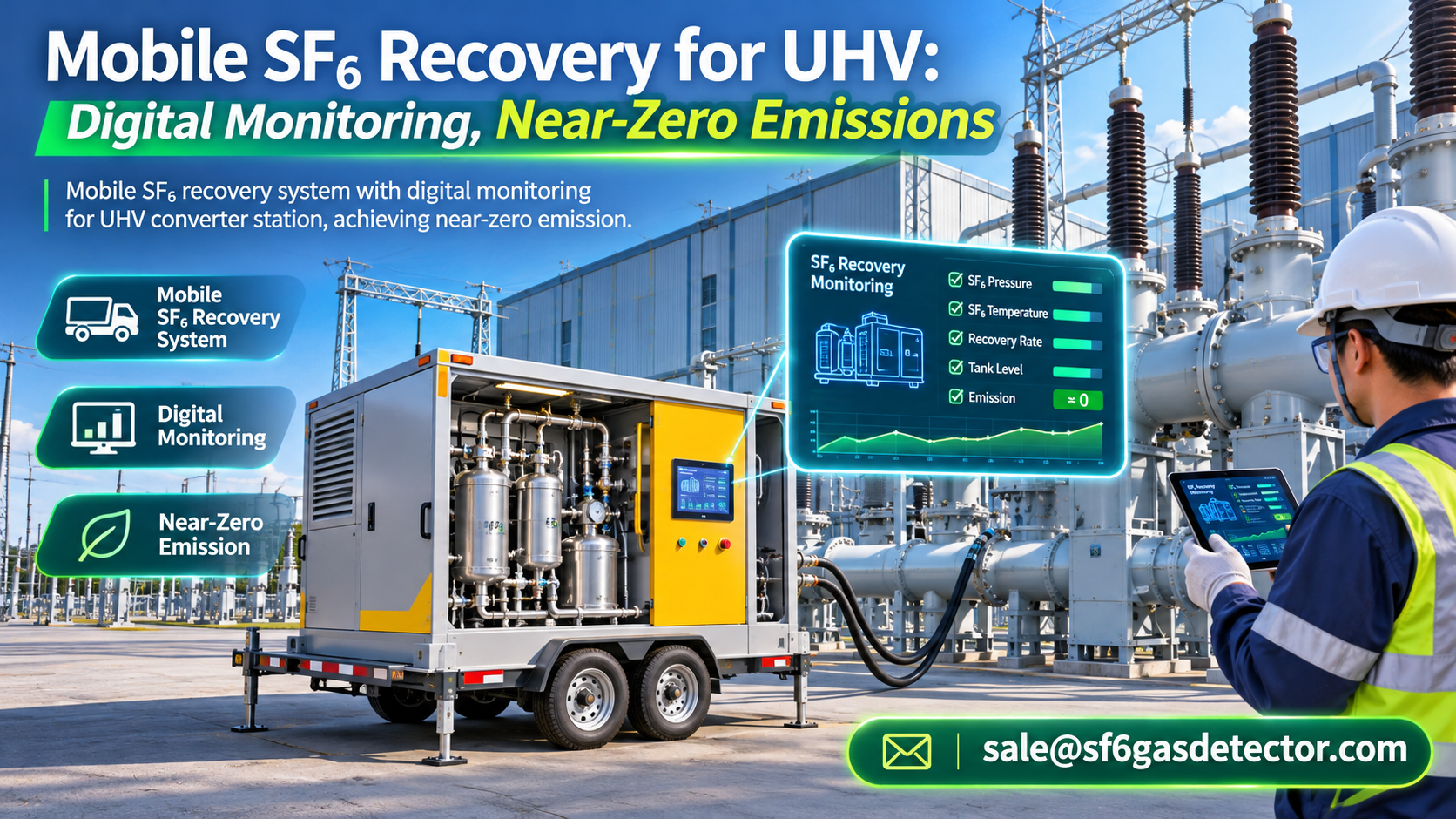
A mobile SF6 recovery system with digital monitoring for UHV converter station near-zero emission maintenance enables controlled gas transfer, accountable inventory management, and safer servicing of SF6-insulated equipment. At ultra-high-voltage converter stations, its value extends beyond recovering gas: it helps operators document losses, verify process conditions, and prevent avoidable releases. However, “near-zero emission” is an operational objective—not a universal equipment certification—and must be demonstrated through defined measurement boundaries, calibrated instruments, and documented procedures.
Why UHV Converter Stations Need Controlled SF6 Recovery
UHV converter stations can contain large inventories of SF6 in gas-insulated switchgear and other specified equipment. Equipment configurations vary, so recovery planning must follow the actual gas compartment schedule rather than assume every converter component contains SF6.
Maintenance introduces emission risks during hose connection, evacuation, storage transfer, sampling, and disconnection. A mobile SF6 recovery system reduces these risks through closed-loop handling and suitable recovery connections.
Digital monitoring adds traceability. Pressure, temperature, gas mass, valve status, and alarms can be recorded against individual compartments, making abnormal conditions easier to detect and investigate.
Define Near-Zero Emission Before Selecting Equipment
A credible near-zero-emission target starts with an auditable boundary. Include the serviced compartment, connecting hoses, recovery equipment, storage vessels, sampling arrangements, and any treatment or disposal streams.
Measure performance through mass accounting, supported by pressure and temperature records. Residual pressure alone cannot establish emissions because unrecovered gas quantity also depends on compartment volume, temperature, and gas properties.
Practical Acceptance Indicators
Specify measurable indicators in the procurement and commissioning documents:
- Gas balance: Compare opening inventory, recovered gas, returned gas, transferred waste, and closing inventory.
- Residual pressure: Define an absolute-pressure endpoint compatible with the serviced equipment manufacturer’s instructions.
- Connection integrity: Verify hose assemblies, couplings, and isolation valves using an agreed leak-testing procedure.
- Measurement uncertainty: Document scale and sensor accuracy, calibration status, and uncertainty in the reported balance.
- Event traceability: Record alarms, interrupted cycles, manual overrides, and corrective actions.
A small apparent inventory difference within measurement uncertainty should not automatically be reported as proven zero emissions.
Essential Technical Parameters for Procurement
Mobile SF6 recovery equipment should be selected for the largest planned maintenance task, available outage window, and station operating environment—not simply compressor nameplate capacity.
| Parameter | Procurement requirement | Operational significance |
|---|---|---|
| Recovery performance | Verified transfer rate under stated inlet pressure, discharge pressure, and temperature | Supports realistic outage planning |
| Recovery endpoint | Guaranteed ultimate absolute pressure under defined test conditions | Limits residual gas inventory |
| Storage capacity | Usable capacity matched to compartment inventory and permitted vessel filling limits | Prevents interrupted recovery and overfilling |
| Gas treatment | Filtration and drying matched to expected contamination | Supports controlled reuse assessment |
| Instrumentation | Calibrated pressure, temperature, and mass measurement | Enables defensible process records |
| Mobility | Suitable dimensions, lifting points, braking, and transport restraints | Supports safe deployment around station infrastructure |
| Environmental rating | Defined ambient range and enclosure protection | Reduces weather-related operating failures |
For mobile SF6 recovery with digital monitoring, require exportable records, synchronized timestamps, user-access controls, and retained calibration history. Remote connectivity should follow station cybersecurity policies; it should not create an uncontrolled path into protection or control networks.
Standards, Certifications, and Regulatory Checks
No single certificate establishes worldwide compliance. Applicable requirements depend on equipment design, installation location, pressure classification, transport arrangements, and jurisdiction.
Gas Handling and Quality
IEC 62271-4 provides procedures for handling gases used for insulation or switching. IEC 60376 addresses technical-grade SF6 and complementary gases, while IEC 60480 addresses specifications for the reuse of SF6 and its mixtures in electrical equipment.
Recovered gas should be assessed against applicable reuse criteria before refilling. Moisture, purity, and relevant decomposition products require appropriate testing; filtration alone does not prove conformity.
Pressure, Electrical, and Environmental Compliance
Pressure vessels and associated assemblies must meet applicable local requirements, such as the EU Pressure Equipment Directive where relevant. Transportable cylinders and shipments require separate assessment under applicable transport rules.
EU operations must also consider Regulation (EU) 2024/573 on fluorinated greenhouse gases, including relevant personnel qualification, recovery, recordkeeping, and equipment restrictions. Other jurisdictions impose different obligations.
Request declarations, inspection records, calibration certificates, and operating manuals appropriate to the supplied configuration. An ISO 9001 certificate supports confidence in a manufacturer’s quality-management system, but does not independently certify product safety or emission performance.
Scenario-Based Solutions for Station Maintenance
Planned GIS Compartment Overhaul
Confirm compartment identification, gas inventory, isolation status, and approved work permits. Connect a dedicated recovery circuit, verify tightness, and recover into suitable storage.
Digital monitoring should capture the recovery curve and final stabilized pressure. After maintenance, follow manufacturer requirements for evacuation, gas-quality verification, refilling, and leak checks.
Suspected Internal Fault or Contaminated Gas
Treat gas from fault-affected equipment as potentially contaminated. Use suitable personal protective equipment, ventilation, segregated storage, and treatment arrangements based on the risk assessment.
Prevent cross-contamination by identifying vessels and lines clearly. Gas that fails reuse criteria should go to an authorized treatment or disposal route.
Several Compartments Within a Short Outage
Use compartment-specific digital records and a storage plan that accounts for gas quality and vessel capacity. Parallel work requires independent identification and controlled valve sequencing to prevent accidental mixing or transfer to the wrong compartment.
Frequently Asked Questions
Can a mobile SF6 recovery system guarantee zero emissions?
No universal guarantee is credible without defined boundaries and verification conditions. Properly designed equipment can minimize releases, but connection practices, residual gas, sampling, and measurement uncertainty still matter.
Does digital monitoring replace leak detection?
No. Digital monitoring identifies process deviations and supports gas accounting. Suitable leak detection remains necessary for locating small leaks at connections, seals, and serviced equipment.
What should a factory acceptance test include?
Include functional sequencing, interlock checks, alarm verification, leak tightness, recovery performance under agreed conditions, measurement checks, and data-export validation. Site acceptance should confirm compatibility with actual station interfaces and procedures.
Building a Verifiable Low-Emission Maintenance Program
Near-zero-emission SF6 maintenance depends on the complete operating system: recovery equipment, trained personnel, approved procedures, calibrated measurements, and accountable gas management. Selecting mobile equipment against documented performance requirements—and verifying every maintenance campaign—turns an environmental objective into a practical, auditable station capability.