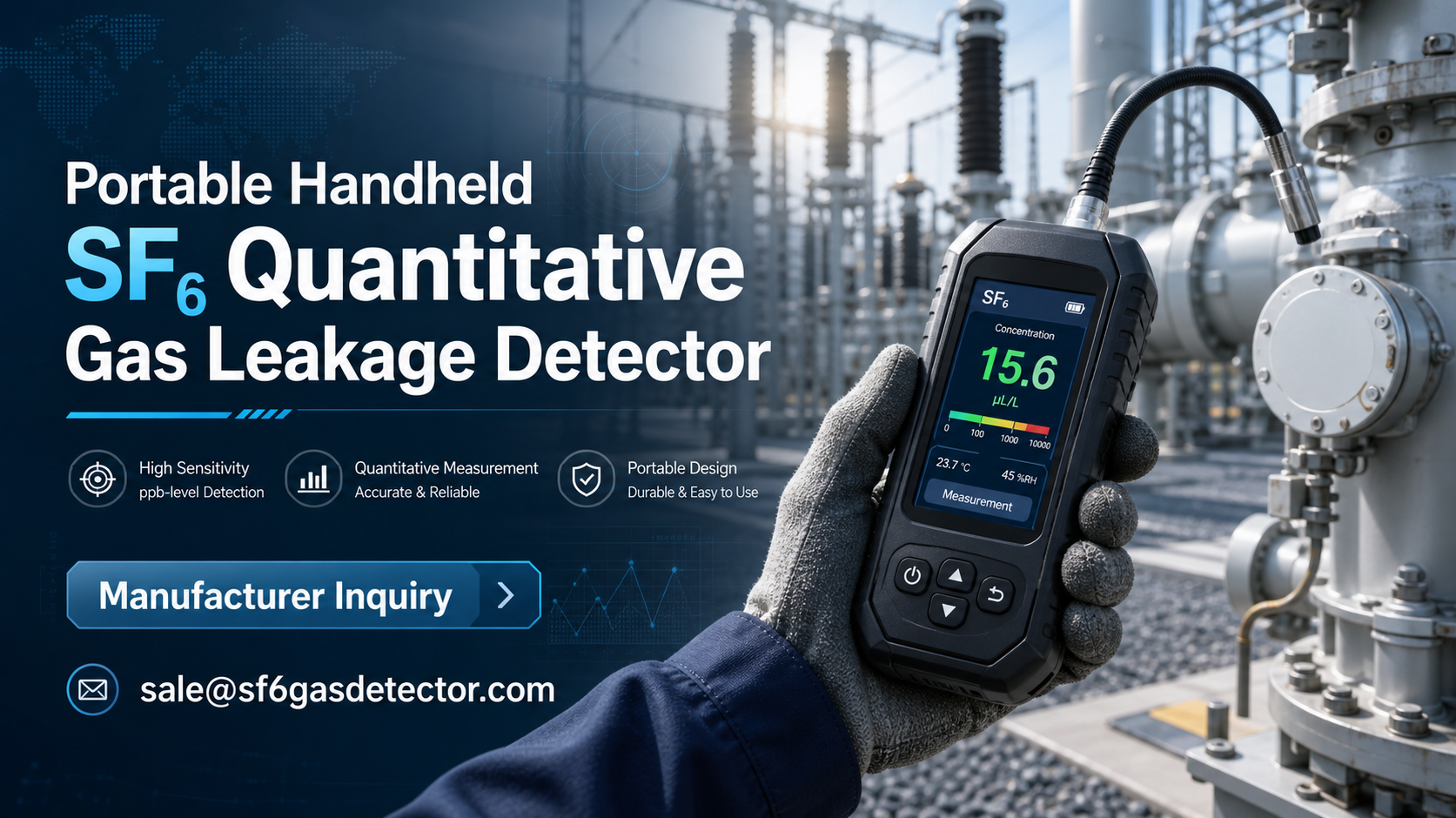
Portable Handheld SF6 Quantitative Gas Leakage Detector Manufacturer Inquiry
Date
2026-08-31
[email protected]
Website
www.sf6gasdetector.com
Get Solutions And Quotes
Contact Factory
Portable Handheld SF6 Quantitative Gas Leakage Detector Manufacturer Inquiry
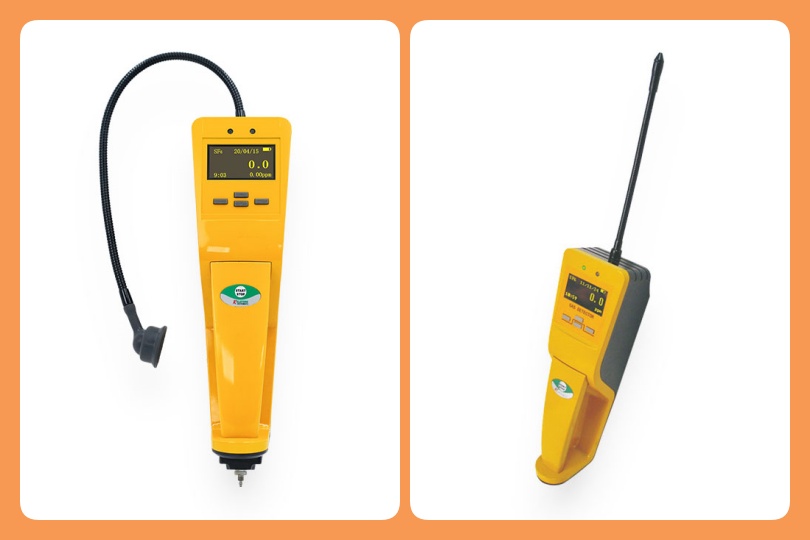
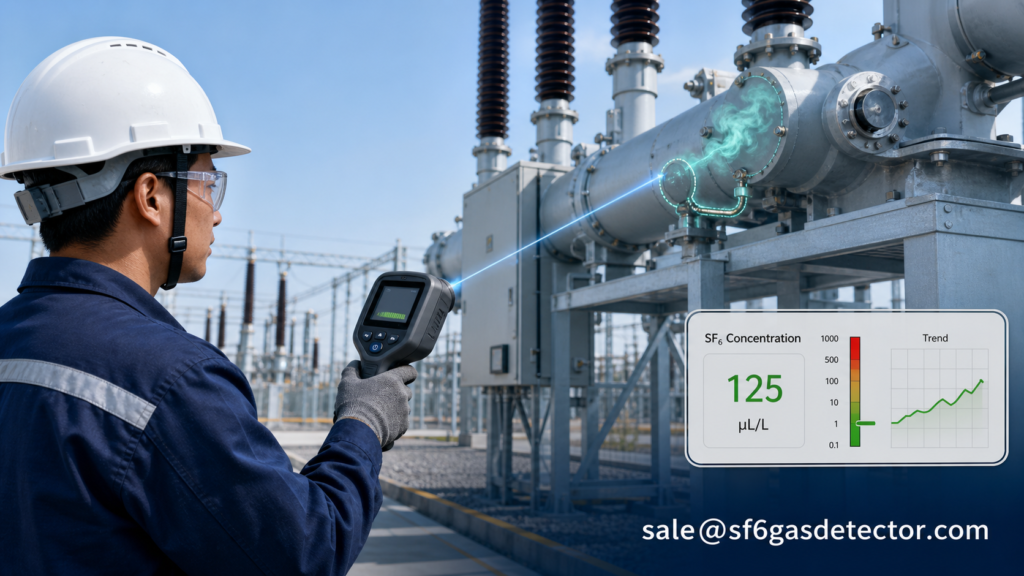
A Portable handheld SF6 quantitative Gas Leakage Detector is an essential instrument for utilities, switchgear manufacturers, maintenance contractors, and laboratories responsible for gas-insulated electrical equipment. When preparing a manufacturer inquiry, buyers need more than a sensitivity figure: they need verified measurement performance, applicable compliance documentation, calibration support, and equipment suitability for real maintenance conditions. This guide explains how to evaluate a Portable handheld SF6 quantitative Gas Leakage Detector and structure an effective manufacturer inquiry for reliable procurement.
Why Quantitative SF6 Leak Detection Matters
Sulfur hexafluoride (SF6) is widely used in high-voltage circuit breakers, gas-insulated switchgear (GIS), gas-insulated lines, and related electrical equipment because of its excellent dielectric properties. However, SF6 has a very high global warming potential, so preventing, locating, and documenting leaks is a critical part of responsible asset management.
Unlike a simple qualitative leak detector that only indicates the presence of gas, a Portable handheld SF6 quantitative Gas Leakage Detector is designed to provide a measurable leak-rate result. Depending on the instrument and test method, the displayed value may be expressed in g/year, ppmv, mL/s, or another defined unit. Quantitative measurement helps maintenance teams prioritize repairs, establish baseline records, and support environmental reporting programs.
For a successful manufacturer inquiry, the buyer should clearly state whether the detector will be used for pinpointing leaks around seals and flanges, routine GIS inspection, factory acceptance testing, or post-repair verification.
Core Performance Parameters to Request
A professional Portable handheld SF6 quantitative Gas Leakage Detector manufacturer should provide a complete technical data sheet rather than only a headline sensitivity claim. The following specifications should be reviewed carefully.
Minimum Detectable Leak Rate
Sensitivity is often the first parameter requested, but it must be linked to a defined test condition. Ask the supplier to identify:
- Minimum detectable SF6 leak rate
- Measurement unit and resolution
- Test distance between probe and leak source
- Response time and recovery time
- Background concentration conditions
- Calibration gas concentration or reference leak method
A low stated sensitivity is valuable only when it is repeatable under field conditions. For example, wind, ventilation, humidity, probe movement, and background gas can influence handheld measurements. A reliable Portable handheld SF6 quantitative Gas Leakage Detector should provide stable readings and clear guidance for correct probe positioning.
Measurement Method and Selectivity
Different instruments may use infrared sensing, electron capture techniques, or other detection principles. The chosen technology should be selective enough for SF6 applications and suitable for the operating environment.
During a manufacturer inquiry, request information on cross-sensitivity to common gases, vapors, cleaning agents, moisture, and by-products that may be present near electrical equipment. This is particularly important for substations, indoor GIS halls, and industrial sites where other fluorinated gases or solvents may be used.
Probe Design, Display, and Data Handling
Field technicians benefit from a flexible probe, illuminated display, audible alarm, and durable handheld enclosure. For routine inspection programs, data storage is equally important. Confirm whether the Portable handheld SF6 quantitative Gas Leakage Detector supports:
- Adjustable alarm thresholds
- Peak-hold or maximum-value indication
- Data logging with time and date stamps
- USB, Bluetooth, or other data export options
- Rechargeable battery operation and charging time
- Replaceable filters, probes, or sensor modules
These features help convert inspection activity into auditable maintenance records.
Compliance Certifications and Quality Documentation
Compliance should be assessed according to the destination market and the intended use of the instrument. A responsible manufacturer inquiry should request documentary evidence, not only a statement that the product is “certified.”
Electrical Safety and EMC Requirements
For many international markets, portable electronic test equipment may require conformity with applicable electrical safety and electromagnetic compatibility requirements. Depending on product design and market destination, relevant documentation can include CE-related declarations, EMC test reports, RoHS compliance information, and safety evaluation against applicable IEC or EN standards.
For laboratory and industrial measurement equipment, IEC 61010 series requirements may be relevant where applicable. Environmental robustness can also be evaluated through tests aligned with relevant IEC 60068 methods for vibration, temperature, humidity, and transport conditions.
Buyers should verify that all certificates, declarations, and test reports correspond to the exact Portable handheld SF6 quantitative Gas Leakage Detector model being quoted.
Calibration and Traceability
Quantitative leak measurement depends on calibration integrity. Ask whether the manufacturer provides a calibration certificate, recommended calibration interval, adjustment procedure, and traceability information. Calibration performed by a laboratory accredited to ISO/IEC 17025 can provide additional confidence where traceability is required by quality systems or customer contracts.
For SF6 handling and quality-management activities, the detector should be used alongside established industry procedures. IEC 60376 addresses technical-grade SF6 specifications, while IEC 60480 provides guidance related to the reuse and handling of SF6 in electrical equipment. These standards do not replace leak-detector operating instructions, but they provide useful context for responsible gas management.
Scenario-Based Selection Recommendations
Substation and GIS Maintenance
For GIS maintenance, select a Portable handheld SF6 quantitative Gas Leakage Detector with a long, flexible probe, rapid response, strong interference resistance, and clear alarm functions. Technicians commonly inspect gas compartments, density-monitor connections, valve interfaces, flange seals, and cable termination areas. A rugged enclosure and long battery life are important for extended field rounds.
Switchgear Manufacturing and Factory Testing
Manufacturers of circuit breakers and gas-insulated equipment often need repeatable testing during assembly and final inspection. In this setting, stable quantitative readings, data logging, and documented calibration are priorities. Ask whether the instrument can support standardized internal test procedures and whether the supplier can provide operator training materials.
Environmental Compliance and Asset Management
For organizations tracking SF6 emissions across multiple locations, the ideal Portable handheld SF6 quantitative Gas Leakage Detector should support consistent leak-rate recording and simple data export. This enables maintenance planners to compare results over time, identify recurring failure points, and prioritize corrective actions based on measured leakage rather than subjective alarm intensity.
For project-specific configuration, calibration documentation, or bulk purchasing requirements, you can quickly obtain a product quotation with your required sensitivity, quantity, destination country, and application details.
How to Prepare an Effective Manufacturer Inquiry
A clear manufacturer inquiry reduces technical uncertainty and speeds up quotation evaluation. Include the following details:
- Required leak-rate range and measurement unit
- Application: GIS, circuit breaker, laboratory, factory, or field service
- Required sensitivity, response time, and probe length
- Operating temperature and environmental conditions
- Data logging, communication, and reporting requirements
- Required certificates and calibration documentation
- Quantity, delivery destination, and expected lead time
- Warranty terms, spare parts availability, and after-sales support
Avoid comparing instruments solely by price. A lower-cost detector without documented calibration, service support, or test evidence can create higher lifecycle costs and unreliable maintenance decisions.
Frequently Asked Questions
Is a quantitative detector better than a standard SF6 leak detector?
For maintenance programs requiring documented leak rates or trend analysis, a Portable handheld SF6 quantitative Gas Leakage Detector is generally more suitable. A qualitative detector may be sufficient for basic leak location, but it does not always provide a reliable numerical result for reporting or repair prioritization.
What calibration documents should be requested?
Request a calibration certificate showing the model, serial number, test date, measured results, calibration method, and traceability information. Confirm the recommended recalibration interval and whether local service is available.
Can one detector be used for all SF6 equipment?
A Portable handheld SF6 quantitative Gas Leakage Detector can be used across many SF6-filled assets when its sensitivity, probe arrangement, and operating conditions match the task. However, enclosed spaces, high-background areas, or demanding factory tests may require specific accessories or procedures.
What should be included in a manufacturer inquiry?
Include the required application, leak-rate range, compliance expectations, calibration needs, quantity, and delivery location. For technical selection support, request one-on-one guidance from engineers before finalizing the purchase specification.