SF6 Gas Handling in Wind Farm Electrical Systems: Best Practices
Date
2026-08-14
[email protected]
Website
www.sf6gasdetector.com
Get Solutions And Quotes
Contact Factory
SF6 Gas Handling in Wind Farm Electrical Systems: Best Practices
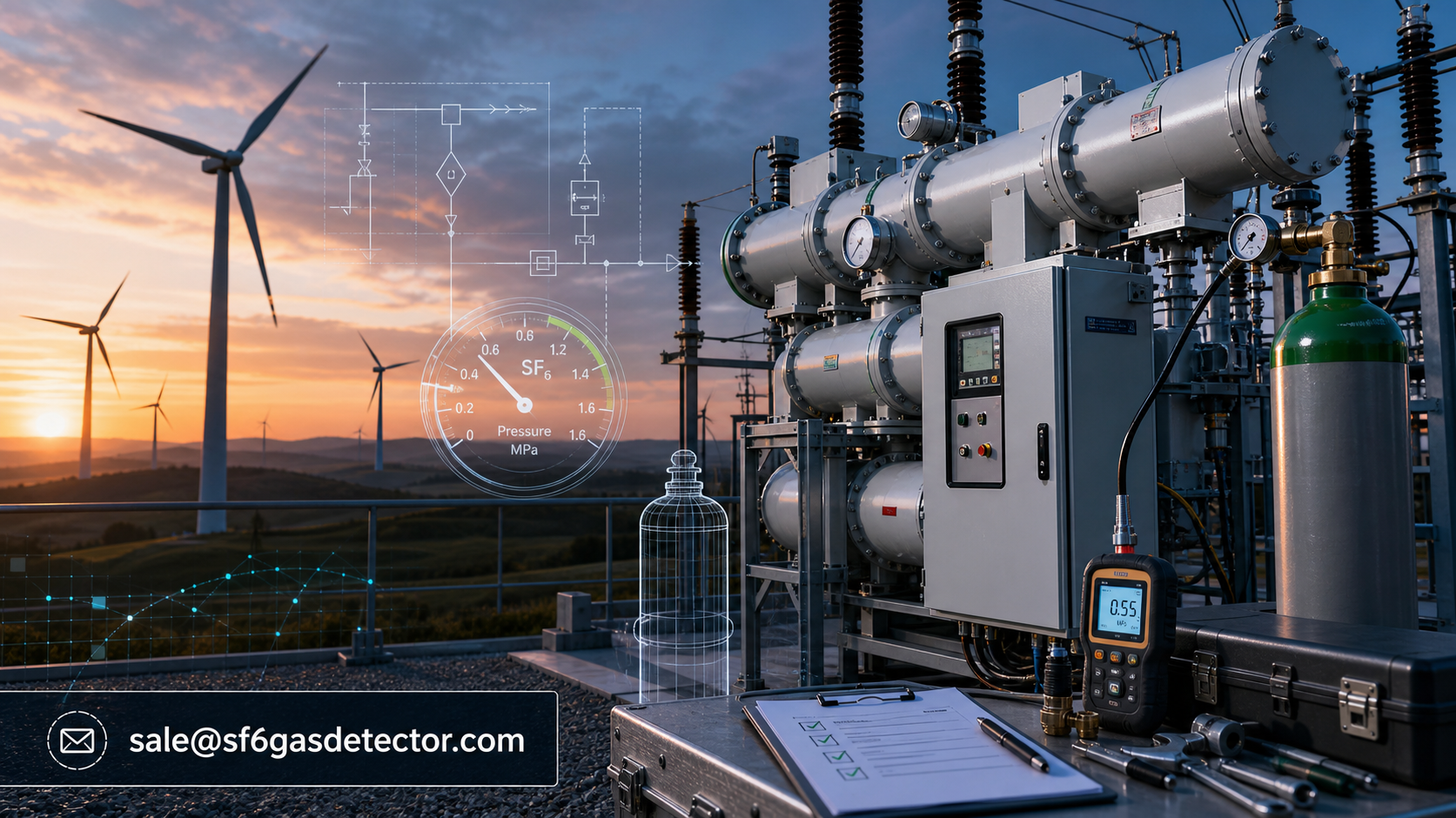
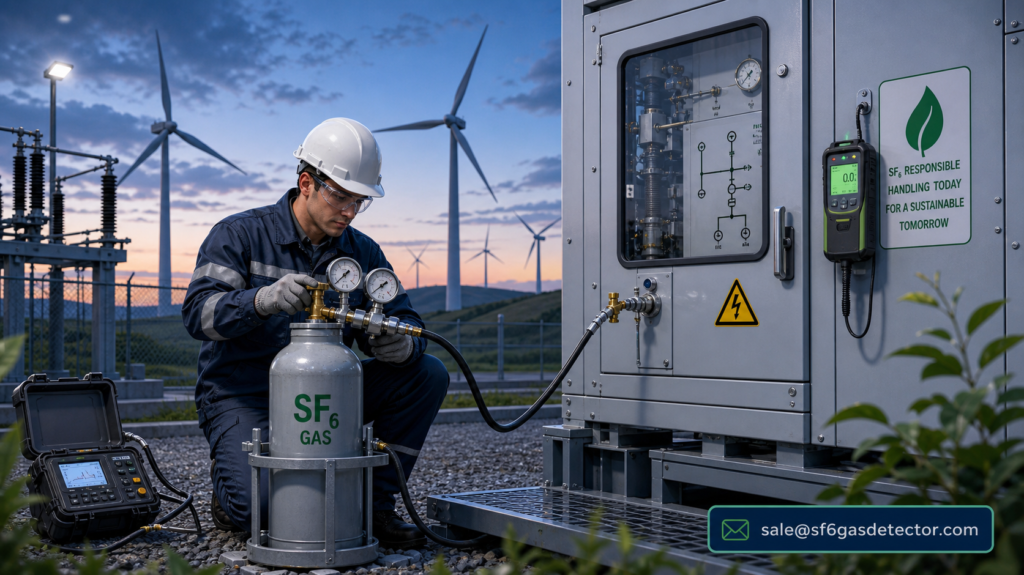
SF6 gas handling in wind farm electrical systems is a critical part of maintaining safe, reliable medium- and high-voltage power infrastructure. Wind farms commonly use gas-insulated switchgear (GIS), circuit breakers, ring main units, and substations that rely on sulfur hexafluoride (SF6) for dielectric insulation and arc interruption. Because SF6 has a very high global warming potential, operators must manage filling, recovery, leak detection, purity testing, and end-of-life treatment under strict environmental and electrical safety controls.
Proper SF6 gas handling protects turbine availability, reduces unplanned outages, supports regulatory compliance, and helps wind farm owners meet sustainability commitments.
Why SF6 Management Matters in Wind Farms
Modern wind farms operate across dispersed turbine arrays, collector substations, offshore platforms, and grid-connection facilities. Electrical equipment is exposed to vibration, salt mist, temperature variation, moisture, and frequent switching duty. These conditions can affect sealing performance and increase the risk of SF6 leakage or gas-quality degradation.
Effective SF6 gas handling in wind farm electrical systems focuses on four operational goals:
- Maintaining the specified gas density and insulation performance
- Detecting and controlling SF6 leaks before they affect equipment reliability
- Preventing moisture and decomposition products from entering gas compartments
- Recovering SF6 for reclamation, reuse, or compliant disposal during maintenance and decommissioning
A low gas density alarm in a wind turbine switchgear compartment should never be treated as a simple pressure issue. It may indicate temperature effects, a developing leak, incorrect filling history, or degraded sealing components. Technicians should evaluate the equipment manufacturer’s density-pressure curves and maintenance instructions before taking action.
Key SF6 Handling Parameters for Electrical Equipment
SF6 gas handling in wind farm electrical systems should follow the equipment manufacturer’s specified filling values and the site’s approved maintenance procedure. Field teams should measure more than pressure alone, since pressure is influenced by ambient temperature and altitude.
Essential Gas Quality Indicators
The most commonly monitored SF6 quality parameters include:
| Parameter | Operational Purpose |
|---|---|
| SF6 purity | Confirms the concentration of usable SF6 gas |
| Moisture or dew point | Indicates water vapor that can reduce dielectric strength |
| Air or nitrogen content | Identifies contamination caused by leaks or incorrect filling |
| SO2 and decomposition by-products | Helps identify arcing, overheating, or internal fault conditions |
| Gas density or compensated pressure | Confirms the required insulation and interruption capability |
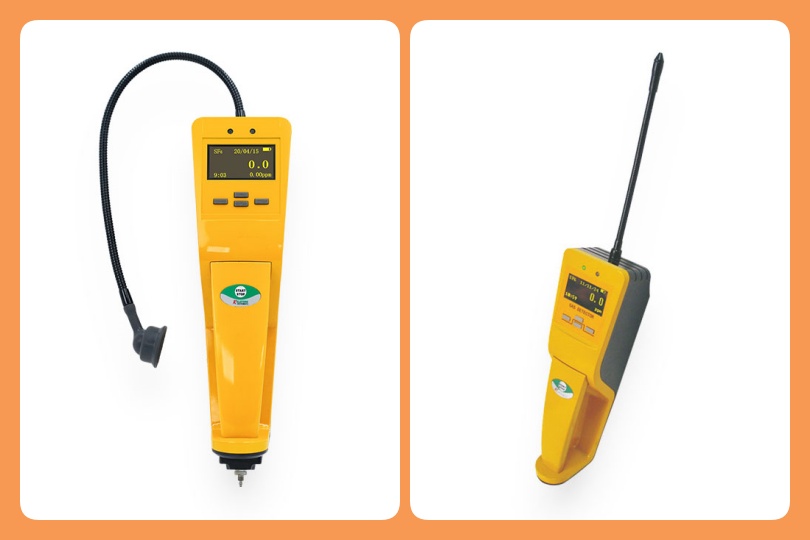
IEC 60480 provides guidance for the reuse and handling of SF6 taken from electrical equipment, including evaluation of gas quality and treatment requirements. IEC 62271 series standards also establish relevant requirements for high-voltage switchgear and controlgear. For gas quality testing, operators should use calibrated analyzers suitable for SF6 purity, moisture, and decomposition product measurement.
A Safe SF6 Handling Workflow
A controlled workflow reduces emissions and prevents contamination of equipment compartments. Before starting work, technicians should review the single-line diagram, equipment manual, lockout/tagout requirements, gas compartment identification, and prior gas records.
1. Isolate and Make Equipment Safe
De-energize, isolate, ground, and verify the electrical equipment in accordance with the approved switching procedure. Follow applicable electrical safety requirements, including site-specific arc-flash controls and local occupational safety rules. No SF6 compartment should be opened until the equipment is confirmed safe for maintenance.
2. Recover Gas Instead of Venting
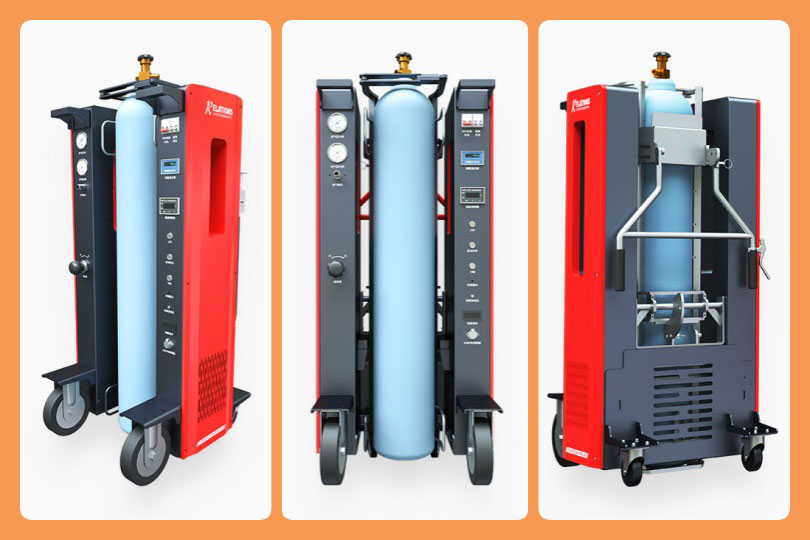
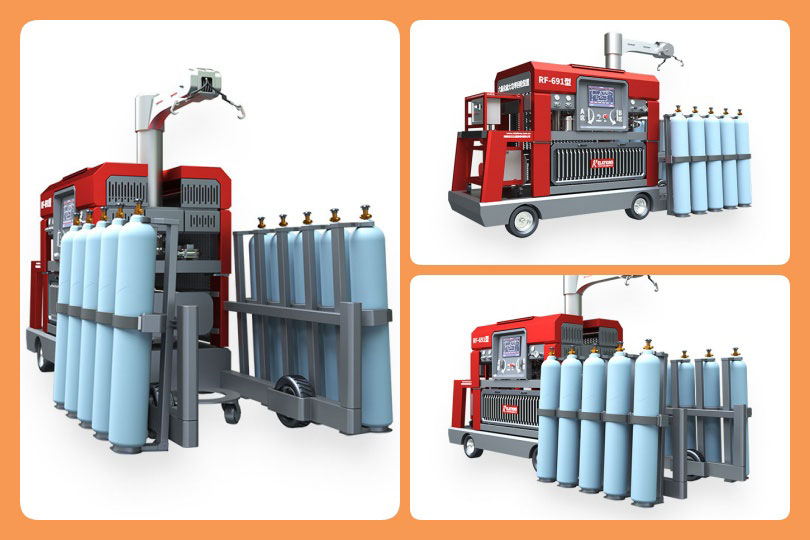
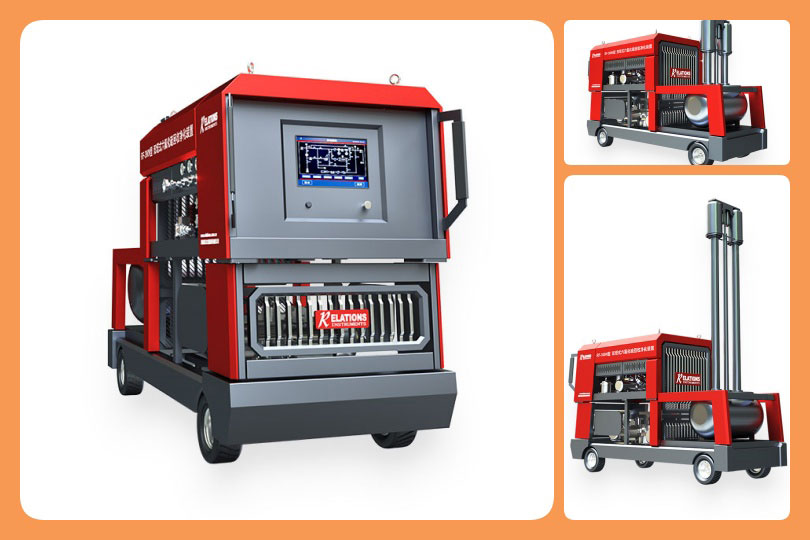
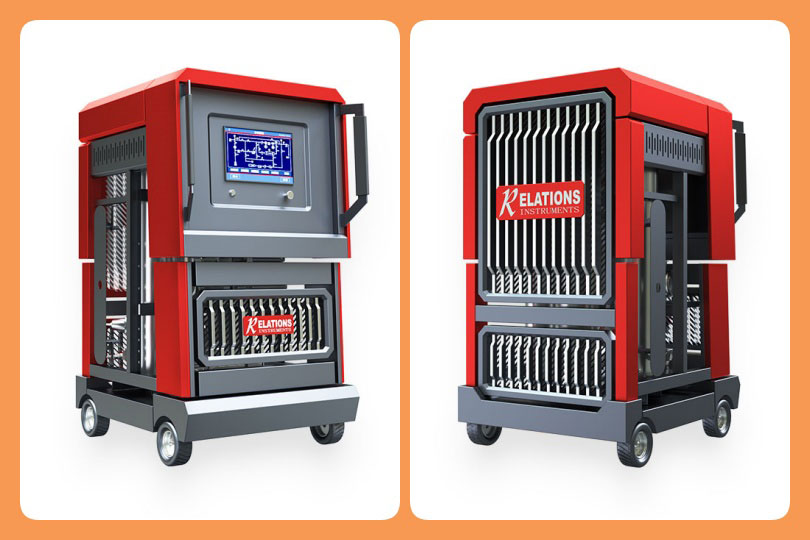
SF6 must be recovered using dedicated SF6 gas recovery equipment. Direct release to atmosphere is environmentally harmful and may violate applicable regulations. Recovery units should use compatible hoses, self-sealing couplings, particle filtration, and suitable vacuum capability.
Recovered gas should be placed in clearly identified cylinders or tanks. Label each container with the source equipment, date, gas condition, and whether the gas is suitable for reuse, reclamation, or disposal.
3. Test Before Refilling
Before refilling, conduct SF6 purity and moisture tests. If the gas has been exposed to internal arcing or fault conditions, test for decomposition products and follow the manufacturer’s instructions for handling contaminated gas. Personnel may require appropriate respiratory protection and chemical-resistant gloves when dealing with by-products such as sulfur dioxide or fluorinated compounds.
For planned maintenance campaigns, a calibrated analyzer and recovery cart can improve consistency across multiple turbines. Operators seeking to standardize their process can request one-on-one guidance from engineers on selecting testing and handling equipment for their voltage class and maintenance scope.
4. Evacuate, Fill, and Verify
After repairs, evacuate the compartment to the manufacturer’s specified vacuum level before filling with compliant SF6 gas. Use clean, dry hoses and avoid cross-contamination between gas compartments. Fill by mass or compensated density as required by the equipment documentation, then perform a leak check at all service ports, flanges, valves, and repaired sealing points.
Record the quantity of gas recovered, added, reused, and sent for reclamation. This traceability is essential for environmental reporting and asset management.
Compliance and Documentation Requirements
SF6 gas handling in wind farm electrical systems should be supported by a documented environmental and maintenance management system. Depending on location, operators may need to comply with fluorinated greenhouse gas regulations, waste-management requirements, utility standards, and grid operator rules.
Relevant international references include IEC 60480 for SF6 reuse and treatment, IEC 62271 requirements for high-voltage switchgear, ISO 14001 environmental management principles, and ISO 45001 occupational health and safety practices. Personnel should be trained in gas recovery, cylinder handling, leak detection, electrical isolation, and emergency response.
A practical maintenance record should include:
- Equipment identification and gas compartment reference
- Date, technician, and work order number
- Initial and final gas density or pressure readings
- SF6 purity, moisture, and decomposition test results
- Gas mass recovered, filled, transferred, or disposed of
- Leak-test results and corrective actions
- Calibration status of analyzers and recovery equipment
Scenario-Based Solutions for Wind Farm Operators
Routine Turbine Switchgear Inspection
For routine preventive maintenance, portable SF6 analyzers can verify purity and moisture without removing excessive gas from the compartment. This helps technicians identify developing moisture ingress before insulation performance is affected.
Repeated Low-Density Alarms
Repeated alarms require a systematic leak investigation. Inspect service valves, flange gaskets, pressure-relief devices, density-monitor connections, and enclosure welds. Use an appropriate SF6 leak detector and confirm repairs with a repeatable test method. Do not repeatedly top up gas without identifying the loss mechanism.
Offshore Wind Farm Maintenance
Offshore facilities need compact, corrosion-resistant, transportable handling equipment. Recovery carts, cylinders, and analyzers should be selected for marine logistics, limited deck space, and reliable operation in humid, salt-laden environments. Pre-job planning should include contingency capacity for unexpected gas recovery volume.
For projects requiring compatible analyzers, recovery units, or leak detectors, teams can quickly obtain product quotations based on their equipment type, gas volume, and operational environment.
Frequently Asked Questions
How often should SF6 gas be tested in wind farm equipment?
Testing frequency should follow the switchgear manufacturer’s maintenance plan, local regulations, and site risk assessment. Additional testing is recommended after low-density alarms, fault interruption events, repair work, or suspected moisture ingress.
Can recovered SF6 gas be reused?
Yes, if testing confirms that the gas meets the applicable quality requirements and it has been properly filtered or reclaimed where necessary. IEC 60480 provides recognized guidance for evaluating used SF6 from electrical equipment.
Is SF6 pressure the same as gas density?
No. Pressure changes with temperature, while gas density is the more reliable indicator of insulation capability. Most sealed switchgear uses temperature-compensated density monitoring to provide meaningful alarm thresholds.
What should be done if SF6 decomposition products are detected?
Treat the gas as potentially contaminated, follow the equipment manufacturer’s safety instructions, use suitable personal protective equipment, and send the gas for treatment or reclamation through an approved process. Avoid releasing contaminated gas or residues into the environment.
Responsible SF6 gas handling in wind farm electrical systems combines technical discipline, environmental accountability, and accurate documentation. With trained personnel, calibrated equipment, and a controlled recovery-to-refill process, wind farm operators can maintain electrical reliability while reducing emissions and supporting long-term compliance.