SF6 Leak Detector for Semiconductor and Lab Systems: Find Leaks Fast

Date
2026-08-12
[email protected]
Website
www.sf6gasdetector.com
Get Solutions And Quotes
Contact Factory
SF6 Leak Detector for Semiconductor and Lab Systems: Find Leaks Fast
An SF6 leak detector for semiconductor or lab SF6 systems is an essential safety, compliance, and process-control instrument where sulfur hexafluoride is stored, transferred, used, or recovered. SF6 is chemically stable, non-flammable, and widely used in high-voltage equipment and specialized research applications. However, it is also a potent greenhouse gas with a very high global warming potential. Detecting even small releases supports environmental responsibility, protects costly gas inventories, and helps laboratories and semiconductor facilities maintain controlled operating conditions.
For facilities handling high-purity gases, the right SF6 leak detection solution must provide more than an alarm. It should deliver repeatable sensitivity, traceable calibration, clear reporting, and compatibility with the site’s safety and quality-management procedures.
Why SF6 Leak Detection Matters in Laboratories and Semiconductor Facilities
SF6 may be used in laboratory-scale gas systems, plasma research, materials studies, electrical test environments, and selected semiconductor-related processes. In every case, leakage can create operational and environmental consequences.
A small leak at a regulator, VCR fitting, gas cabinet connection, manifold, valve stem, or recovery line can gradually waste expensive specialty gas. In systems that require stable pressure or high purity, ingress of air or moisture associated with a leak can also affect experimental repeatability and process consistency.
From an environmental perspective, SF6 emissions require particular attention. Its 100-year global warming potential is significantly higher than that of carbon dioxide, so leak prevention and prompt repair are important elements of an emissions-reduction program. A well-selected SF6 gas leak detector helps maintenance teams locate leaks early, verify repairs, and document inspection results.
Key Performance Parameters for an SF6 Leak Detector
When specifying an SF6 leak detector for semiconductor or lab SF6 systems, purchasing teams should evaluate the detector against the actual installation, gas-handling method, and maintenance workflow.
Detection Sensitivity and Response Time
Sensitivity determines whether the instrument can identify low-level leaks before they become material losses or environmental concerns. For precision laboratory gas systems, a portable detector should be capable of identifying small leaks at fittings, joints, seals, and components without excessive false alarms.
Response time is equally important. A fast-response SF6 leak detector allows technicians to scan multiple connection points efficiently during commissioning, preventive maintenance, or troubleshooting. Recovery time should also be considered, especially where several test points must be inspected in sequence.
Selectivity and Cross-Sensitivity
Gas systems may contain other fluorinated gases, refrigerants, solvents, cleaning agents, or process chemicals. The detector’s sensing method should be assessed for possible cross-sensitivity in the intended environment.
For high-purity gas operations, selectivity supports more reliable diagnosis. A reading should indicate a meaningful SF6-related leak condition rather than background interference. Always review the manufacturer’s cross-sensitivity data and use the instrument only within its stated operating limits.
Measurement Range, Alarms, and Data Logging
A practical industrial SF6 leak detector should offer a measurement range appropriate for both fine leak finding and higher-concentration fault investigation. Audible, visual, and vibration alarms improve usability in noisy equipment rooms or when operators are wearing appropriate personal protective equipment.
Data logging can be valuable for laboratories and semiconductor facilities operating under documented maintenance procedures. Recorded inspection dates, detector readings, calibration status, and corrective actions help create a traceable maintenance history.
Compliance, Calibration, and Quality Assurance
Reliable leak detection depends on a disciplined calibration program. Select equipment supplied with calibration documentation and establish recalibration intervals according to the manufacturer’s instructions, usage frequency, internal quality procedures, and applicable site requirements.
Relevant Standards and Management Systems
An SF6 leak detection program should align with the facility’s broader environmental, safety, and quality systems. ISO 14001 environmental management principles can support emission tracking and continual improvement, while ISO 45001 principles can inform occupational safety controls. Laboratories operating under ISO/IEC 17025 practices should maintain documented calibration traceability where relevant to test quality.
Equipment suppliers with ISO 9001 quality-management certification can provide additional confidence that manufacturing and service processes are controlled. For electrical, electronic, and industrial equipment supplied into relevant markets, consider applicable requirements such as CE marking, RoHS compliance, and electromagnetic compatibility requirements. The exact obligations depend on the product design, region of use, and installation conditions.
A detector alone does not create compliance. Facilities should combine appropriate equipment with written procedures, trained personnel, scheduled inspections, repair verification, and records retention.
Scenario-Based Leak Detection Solutions
Semiconductor Gas Cabinets and Distribution Lines
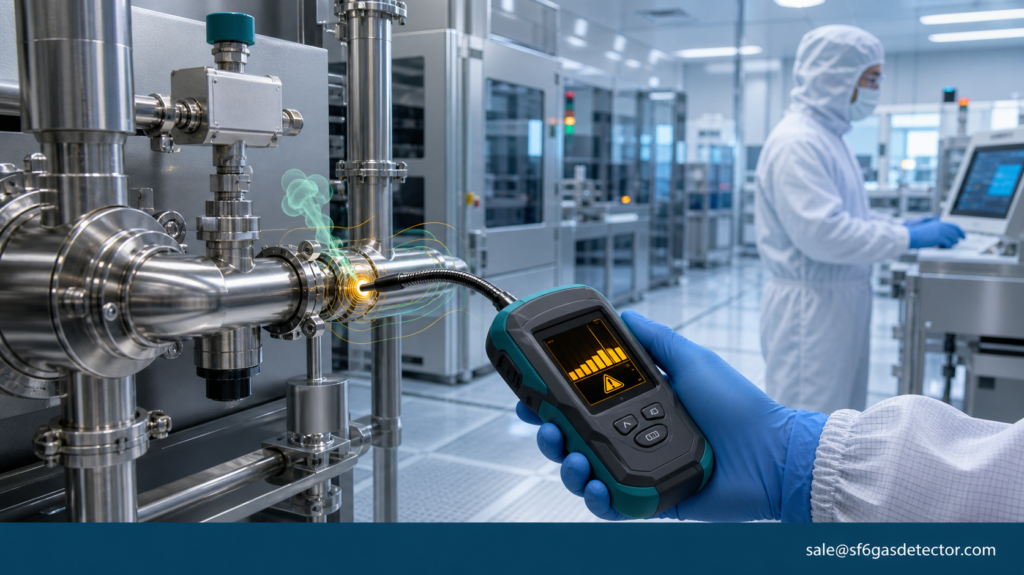
In semiconductor-related gas distribution systems, leak surveys should focus on cylinder valve connections, pressure regulators, pigtails, automatic changeover panels, gas cabinet fittings, valve manifolds, and points near abatement or recovery interfaces.
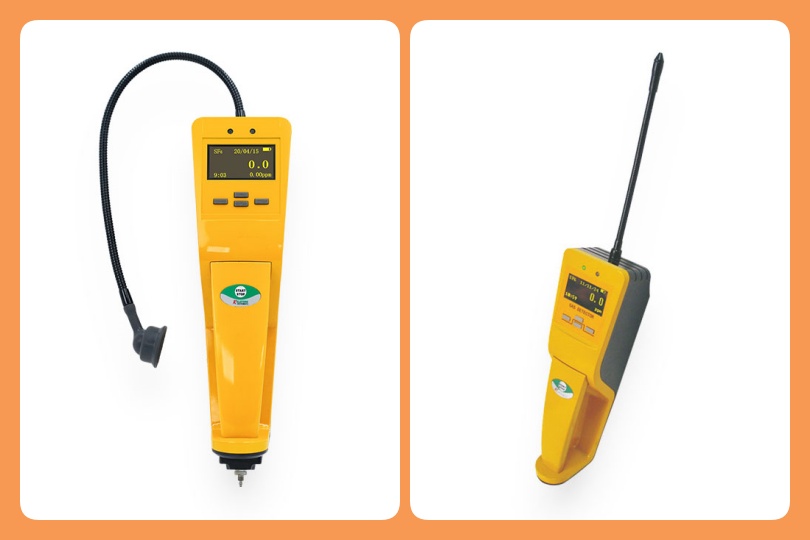
A handheld SF6 leak detector with a flexible probe is useful for accessing restricted locations. Technicians should move the probe slowly around suspected points, allow sufficient response time, and confirm any elevated indication through repeat testing. After repairing a leak, the joint should be retested and documented before the system returns to service.
Research Laboratories and Test Benches
Laboratory SF6 systems often change more frequently than production installations. New experiments, temporary lines, sample chambers, and modified test rigs can introduce new leak paths.
A pre-use inspection routine can prevent avoidable releases. Before introducing SF6, inspect tubing, seals, compression fittings, and valves. During operation, monitor system pressure trends and investigate unexplained pressure loss. Following cylinder replacement or system maintenance, perform a targeted scan before resuming experiments.
For system-specific selection support, request one-on-one guidance from engineers with details such as gas purity, expected operating pressure, installation layout, and required detection limit.
Best Practices for Using an SF6 Leak Detector
Use the detector in a controlled and repeatable manner. Confirm battery condition, warm-up status, zeroing procedure, and calibration validity before beginning a survey. Avoid testing immediately after applying cleaning chemicals or near strong airflow, which may affect readings or disperse gas away from the probe.
Probe likely leak points methodically:
- Cylinder valves and pressure regulators
- Threaded, compression, and face-seal fittings
- Flexible hoses and hose-end connections
- Valve stems, gauges, flow controllers, and manifolds
- Recovery, purification, and gas-transfer connections
If a leak is identified, isolate the system according to site procedures, repair the fault using compatible components and approved torque practices, then retest. Never rely on leak detection as a substitute for appropriate ventilation, gas handling procedures, or environmental controls.
Frequently Asked Questions
What is the best SF6 leak detector for a laboratory system?
The best option depends on the required sensitivity, likely interference gases, system configuration, reporting needs, and calibration requirements. A portable, high-sensitivity detector with clear alarms, a flexible probe, and calibration support is often suitable for laboratory maintenance programs.
Can one detector be used for semiconductor and laboratory SF6 applications?
Often, yes, if its measurement capability, materials compatibility, and safety certifications match the operating environment. Semiconductor facilities may require more stringent documentation, contamination-control practices, and integration with site maintenance procedures than smaller research laboratories.
How often should SF6 systems be checked for leaks?
Inspection frequency should be risk-based. Check systems after installation, cylinder changes, modifications, repairs, or abnormal pressure trends. Routine preventive inspections should be scheduled according to gas usage, system criticality, environmental objectives, and internal operating procedures.
Why is calibration important for SF6 leak detection?
Calibration verifies that the detector responds within its specified performance range. Without current calibration, a reading may not be dependable for maintenance decisions, environmental reporting, or quality documentation.
For a detector matched to your gas-handling conditions, quickly obtain a product quotation and include your application, target sensitivity, required certifications, and expected annual inspection volume.