Wholesale SF6 Gas Leak Detectors for Reliable Substation Safety
Date
2026-11-02
[email protected]
Website
www.sf6gasdetector.com
Get Solutions And Quotes
Contact Factory
Wholesale SF6 Gas Leak Detectors for Reliable Substation Safety
Reliable SF6 monitoring is essential to the safe, efficient operation of gas-insulated switchgear (GIS), circuit breakers, and other high-voltage assets. A Wholesale SF6 gas leak detector for power transmission substations gives utilities, EPC contractors, and maintenance providers a scalable way to identify leakage early, reduce gas losses, support environmental reporting, and avoid unplanned outages. Selecting the right detector requires more than comparing prices; buyers must assess sensitivity, response time, operating conditions, calibration traceability, and applicable compliance requirements.
Why SF6 Leak Detection Matters in Transmission Substations
Sulfur hexafluoride is widely used in high-voltage equipment because of its exceptional dielectric strength and arc-quenching performance. However, SF6 has a very high global warming potential, so even minor leaks can create environmental, regulatory, and asset-management concerns. A Wholesale SF6 gas leak detector for power transmission substations helps maintenance teams locate leaks before gas pressure falls below equipment limits or a defect develops into a service interruption.
For transmission operators, proactive detection supports several practical objectives:
- Maintaining insulation performance in GIS bays and circuit breakers
- Reducing SF6 replenishment costs and gas handling activities
- Supporting emissions inventories and sustainability targets
- Improving personnel efficiency during routine inspections
- Providing documented evidence for preventive maintenance programs
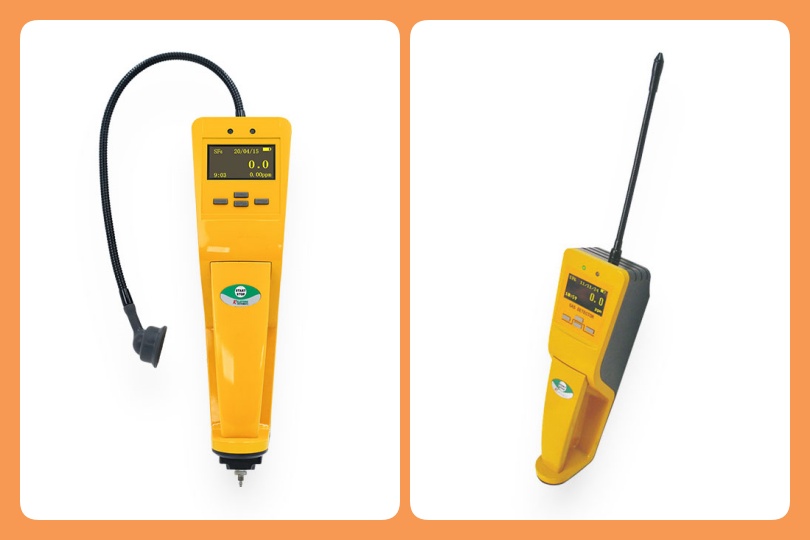
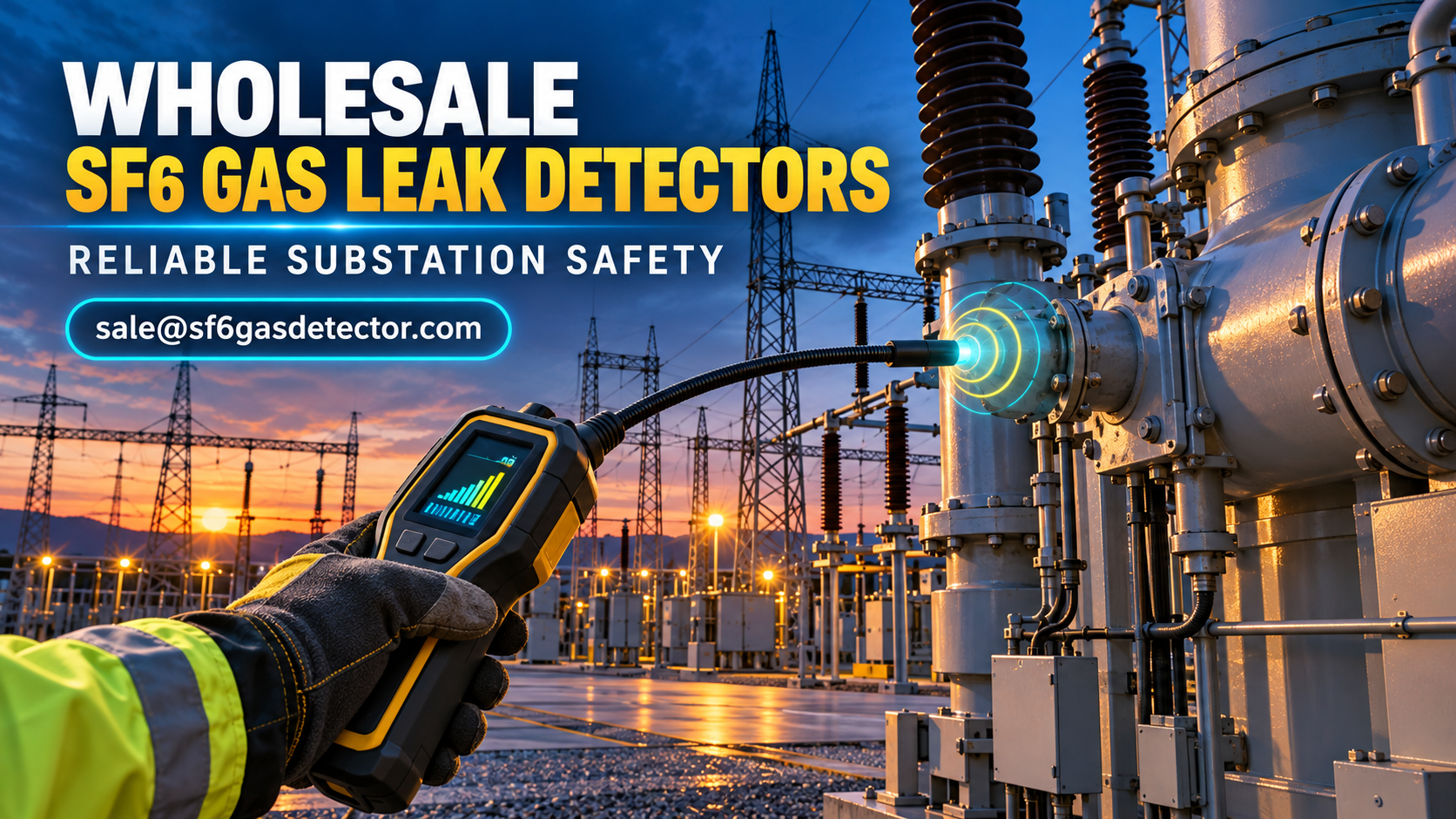
Portable sniffers are particularly valuable for pinpointing leaks at flanges, valves, density-monitor connections, sealing surfaces, pressure-relief devices, and cable terminations. Fixed monitoring systems may complement portable instruments in enclosed GIS rooms or critical facilities requiring continuous surveillance.
Key Technical Parameters for Wholesale Procurement
When sourcing a Wholesale SF6 gas leak detector for power transmission substations, procurement teams should define technical acceptance criteria before requesting quotations. The most suitable configuration depends on the equipment population, inspection frequency, and site environment.
Detection Sensitivity and Measurement Range
Sensitivity determines whether the instrument can identify small leaks before they become operationally significant. For substation maintenance, a detector with low-level sensitivity expressed in ppmv, g/year, or equivalent leakage-rate units is generally preferred. Buyers should confirm the stated minimum detectable leak rate under defined test conditions, rather than relying on unverified marketing claims.
A practical detector should also offer a usable measurement range for both minor seepage and more substantial leaks. Adjustable sensitivity settings can help technicians screen large areas quickly and then narrow the search around suspected leak points.
Response Time and Recovery Time
Fast response improves field productivity. The detector should react promptly when the probe approaches an SF6 source and recover quickly once it is moved away. Slow recovery can make it difficult to distinguish adjacent leak points, especially in dense GIS installations with multiple compartments and fittings.
Probe Design and Field Durability
Transmission substations can expose instruments to dust, vibration, humidity, temperature changes, and electromagnetic interference. A robust handheld unit should include a flexible probe for difficult-to-reach locations, a clear display, audible and visual alarms, rechargeable battery capability, and a durable enclosure. For outdoor use, review the manufacturer’s stated ingress-protection rating and operating temperature range.
Calibration and Data Traceability
Calibration is central to measurement confidence. Select suppliers that provide calibration certificates, traceable test methods, recommended calibration intervals, and accessible after-sales support. Data logging, timestamped records, and USB or wireless export functions are useful for utilities that need auditable maintenance histories.
Compliance and Industry Standards
A professionally specified Wholesale SF6 gas leak detector for power transmission substations should be evaluated within the broader compliance framework governing electrical maintenance, gas handling, and worker safety. Equipment used in substations should align with relevant international requirements and local regulations applicable to the installation.
For GIS and high-voltage switchgear applications, IEC 62271 series requirements provide important technical context for equipment operation and maintenance. SF6 handling practices are commonly guided by IEC 60480, which addresses the reuse and handling of SF6 taken from electrical equipment. In applicable markets, buyers should also verify CE conformity, RoHS compliance, EMC performance, and relevant electrical safety certifications.
Where detectors are used in potentially hazardous or restricted-access areas, confirm whether ATEX, IECEx, or local hazardous-area approvals are necessary. A detector should never be assumed suitable for explosive atmospheres unless it is specifically certified for that purpose. Procurement documentation should also require operating manuals, safety instructions, calibration information, and warranty terms in English or the required local language.
Scenario-Based Selection for Substation Operations
Routine Preventive Maintenance
For scheduled inspections across several transmission substations, a portable Wholesale SF6 gas leak detector for power transmission substations with strong battery life, fast warm-up, and clear alarm indications is usually the most efficient choice. Maintenance crews can inspect known leak-prone points during annual or semiannual service intervals and record results in the asset management system.
Emergency Leak Investigation
When density alarms, pressure trends, or abnormal gas consumption indicate a possible leak, technicians need a sensitive instrument that can quickly localize the source. A flexible probe, multiple sensitivity levels, and rapid response are especially important when working around complex GIS compartments or elevated breaker components.
Multi-Site Utility Procurement
For utilities purchasing instruments for regional maintenance teams, wholesale supply should include standardized models, consistent calibration support, spare sensor availability, and operator training materials. Standardizing one detector platform simplifies training, improves comparison of inspection records, and reduces spare-parts complexity.
Best Practices for Accurate SF6 Leak Surveys
Even a high-quality detector depends on correct field practice. Allow the instrument to stabilize according to the manufacturer’s instructions, perform a functional check before use, and inspect probe filters for contamination. Move the probe slowly around seals and connections, typically keeping it close to the suspected surface without touching hot or energized components.
Technicians should account for wind and ventilation, which can disperse gas and reduce apparent concentrations. In outdoor yards, shielding the test area where safe and practical can improve repeatability. Follow site lockout, approach-distance, and arc-flash procedures at all times. Leak findings should be documented with equipment identification, location, estimated severity, date, instrument serial number, and calibration status.
Frequently Asked Questions
What is the main benefit of buying SF6 leak detectors wholesale?
Wholesale purchasing helps utilities and contractors standardize inspection tools across multiple teams while reducing unit cost, simplifying training, and improving access to spare parts, calibration, and technical support.
Can one detector be used for both GIS and SF6 circuit breakers?
Yes, provided the detector has suitable sensitivity and probe access for the equipment geometry. GIS and circuit breakers both use SF6, but inspection points and site conditions may differ.
How often should an SF6 leak detector be calibrated?
Follow the manufacturer’s specified interval, commonly annual calibration, and perform routine functional checks before field use. More frequent verification may be appropriate for heavily used instruments or critical compliance programs.
Does a leak detector replace gas density monitoring?
No. Density monitoring identifies changes in gas condition or pressure, while a portable detector helps locate the physical source of leakage. Both functions are important in a complete substation maintenance strategy.
Choosing a Wholesale SF6 gas leak detector for power transmission substations is an investment in asset reliability, environmental responsibility, and maintenance efficiency. By prioritizing verified sensitivity, calibration traceability, durable construction, and compliance-ready documentation, transmission organizations can build a dependable SF6 leak-management program for current and future network needs.